Adding a Tent Wood Stove to Camping Tarp Shelter
Choosing the Right Tent Stove for Your Camping Tarp Setup
A tent wood stove transforms your camping experience, especially when paired with a quality tarp shelter. Whether you're planning a winter expedition or extending your shoulder-season adventures, understanding how to properly integrate a stove into your tarp setup is essential for safety, comfort, and performance.

Why Add a Stove to Your Tarp Shelter
Tarp shelters offer lightweight protection from the elements, this makes them great for group camping and overlanding. They allow you to camp comfortably in cold conditions while keeping your setup portable. The combination also enables you to dry gear, cook meals, and maintain core body temperature during extended trips.
Creating a Common Gathering Area Under Your Tarp Shelter
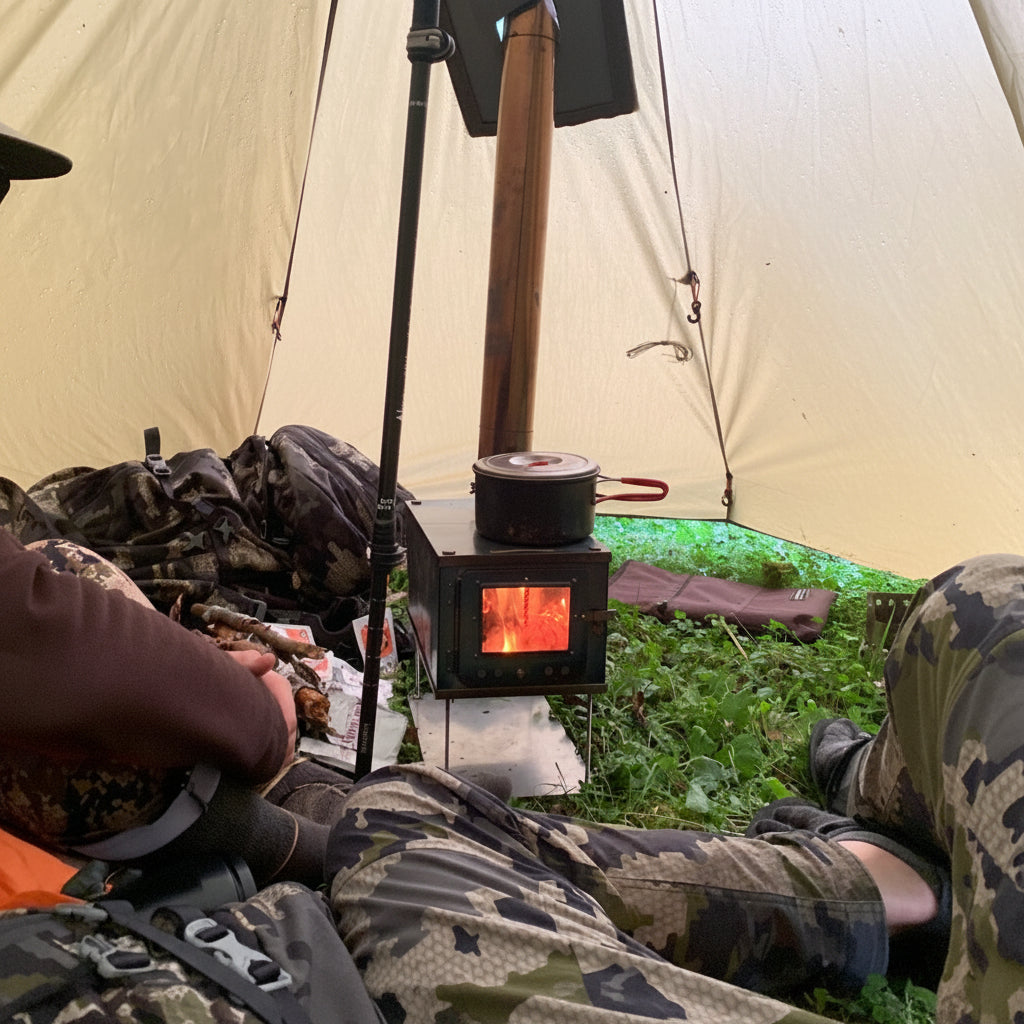
One of the greatest advantages of a tarp shelter with a wood stove is the ability to create a comfortable communal space for your group. Unlike traditional tents that isolate occupants, a well-designed tarp setup encourages gathering, conversation, and shared meals around the warmth of your stove.
Position your stove slightly off-center within the tarp to maximize usable space around it. This layout allows people to sit in a semi-circle or circle formation, creating natural sightlines and conversation flow. Ensure adequate seating clearance—typically 3 to 4 feet from the stove on all sides—so guests can sit comfortably without feeling cramped or at risk from heat radiation.
Use the area directly opposite the stove as your primary gathering zone. This spot benefits from radiant heat while maintaining safe distance from the chimney pipe and hot surfaces. Arrange camp chairs, logs, or cushions to define the space and encourage people to settle in. The psychological effect of gathering around a heat source strengthens group cohesion, especially during cold or wet weather when outdoor activities are limited.
Consider the flow of your shelter layout. Position sleeping areas toward the perimeter and slightly elevated if possible, keeping the central zone reserved for cooking, eating, and socializing.
A well-organized gathering space under your tarp shelter transforms a simple shelter into a basecamp hub—a place where your group connects, shares meals, and builds memories around the warmth of your wood stove.
Essential Considerations Before Installing
Most tarps are suitable for stove use with an installed Stove Jack. Look for tarps typically made from canvas or heavy-duty synthetic fabrics with reinforced seams. The interior height should accommodate your stove's chimney pipe, and stove jack placed in an area where the pipe will not come into contact with fabric.
Clearance is critical. Most tent stoves require at least 12 to 18 inches of clearance from combustible materials on all sides. Plan your tarp layout accordingly, positioning the stove away from sleeping areas and gear storage zones.
Installation Best Practices
Start by establishing a stable, level base for your wood stove. Position the chimney pipe vertically through a dedicated opening in your tarp, using a fire-resistant stove jack to create a safe seal around the pipe, but not too tight that the tarp can not move freely in the wind.
Secure the pipe to prevent movement from wind or accidental contact. In windy locations, guy lines can help stabilize the structure. Ensure your tarp opening allows smoke to escape freely while maintaining shelter integrity.
Safety and Maintenance
Never leave a burning stove unattended. Keep a fire extinguisher or water source nearby, and establish a clear protocol for extinguishing the fire before sleep. Inspect your stove and chimney regularly for creosote buildup, which increases fire risk. Clean the flue system before each trip and after extended use.
Maintain proper ventilation throughout your shelter. Crack a vent or opening opposite the stove to create airflow and prevent dangerous gas accumulation. Monitor interior temperature and adjust ventilation as needed.
Getting Started
Begin with shorter trips to familiarize yourself with your stove's operation and your tarp's living space dynamics. Practice setup and breakdown in your backyard before heading into the field. Invest in quality accessories like heat-resistant gloves to prevent cuts and burns.
With proper planning and attention to detail, a tent stove and tarp combination delivers reliable warmth and shelter for serious outdoor enthusiasts.