Adding a Wood Stove to Your Overlanding Shelter
Adding a wood stove to your overlanding shelter transforms it from a basic camp into a warm, comfortable basecamp—especially during cold-weather adventures. Whether you're setting up a hot tent or adding a stove jack to your overlanding shelter, a properly installed wood stove can mean the difference between a miserable night and a cozy evening in the backcountry.

Choose the Right Stove for Your Setup
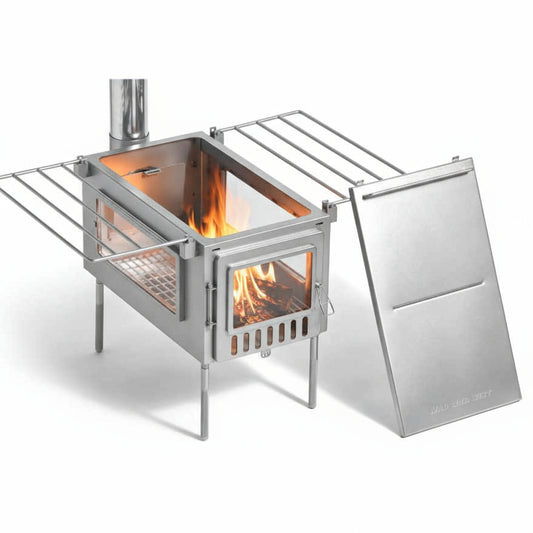
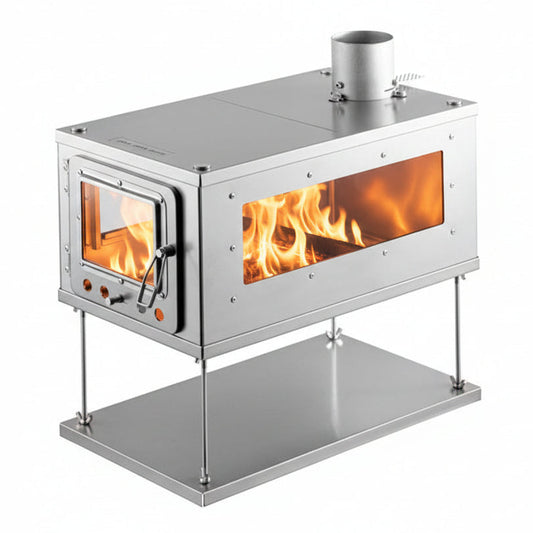
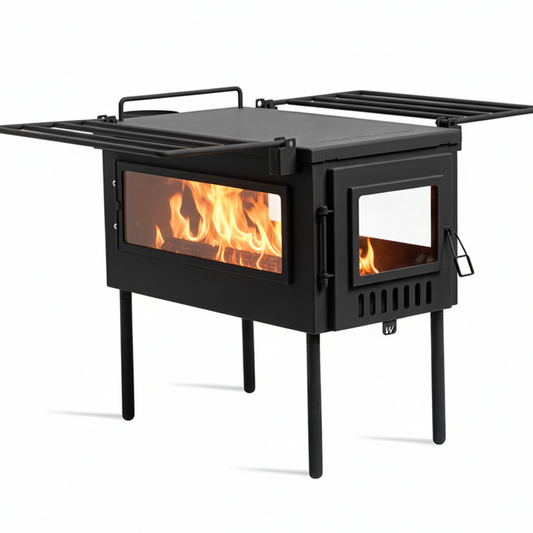
Most tent wood stoves work well in overlanding shelters. Compact, lightweight models designed for camping are your best bet. Look for stoves with a small footprint that can fit comfortably inside your shelter without consuming too much floor space. Consider the stove's heat output—relative to your shelter's size. A stove that's too powerful can make your shelter uncomfortably hot and waste fuel, while an undersized stove won't keep you warm enough.
Titanium and steel stoves are popular choices. Titanium is lighter and more durable, making it ideal for weight-conscious overlanders. Steel stoves are heavier but often more affordable and excellent at retaining and radiating heat.
Plan Your Ventilation and Chimney Setup
Proper ventilation is critical for safety and comfort. Your wood stove needs a chimney or flue pipe that extends through the roof of your shelter. Most tent wood stoves come with modular chimney sections that you can assemble to the right height. The chimney should rise at least 12 inches above the roofline to ensure proper draft and prevent smoke from pooling inside your shelter.
Install a stove jack as the chimney opening where it passes through your shelter's fabric or material. This protects the shelter from heat damage and prevents red hot pipe from igniting the fabric. Many premium shelters can come with pre-installed stove jacks designed specifically for this purpose.
Cooking and Drying Gear with Your Wood Stove
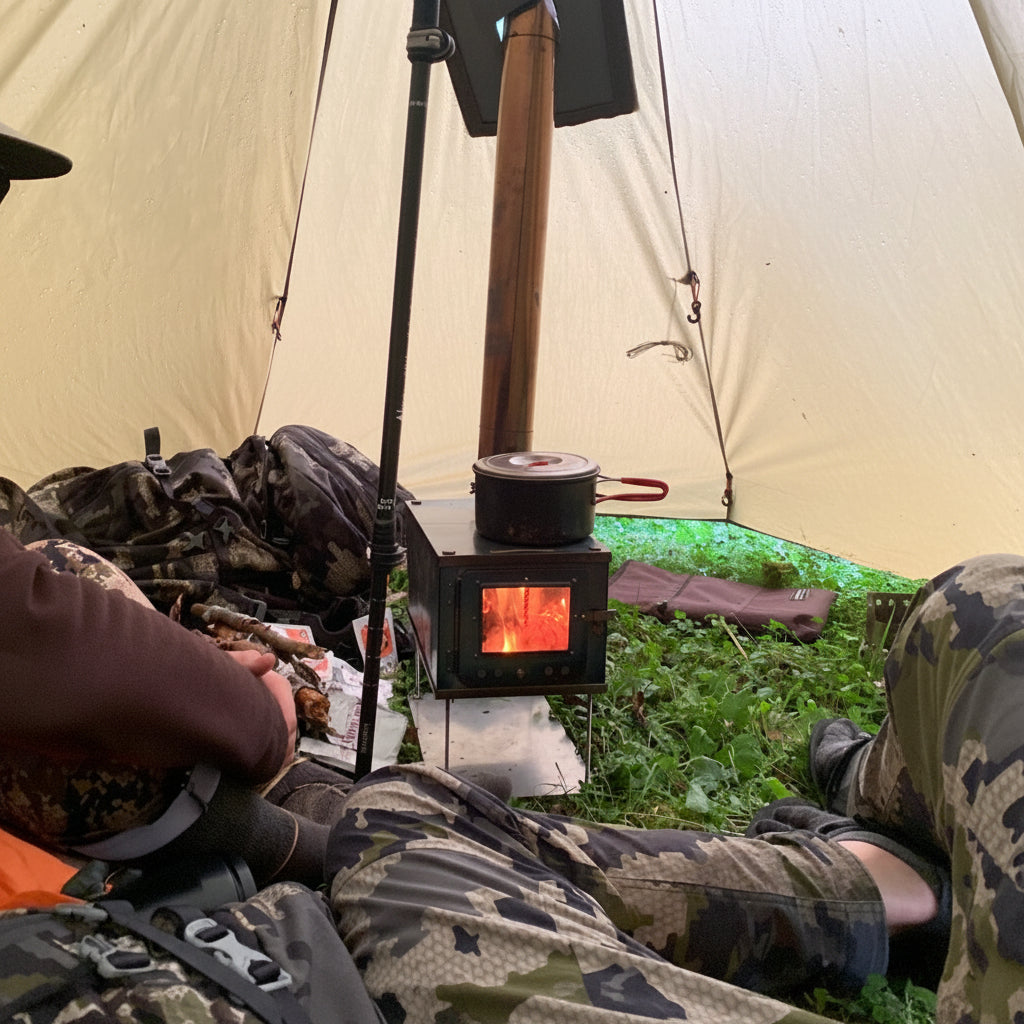
Beyond heating your shelter, a wood stove becomes a practical hub for camp cooking and gear maintenance. Many overlanders use the flat top surface of their stove to simmer water for hot meals, brew coffee, or heat soup—turning your stove into a secondary cooking surface that saves fuel and time.
Cast iron cookware works exceptionally well on wood stoves, distributing heat evenly and developing a natural seasoning over time. Always use a heat-resistant glove or cloth when handling pots and pans, as the stove top gets extremely hot.
Wet gear is a common challenge on extended overlanding trips. Damp socks, gloves, and clothing can be carefully draped on a rack or line positioned safely above the stove—never directly on the hot surface. The gentle, consistent heat dries gear without scorching it, and you'll wake up to dry clothes ready for the next day. Keep flammable items like synthetic fabrics at a safe distance to prevent melting or fire hazards.
You can also use the stove's heat to dry out damp firewood for the next burn, making your fuel more efficient. Place split wood on a rack nearby, and the residual heat will season it faster than air drying alone.
Always maintain proper clearance around your stove when using it for cooking or drying. Never leave items unattended on or near the stove, and ensure nothing blocks airflow or ventilation. With thoughtful placement and attention to safety, your wood stove becomes a multi-purpose asset that enhances comfort and efficiency throughout your basecamp.
Stock Appropriate Firewood
Seasoned hardwoods like oak, maple, and birch burn hotter and longer than softwoods. Avoid wet or green wood, which produces excessive smoke and creosote buildup in your chimney. Bring more firewood than you think you'll need—overlanding trips often extend longer than planned, and running out of fuel in cold weather is uncomfortable and potentially dangerous.
Store firewood in your shelter in a dry location. Keeping it inside takes up valuable space, so be smart with your living area floor-space.
Maintain Your Stove and Chimney
Regular maintenance keeps your stove safe and efficient. Clean ash from the stove's interior regularly—a buildup of ash reduces airflow and heat output. Inspect your chimney and spark arrestor for creosote buildup, especially if you're burning softwoods or wet wood. A chimney brush and rods designed for camping stoves make cleaning easier in the field.
Before each trip, check all connections, seals, and the stove body for damage or corrosion. Replace any worn gaskets or damaged sections to prevent smoke leaks.
Practice Safe Operation
Never leave a burning stove unattended inside your shelter. Always fully extinguish the fire before sleeping or leaving camp. Keep a fire extinguisher or bucket of water nearby as a precaution. Ensure everyone in your party understands how to operate the stove safely and knows where emergency supplies are located.
Ventilate your shelter periodically, even with a stove running, to prevent carbon monoxide buildup. A small crack in a door or window is usually sufficient.
A well-installed wood stove elevates your overlanding experience, providing reliable warmth and a gathering point for your basecamp. Take time to plan your setup carefully, invest in quality equipment, and prioritize safety—and you'll enjoy comfortable, memorable trips into the backcountry.
Wood Stoves and Leave No Trace Camping
Using a wood stove in your overlanding shelter aligns well with Leave No Trace principles when done responsibly. Unlike open campfires, enclosed stoves contain ash and embers, reduce your environmental footprint, and allow you to camp in areas where open fires are prohibited or dangerous.
To practice Leave No Trace with your wood stove, source dead and downed wood from the ground rather than cutting live trees or branches. Collect only what you'll burn while camping. If dead wood is scarce in your area, consider bringing pre-packaged firewood or fuel alternatives to minimize impact on local ecosystems.
When you break camp, scatter cold ash over a wide area away from water sources, or pack it out entirely if you're in a sensitive environment. Never leave partially burned wood or charcoal behind. A small shovel makes it easy to disperse ash properly and leave your campsite indistinguishable from how you found it.
Wood stoves also reduce your reliance on fuel canisters and other packaged fuels, cutting down on waste you need to carry out. By choosing a stove-based heating system and operating it thoughtfully, you can stay warm and comfortable while respecting the wilderness you're exploring.