Avoid Black Fireplace Glass Windows on a Tent Wood Stove
If you've noticed your tent wood stove's fireplace window turning black or dark, you're not alone. This is one of the most common issues stove owners encounter, and the good news is that it's usually preventable and fixable. Understanding what causes window blackening will help you maintain better visibility into your fire and keep your stove looking its best.

What Causes Window Blackening?
The black buildup on your stove window is typically a combination of soot, creosote, and unburned wood particles. When wood burns incompletely or inefficiently, these byproducts accumulate on the glass surface. Several factors contribute to this problem:
- Wet or unseasoned wood — Moisture in the wood creates incomplete combustion, producing excess soot and creosote.
- Poor airflow — Insufficient oxygen in the combustion chamber prevents complete burning and leaves residue on the glass.
- Low fire temperature — Fires that burn too cool don't combust fuel completely, leading to more buildup.
- Dirty or clogged chimney — Restricted airflow from a blocked chimney forces smoke and soot back toward the window.
- Overstuffed firebox — Too much wood at once reduces oxygen availability and efficient burning.
How to Prevent Window Blackening
Prevention is always easier than cleanup. Start by using only seasoned hardwood that has been dried off the ground for at least 6–12 months. Seasoned wood has lower moisture content, which promotes cleaner, more complete combustion. Store your wood in a dry location and keep it covered to prevent moisture absorption.
Maintain proper airflow by ensuring your chimney is clean and unobstructed. A blocked or dirty chimney is one of the leading causes of window blackening. Inspect your chimney pipe daily for blockage. Additionally, avoid overloading your firebox. A smaller, hotter fire burns more efficiently than a large, smoldering one.
Allow adequate oxygen flow by not closing air vents too much. While you want to control the burn rate, completely restricting airflow will cause incomplete combustion and excessive soot production.
Creating a Thick Coal Bed
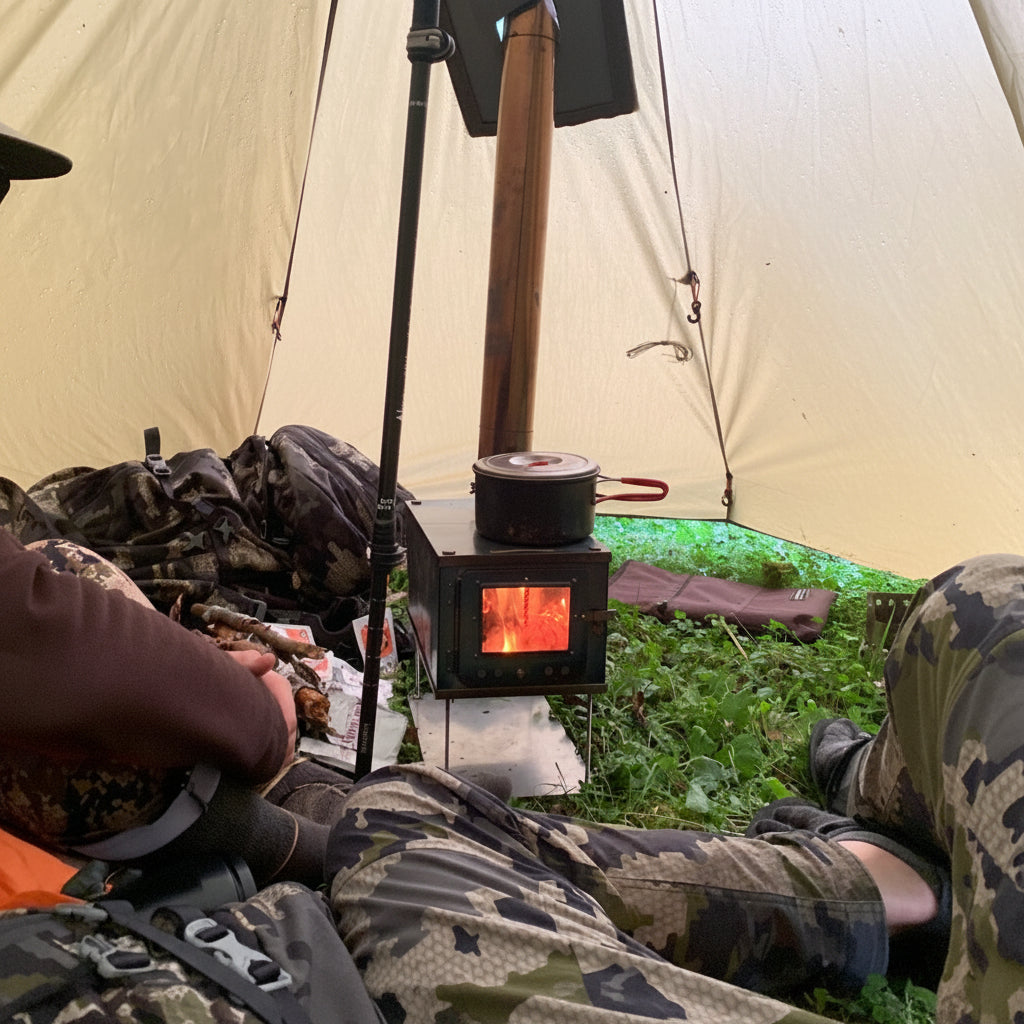
A thick coal bed is essential for maintaining consistent heat output and efficient burning in your tent wood stove. Unlike a small fire that relies on active flames, a robust coal bed provides sustained radiant heat that keeps your tent warm even when you're not actively tending the fire.
To build a thick coal bed, start by burning seasoned hardwood consistently over several hours. Allow wood to burn down completely until you have a substantial layer of hot coals at the bottom of your firebox. This typically requires at least 3–4 hours of continuous burning with properly sized logs. The key is patience — resist the urge to add fresh wood too frequently, as this interrupts the coal-building process.
Once you have an established coal bed, maintain it by adding wood strategically rather than dumping large amounts at once. Place new logs on top of the coals and let them ignite from the heat below. This method preserves your coal layer while continuously feeding the fire. A well-maintained coal bed will glow bright orange or red when you open the door, indicating optimal temperature for efficient heat transfer.
The thicker your coal bed, the longer your stove will hold heat between refueling cycles. This is particularly valuable during cold nights when you want steady warmth without constant attention. Monitor your coal bed regularly — if it becomes too thick and restricts airflow, gently rake it to create small gaps that allow oxygen to reach the burning coals.
Cleaning Your Stove Window
When blackening does occur, cleaning is straightforward. Allow the stove to cool completely before attempting any cleaning. Use a soft cloth or newspaper dampened with water to gently wipe the glass. For stubborn buildup, a specialized glass cleaner designed for wood stoves works well. Avoid abrasive scrubbers or harsh chemicals that can damage the glass or its seal.
Some stove owners find that a damp cloth with a small amount of ash from the firebox creates an effective gentle abrasive for removing light soot. Test this method on a small area first to ensure it doesn't scratch your particular window type.