Best Firewood for Tent Wood Stoves while Camping
Finding and Burning the Best Firewood for Your Tent Wood Stove
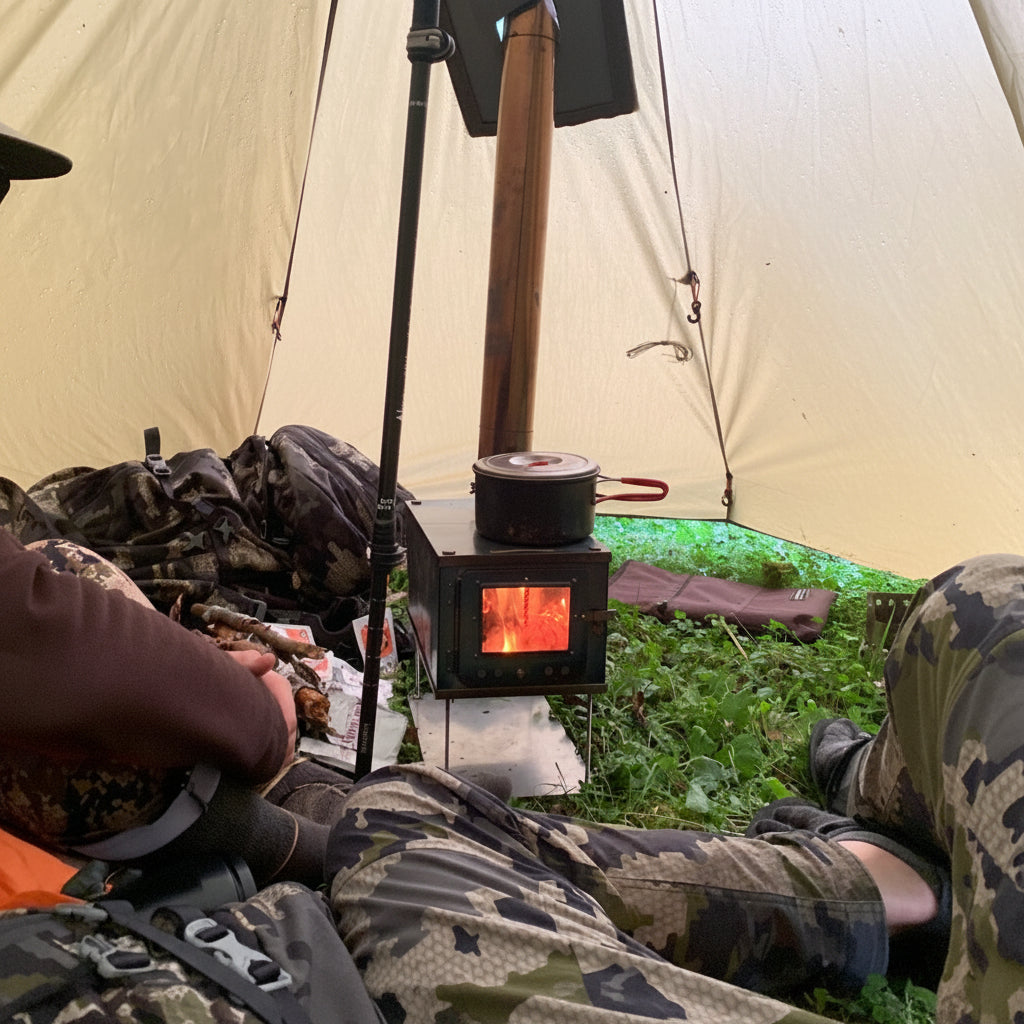
Camping in a hot tent with a wood stove is an incredible way to extend your season into cold weather, but success depends on finding the right firewood in the field. Unlike home heating, you can't always plan ahead—you need to know how to identify quality fuel on the spot and prepare it safely for use in your portable stove.

What to Look for in the Forest
The best tent stove firewood is dead, standing wood that's already seasoning naturally. Look for branches and small logs that have fallen but aren't rotting on the ground. Dead wood that's still attached to trees or standing upright dries faster than wood in contact with soil. Avoid anything that's soft, spongy, or dark—these signs indicate rot and moisture.
Hardwoods are your best bet in any forest. Oak, maple and birch, burn hotter and longer than softwoods. If you're in a coniferous region with mostly pine and fir, they'll work as fuel, but expect more smoke and faster consumption.
Size and Preparation
For a tent stove, smaller is better to create coal base. Aim for pieces roughly pencil-thick to thumb-thick—these ignite easily and burn efficiently in the confined space. Avoid large logs that won't fit or burn too slowly. Split larger pieces by hand or with a small hatchet if needed.
Before loading your stove, snap a piece in half. If it breaks cleanly with a sharp crack, it's dry enough to burn. If it bends or splinters, it still contains too much moisture and will smoke heavily.
You can add larger pieces once coal base is created.
Gathering Safely
Never cut live trees or strip bark—this damages the forest and violates Leave No Trace principles. Stick to fallen branches and dead wood. Gather more than you think you'll need; it's easier to use less than to search for fuel in the dark or cold.
Keep your wood pile organized near your tent but at a safe distance from the stove entrance. Store it under a dry spot to protect it from rain and morning dew.
Burning Efficiently
Start with small, dry kindling and gradually add slightly larger pieces as the fire builds. Don't overload your stove—a steady, controlled fire produces more heat and less smoke than a smoldering pile of wet wood. Open your damper fully during startup, then adjust for heat and draft once the fire is established.
Monitor your stove regularly and never leave it unattended while burning. Keep a fire extinguisher or water source nearby, and ensure your tent has proper ventilation to prevent carbon monoxide buildup.
Regional Considerations
In wet climates, finding truly dry wood is harder. Look for wood under dense tree cover or in sheltered areas where rain doesn't reach. In arid regions, almost any dead wood will work, but prioritize hardwoods for longer burn times and better heat output.
With practice, you'll develop an eye for quality firewood in any forest. The key is gathering small, dry hardwood and burning it efficiently—this keeps your tent warm, minimizes smoke, and lets you focus on enjoying your adventure instead of fighting a stubborn fire.