Burning Wet Wood Inside a Tent Stove Explained
Can You Burn Wet Wood in a Tent Stove?
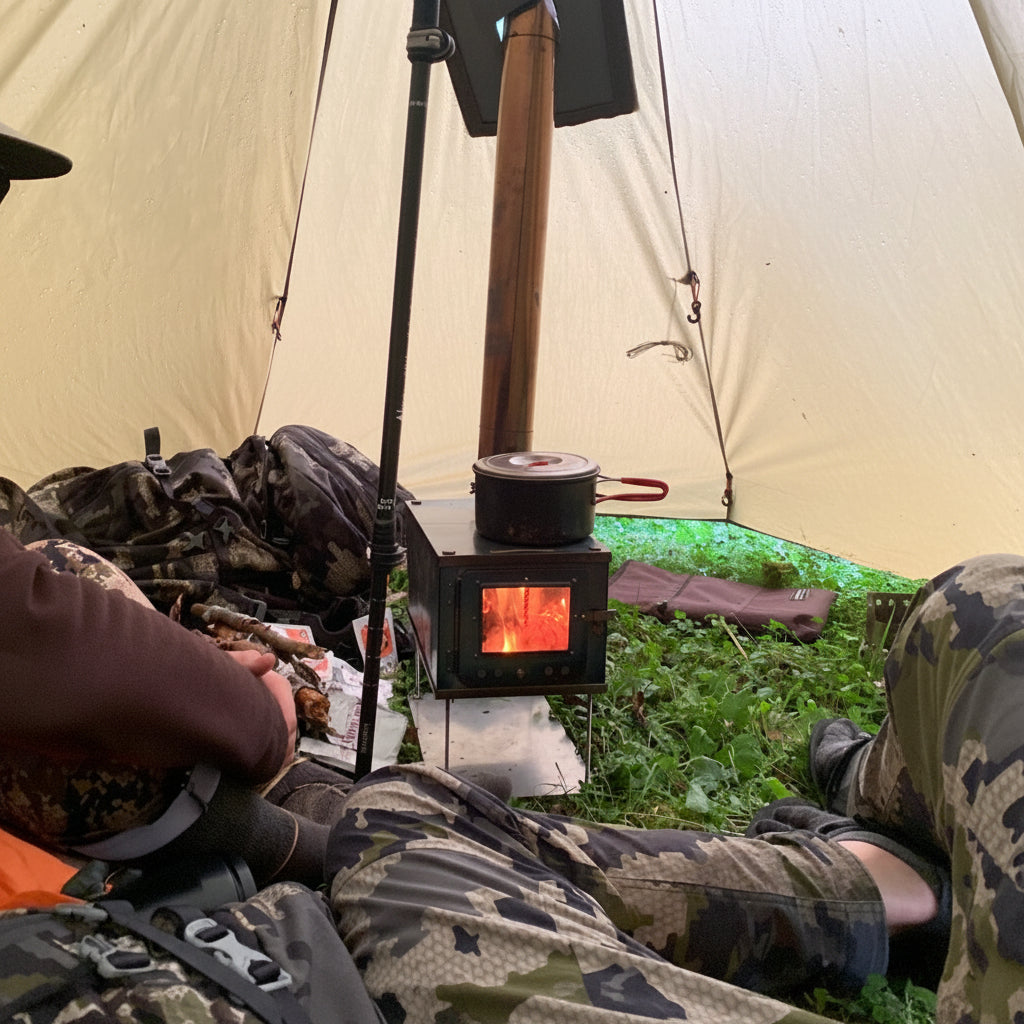
One of the most common questions we hear from hot tent enthusiasts is whether wet wood can be burned in a tent stove. The short answer is: it's not recommended, but understanding why—and what your options are—will help you make the best decision for your next camping trip.

Why Wet Wood Is Problematic
Wet wood creates several challenges inside a tent stove. When wood contains high moisture content, much of the energy produced by combustion goes toward evaporating that water rather than generating heat. This means you'll get less warmth output and more smoke, which can quickly fill your tent with an unpleasant haze and reduce visibility.
Additionally, wet wood produces more creosote—a flammable byproduct that builds up inside your chimney and stove pipes. Over time, creosote accumulation increases the risk of dangerous chimney fires, especially in confined spaces like a hot tent. Poor combustion also creates more ash and requires more frequent cleaning of your stove's interior.
Moisture Content Matters
Wood with moisture content above 20% is considered "wet" and will burn inefficiently. Properly seasoned firewood should have moisture levels between 15–20%. If you're caught without dry wood, you can test moisture by splitting a log and checking the interior—it should feel dry to the touch and have low weight relative to its size.
What to Do If You Only Have Wet Wood
If you're in a situation where wet wood is your only option, start a fire with the driest material you can find—bark, dead branches, or natural tinder—and allow the stove to reach a high temperature. Then gradually introduce small pieces of wet wood to the fire. The intense heat may eventually dry and ignite the wood, though expect reduced efficiency and increased smoke.
A better strategy is prevention: always gather extra firewood and store it in a dry location, elevated off the ground and protected from rain and snow. Even in damp conditions, dead wood standing on trees or protected under overhanging branches will be drier than fallen logs on the ground.
Best Practices for Tent Stove Fuel
Collect seasoned wood that can be naturally found in the forest off the ground. Split wood (which exposes more dry interior surface) ignites more easily than rounds. Prepare more wood than you think you'll need—cold, damp nights require more fuel, and you'll appreciate the security of having plenty on hand.
Your hot tent stove is designed to perform best with dry, quality fuel. Treating it well with proper wood selection ensures safer, warmer, and more enjoyable winter camping experiences.