Don't Burn Charcoal Briquettes or Coal in a Tent Wood Stove Reasons
Why You Shouldn't Burn Charcoal Briquettes or Coal in Your Tent Wood Stove
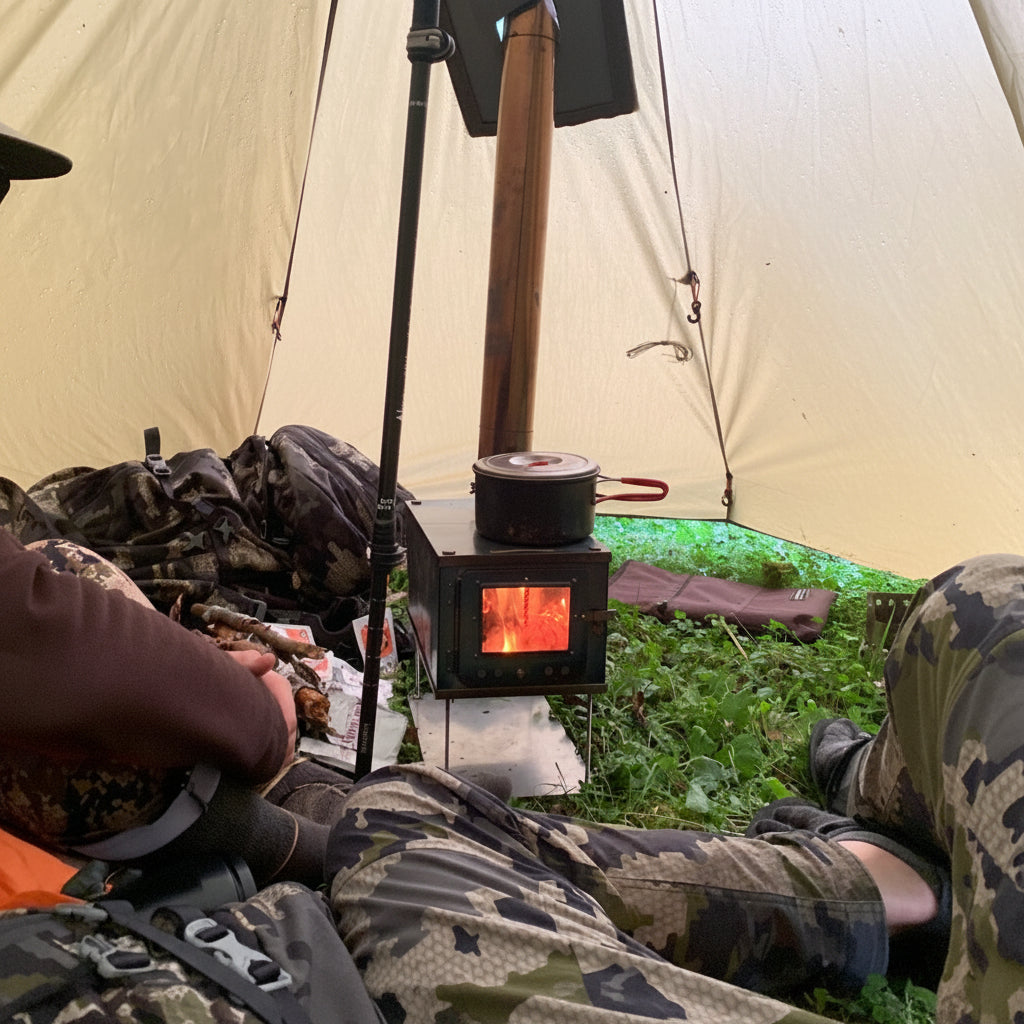
When it comes to heating your tent with a wood stove, fuel choice matters more than you might think. While charcoal briquettes and coal might seem like convenient alternatives to firewood, they pose serious risks to both your safety and your stove's longevity. Understanding why these fuels don't belong in your tent stove is essential for any backcountry camper or glamper.

Carbon Monoxide Production
The most critical reason to avoid charcoal and coal is the danger of carbon monoxide (CO) poisoning. Both fuels produce significantly higher levels of carbon monoxide when burned in enclosed spaces compared to seasoned firewood. Inside a tent—even one with ventilation—CO can accumulate to dangerous levels quickly. Carbon monoxide is odorless and colorless, making it impossible to detect without a monitor. Exposure can cause headaches, dizziness, nausea, and in severe cases, loss of consciousness or death.
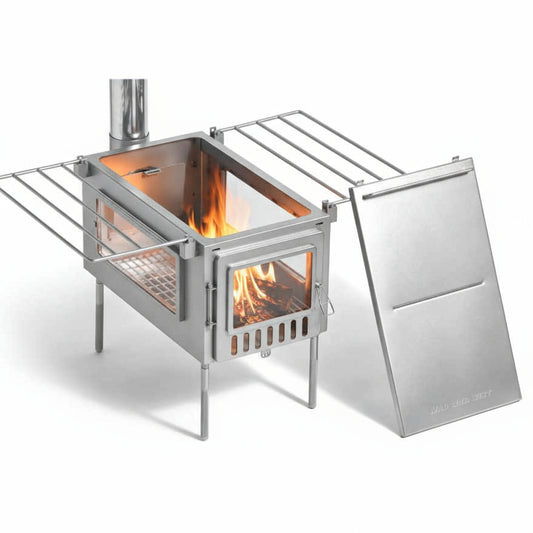
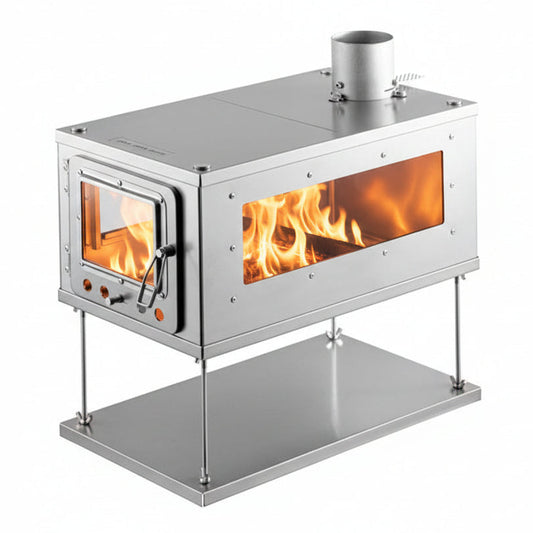
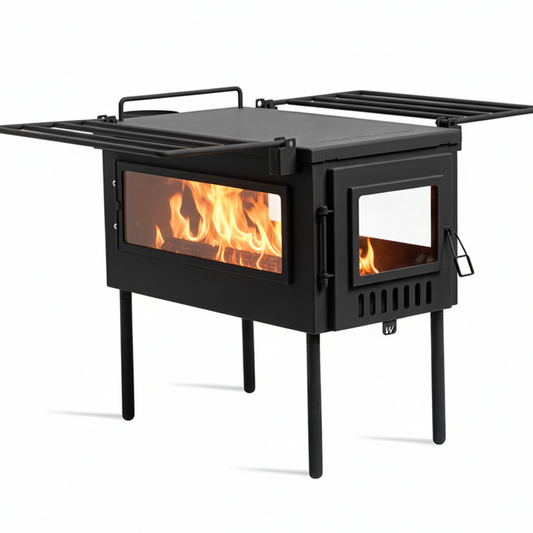
Wood stoves designed for tents are engineered with specific airflow and combustion characteristics optimized for wood. Charcoal and coal burn at different temperatures and produce different combustion byproducts, making them incompatible with this design.
Excessive Heat and Damage
Charcoal briquettes and coal burn hotter and longer than wood, which can cause your stove's metal components to warp, crack, or fail prematurely. The intense, sustained heat can damage seals, welds, and the chimney system. What might seem like a benefit—longer burn time—actually becomes a liability when it exceeds what your stove was built to handle. Repairs or replacement of a damaged stove are far more expensive than buying quality firewood.
Creosote and Chimney Buildup
Coal and charcoal produce different combustion residues than wood. These can accumulate in your chimney and stovepipe more aggressively, increasing the risk of blockages and chimney fires. Even in a tent environment, a chimney fire is a catastrophic safety hazard that can spread to your shelter.
Incomplete Combustion and Smoke
These fuels often produce more smoke and incomplete combustion byproducts in a wood stove environment. This not only creates an unpleasant camping experience but also increases indoor air pollution and the risk of respiratory irritation, especially in the confined space of a tent.
What to Burn Instead
Stick with seasoned hardwood—oak, maple, birch, or ash are excellent choices. Seasoned wood has a moisture content below 20%, burns cleaner, produces less creosote, and generates steady, manageable heat. If you're car camping, bring firewood from home or purchase it locally at your destination. For backcountry trips, gather dead and downed wood that's been dried off the ground, and appropriate for your stove size.
Your tent wood stove is a precision tool designed for a specific fuel type. Respecting that design keeps you warm, safe, and ready for your next adventure.