Figuring Out BTU Rating of Tent Wood Stoves
Understanding why there is no accurate way to determine the BTU rating of a tent wood stove, is essential for choosing the right heating solution for your camping setup. BTU, or British Thermal Unit, measures the amount of heat energy a stove produces, and knowing the variables can help you match your stove to your tent size and climate conditions.

What Is a BTU Rating?
A BTU is a standard unit of measurement that quantifies thermal energy. One BTU represents the amount of heat needed to raise the temperature of one pound of water by one degree Fahrenheit. When applied to tent wood stoves, the BTU rating can tell you how much heating power the stove can deliver to your space. Higher BTU ratings mean more heat output, which can be useful for larger tents or colder environments.
No Accurate Manufacturer's Specifications
Reputable manufacturers do not clearly state the BTU output, because there are too many variables to account for, which include wood type, moisture content of the firewood, and burn rate. The person operating the campfire can also be a strong variable.
Calculate Based on Tent Volume
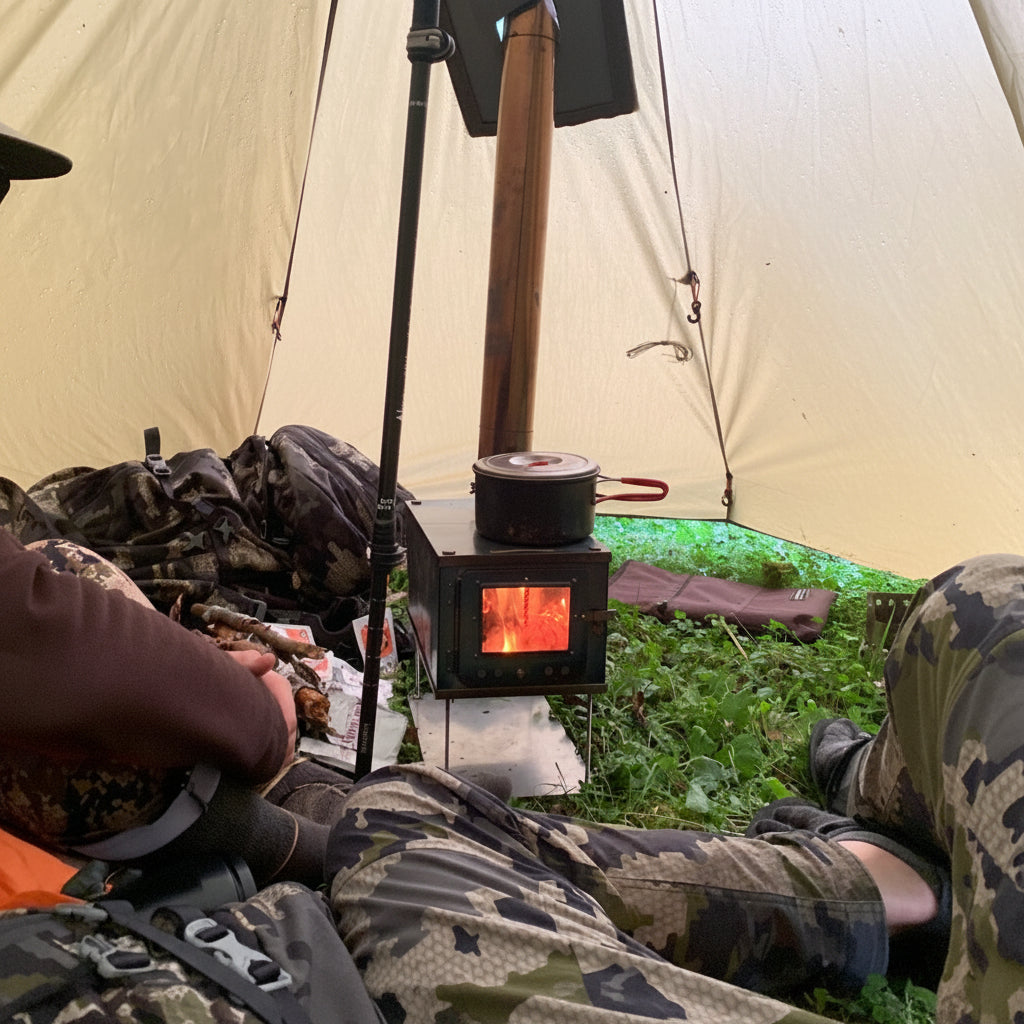
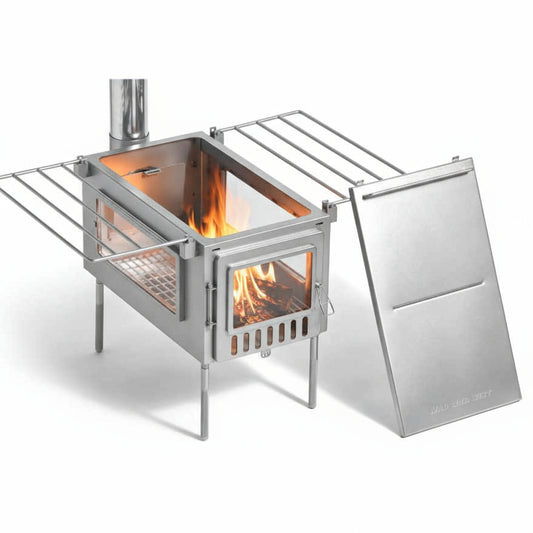
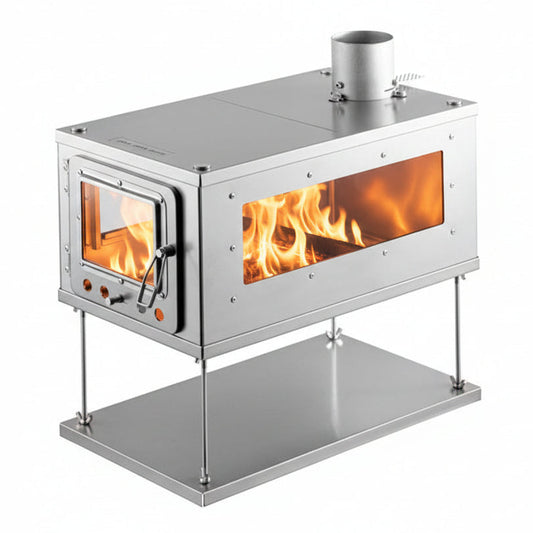
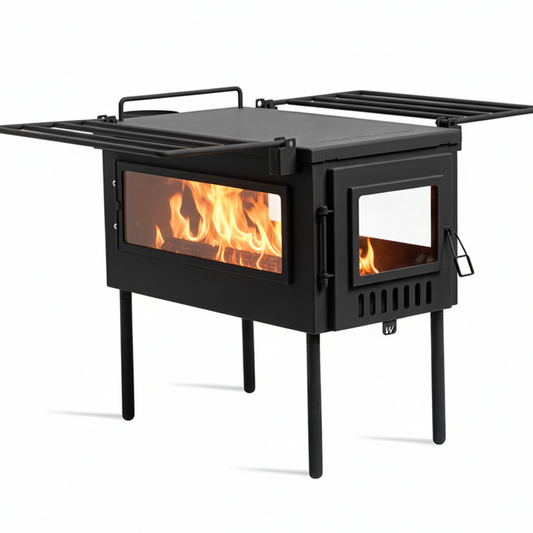
Tent wood stoves come in different sizes, and each has its own heating footprint. Smaller compact stoves typically heat between 100 and 200 square feet, making them ideal for 1p - 2p tents. Mid-sized stoves generally cover 200 to 400 square feet, which works well for 4p to 8p sized shelters. XL models can heat 400 square feet or more, depending on the stove's construction and firewood quality.
The key factor is the stove's firebox size and the amount of heat it generates. A larger firebox holds more wood and burns hotter, extending your heating range and allowing you to maintain warmth for longer periods between refueling.
Consider Wood Type and Moisture
The actual heat output of your stove depends heavily on the wood you burn. Hardwoods like oak and maple can produce BTUs than softwoods like pine or spruce. Seasoned wood (dried for at least six months) burns hotter and more efficiently than green or wet wood. Wet wood can reduce effective BTU output by 20–30 percent, so always use dry, well-seasoned firewood for optimal performance.
Account for Environmental Factors
External conditions can affect how effectively a stove's BTU output heats your tent. Wind, ambient temperature, tent insulation, and ventilation all play a role. A stove with an example output of 12,000 BTU will perform differently in a well-insulated canvas tent versus a thin silnylon shelter, or in mild spring weather versus harsh winter conditions.
Test and Adjust
Once you have your stove set up, monitor how effectively it heats your tent during actual use. If the interior temperature rises too slowly or unevenly, you may need a larger stove model. Conversely, if the stove makes your tent uncomfortably hot or requires constant adjustment, downsizing is more suitable. Real-world performance is the ultimate test of whether a stove's BTU output meets your needs.