Longer Tent Wood Stove Burn Times by Banking Your Coals
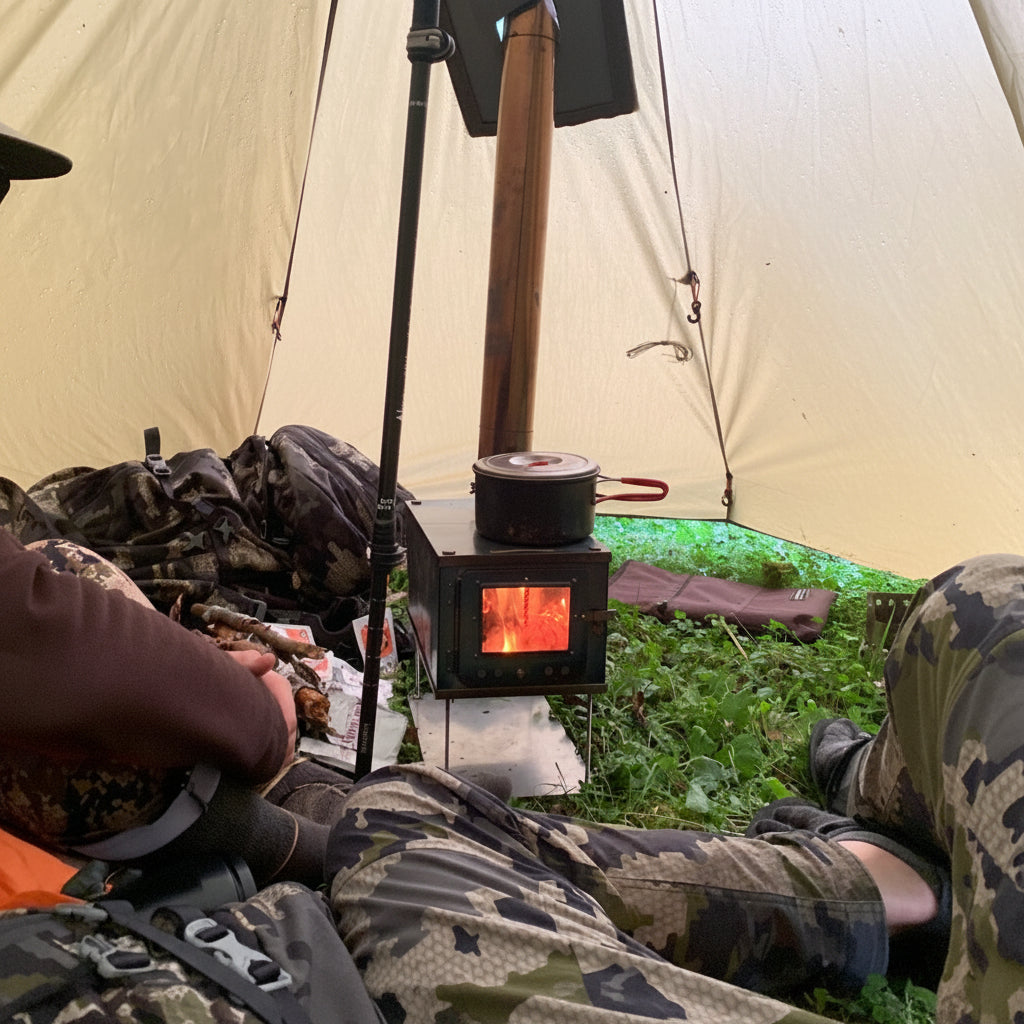
Banking coals in a tent wood stove is a time-honored technique that lets you maintain a steady, long-lasting fire with minimal effort. Whether you're heating your tent through a cold night or keeping your stove warm during the day, mastering this skill will transform how you manage your fire.

What Does Banking Coals Mean?
Banking coals is the practice of arranging hot coals and ash in your stove to slow down the burn rate and extend the life of your fire. By strategically covering active coals with ash, or large firewood pieces, and arranging them compactly, you reduce oxygen flow to the fire, which slows combustion and allows your fuel to burn longer and more efficiently.
Why Bank Your Coals?
There are several practical reasons to bank your coals:
- Extended burn time: A banked fire can last several hours or even overnight, reducing the need to add wood frequently.
- Fuel efficiency: You use less wood overall because the fire burns slower and more completely.
- Consistent heat: A banked fire produces steady, even warmth rather than intense spikes and drops.
- Safety: A slower-burning fire is easier to control and monitor, especially in enclosed spaces like hot tents.
How to Bank Your Coals
Step 1: Let Your Fire Burn Down
Allow your wood to burn down to a bed of hot coals and ash. You want a solid foundation of glowing embers, not active flames. This typically takes 1–2 hours depending on your wood type and stove size.
Step 2: Rake the Coals Together
Use a poker or metal rod to gently rake the hot coals toward the center of your stove, creating a compact mound. Push any larger pieces of charred wood into the center as well. The goal is to concentrate the heat in one area.
Step 3: Cover with Ash or Wet Wood
Carefully rake ash from the edges of your stove over the mound of coals. The ash acts as an insulator and restricts airflow, slowing the burn. Don't smother the coals completely—you want a thin layer of ash that still allows some oxygen to reach the fire. You can also add a large piece of firewood.
Step 4: Close Your Damper Partially
Adjust your stove's damper or air vents to the lowest setting that keeps the coals glowing. This further reduces oxygen and slows combustion. If your stove has a door, close it securely.
Step 5: Monitor and Adjust
Check your stove periodically. If the coals are burning too quickly, add more firewood. If the fire is dying out, gently stir the coals and increase the damper slightly to revive it.
Tips for Success
Use hardwoods like oak or maple for banking—they produce more coals and burn longer than softwoods. Avoid overstuffing your stove with wood before banking; a moderate bed of coals works better than a massive pile. Keep your stove clean and free of excessive ash buildup, which can block airflow and create safety hazards. Always ensure your stove is properly vented and that you're using it in a well-ventilated space.
With practice, banking coals becomes second nature, and you'll enjoy longer, more efficient fires that keep you warm through the night.