Positioning a Tent Wood Stove Correctly Explained
Positioning Your Hot Tent Stove for Maximum Safety and Warmth
One of the most critical decisions when setting up a hot tent stove is placement. Get it right, and you'll enjoy even heat distribution, efficient fuel consumption, and a safe, comfortable night in the field. Get it wrong, and you risk fire hazards, poor performance, and wasted energy.
Here's what you need to know about stove positioning.

Center of the Tent is Ideal
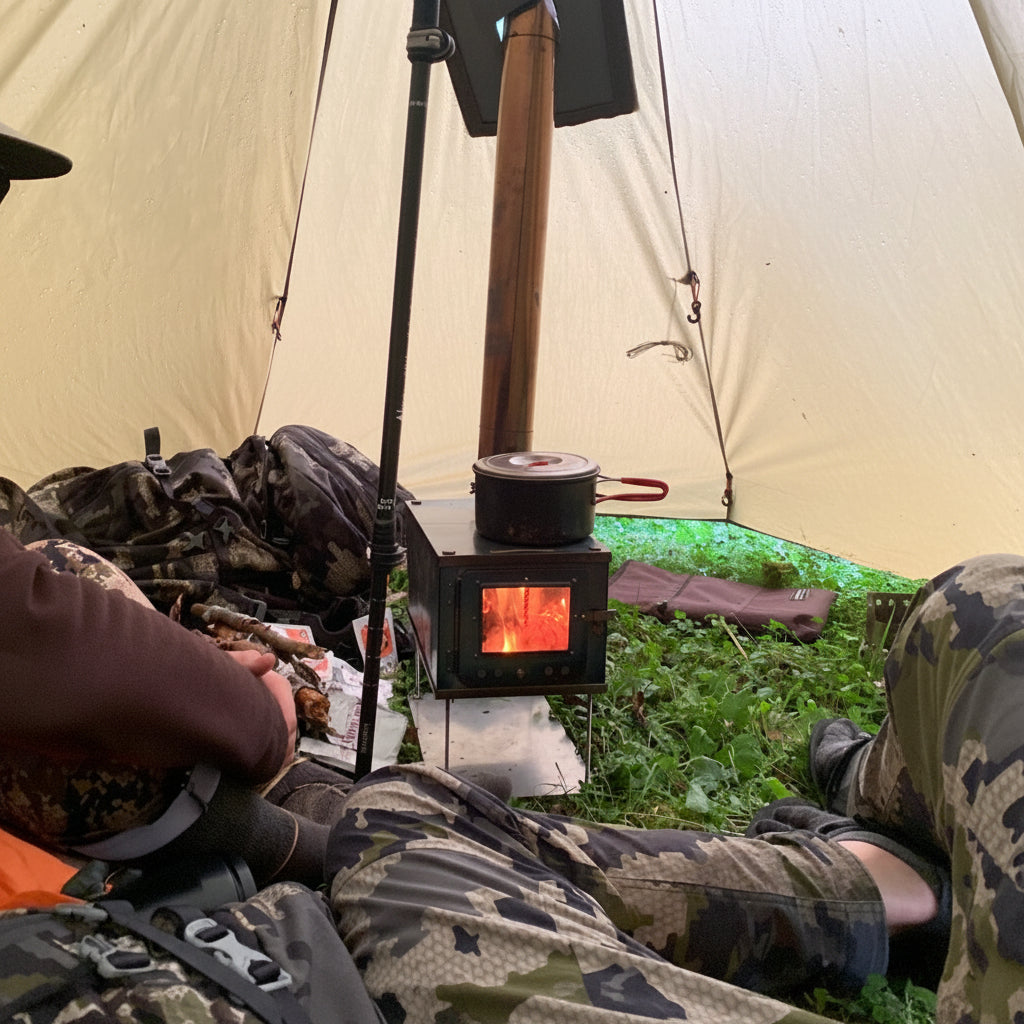
The best position for your hot tent stove is as close to the center of your tent as practical. This allows heat to radiate outward in all directions, warming the entire space evenly. A centered stove also makes it easier to manage airflow and reduces the risk of one side of the tent getting too hot while the other stays cold.
If your tent has a peaked or A-frame design, positioning the stove slightly forward of true center can help direct warm air toward the sleeping area while keeping the stove itself away from the door.
Chimney Pipe Length and Heat Output
One of the most overlooked factors in hot tent stove performance is how much chimney pipe extends inside the tent. The more chimney pipe you position inside the tent before it exits through the roof, the more heat your stove will radiate into your living space.
Here's why: chimney pipe that sits inside the tent acts as a heat exchanger. As exhaust gases travel up the pipe, the pipe walls absorb and release that thermal energy into the tent air. A longer interior chimney section means more surface area for heat transfer—and noticeably warmer conditions with the same amount of wood.
Conversely, if your chimney exits the roof too quickly with minimal interior pipe, more heat escapes outside rather than warming your shelter. You'll burn more fuel to achieve the same comfort level.
The practical balance: Extend your interior chimney pipe as long as safely possible while maintaining the 3–4 foot clearance rule from tent fabric. Most users find that 18–36 inches of pipe inside the tent provides a meaningful heat boost without creating clearance or draft issues. Always verify your specific stove and tent manufacturer's guidance, as designs vary.
Distance from Fabric Walls
Maintain at least 3–4 feet of clearance between your stove and any tent fabric. This includes the walls, roof, and any internal gear. Hot tent canvas is designed to withstand high temperatures, but excess proximity increases fire risk and can degrade the material over time. The clearance also allows for proper air circulation around the stove, which improves draft and combustion efficiency.
Remember that heat radiates in all directions—not just upward. Keep combustible items like sleeping bags, packs, and clothing well away from the sides and back of the stove.
Height Considerations
Your stove should sit on a level, non-flammable surface. Many users place their stove on a fire-resistant mat to protect the tent's floor and ensure stability. The stove legs should be fully supported and level; an uneven stove can affect draft and create safety hazards.
Keep the chimney vertical or at a slight angle (no more than 15 degrees) to maintain optimal draft. The chimney exit should penetrate the tent roof cleanly, with proper stove jack pipe hole.
Wind and Weather Protection
Position your tent itself with wind direction in mind. A stove placed near the downwind end of the tent is less likely to experience draft problems from external gusts. However, always prioritize interior safety and heat distribution over wind considerations—moving the stove to compensate for wind direction is rarely necessary if your chimney is properly installed.
Fuel Access and Fire Maintenance
Position your stove so you can safely load fuel without reaching across the stove or contorting yourself. You should be able to add wood from a seated or kneeling position. This also reduces the chance of accidental contact with hot surfaces.
Ventilation and Draft
Good draft depends on a clear path from the stove through the chimney and out of the tent. Position the stove away from dead zones—areas where air doesn't flow freely. Avoid placing the stove directly in front of a door or window opening, which can create backdraft or uneven heating.
Final Checklist
- Stove is centered or slightly forward of center
- At least 3–4 feet of clearance from all fabric surfaces
- Stove sits on a level, fire-resistant base
- Chimney is vertical or nearly so
- Easy access to fuel from a safe position
- No combustible items within 4+ feet in any direction
- Good airflow around the stove and clear chimney path
Proper positioning takes a few minutes during setup but pays dividends in safety, comfort, and stove performance. Once you've found the right spot in your tent, mark it with a small piece of tape or reference point—consistency across trips makes setup faster and safer.