The Best Beginner Hot Tent Wood Stove Are Simple to Set-up
When you're new to hot tent camping, choosing the right tent wood stove can feel overwhelming. There are dozens of options out there, each with different sizes, materials, and features. But the good news is that finding a beginner-friendly hot tent wood stove doesn't have to be complicated. The best choice for you depends on a few key factors: tent size, weight capacity, ease of use and setup, and your budget.

What Makes a Good Beginner Hot Tent Stove?
A beginner stove should be forgiving. That means it heats efficiently without requiring constant adjustment, it's simple to assemble and operate, and it won't punish you for minor mistakes. Look for a stove with straightforward airflow controls, a durable construction that can handle repeated use, and a design that fits comfortably inside your tent without taking up excessive space.
Weight matters too. If you're backpacking or hiking to your campsite, every pound counts (choose titanium). But if you're car camping or establishing a base camp, a slightly heavier stove (stainless steel) with better heat retention might be worth the trade-off.
Key Features to Consider
Size and Heat Output: Match your stove to your tent. A stove that's too small won't keep you warm; one that's too large can overheat your tent and waste fuel. Most beginners find that a compact to mid-sized stove works best for three-season camping.
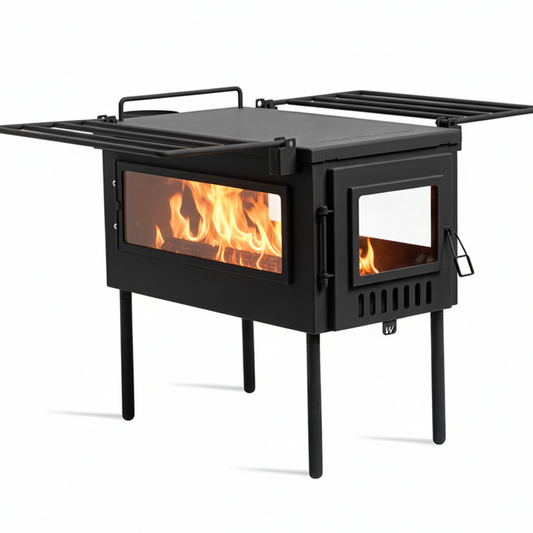
Material and Durability: Stainless steel and high-quality steel that hold more firewood and weight on the stovetop, but are heavier. Titanium stoves are more ultralight for backcountry use. Watch out for thinner low quality materials that may not last as long from some manufacturers. Consider how often you'll use your stove and in what conditions.
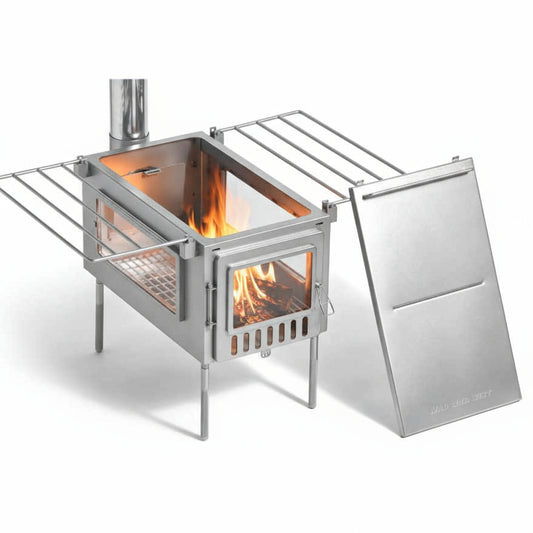
Freestanding vs Non-Freestanding Stoves: Freestanding wood stoves can be setup without a tent and standalone like a BBQ or campfire. Non-freestanding stove require a tent with stove jack to support the chimney flue pipe.
Ease of Assembly: Most freestanding stoves require minimal setup—just place and light. Others need more set up time, like non-freestanding titanium stoves. As a beginner, simpler is better while you're learning the basics.
Fuel Efficiency: A well-designed stove uses less wood to produce more heat. This saves you time gathering fuel and reduces the amount you need to process while camping.
Freestanding Stainless Steel Stoves
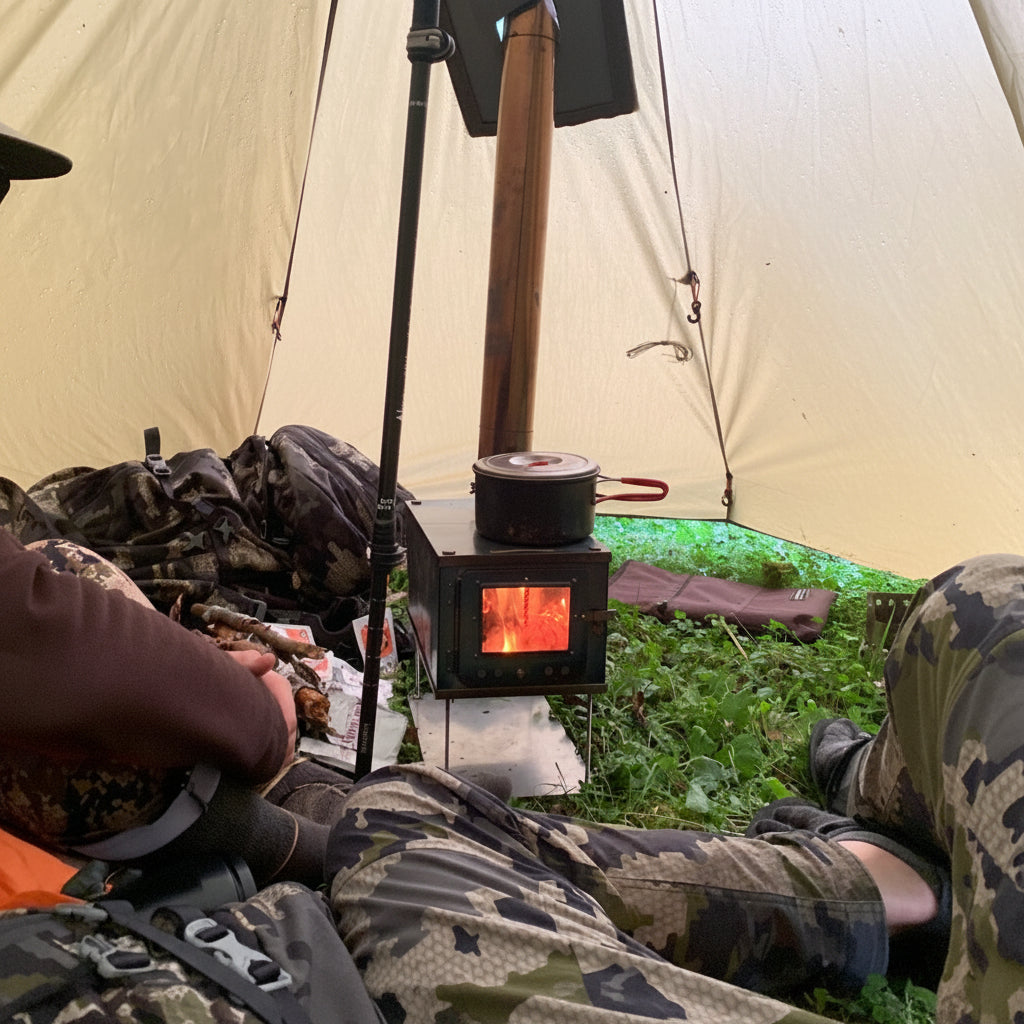
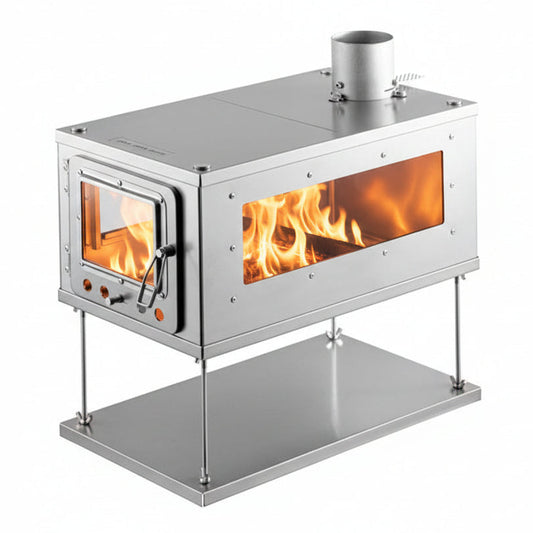
Freestanding stainless steel stoves are an excellent choice for beginners because they combine durability with straightforward operation. Unlike stoves that require more complex assembly, freestanding models sit independently in your tent and connect to a simple vertical nesting stove pipe that vents through your tent's stove jack.
The stainless steel construction resists corrosion and rust, which means your stove will look and perform well even after multiple seasons of use. Stainless steel also retains heat effectively, so you get consistent warmth throughout the night without constantly feeding the fire. This is a huge advantage when you're trying to sleep.
What makes freestanding stainless steel stoves particularly beginner-friendly is their simplicity. There are fewer moving parts to understand, and the basic operation is intuitive: stack the nesting pipe, load wood, adjust the air intake and damper, and let it burn. The compact footprint means they fit well in most hot tent setups without dominating your interior space, leaving room for sleeping gear and other essentials.
The main trade-off is weight. Stainless steel stoves tend to be heavier than titanium stoves, so they're better suited for overlanding, car camping or semi-permanent base camps rather than ultralight backpacking. But if you're establishing a comfortable camp where you'll spend multiple nights, that extra weight is worth the reliability and longevity you gain.
Getting Started with Your New Stove
Once you've chosen your stove, take time to practice at home or in your yard before heading into the backcountry. Learn how to light it safely, adjust the airflow, and manage the fire. Understand how your tent's ventilation works with the stove pipe to prevent condensation and ensure proper draft.
Start with shorter trips in milder weather. This gives you confidence and lets you troubleshoot any issues before tackling more challenging conditions. Keep your stove clean and inspect it regularly for damage or wear.
The right beginner hot tent wood stove will transform your camping experience, keeping you warm and comfortable through cold nights. Take your time choosing, invest in quality, and you'll have a reliable companion for years of adventures ahead.