Using Wood Stoves During Campfire Burn Bans
Staying Warm During Campfire Burn Bans: Your Wood Stove Solution
Campfire burn bans can put a damper on your outdoor adventures, but they don't have to mean sacrificing warmth and comfort. Whether you're dealing with seasonal fire restrictions or local air quality concerns, a portable wood stove offers a practical alternative that keeps you cozy while respecting fire safety regulations.

Understanding Burn Bans and Your Options
Burn bans are typically implemented during dry seasons or when air quality becomes a concern. These restrictions often prohibit open campfires but may allow enclosed heating devices like wood stoves with spark arrestors. The key difference is containment—a wood stove burns fuel in a controlled environment, reducing smoke dispersal and minimizing fire risk compared to an open flame.
Before heading out, always check local regulations in your camping area. Many regions explicitly permit wood stoves during burn bans, but rules vary by location and season. A quick call to the ranger station or a visit to the local forest service website can confirm what's allowed where you're planning to camp.
Why a Wood Stove Works During Restrictions
Wood stoves are engineered for efficiency and safety. They contain the fire within a metal chamber, directing heat where you need it while containing ash and embers. This design makes them compliant with many burn ban regulations because they significantly reduce the risk of uncontrolled fire spread. Plus, a quality stove produces less smoke than a traditional campfire, which helps maintain air quality—often the reason behind the ban in the first place.
Wood Stoves as a Standalone Campfire Substitute
A wood stove isn't just a workaround during burn bans—it's a complete replacement for traditional campfires that offers distinct advantages year-round. Unlike an open fire that requires constant tending and produces unpredictable heat distribution, a wood stove delivers consistent warmth in a compact, controllable package.
The beauty of a wood stove lies in its efficiency. It converts more of your firewood's energy into usable heat, meaning you burn less wood to stay warm. This translates to fewer trips gathering fuel and less environmental impact on your camping area. For backcountry trips where Leave No Trace principles matter, a stove's minimal footprint and reduced fuel consumption make it an environmentally conscious choice.
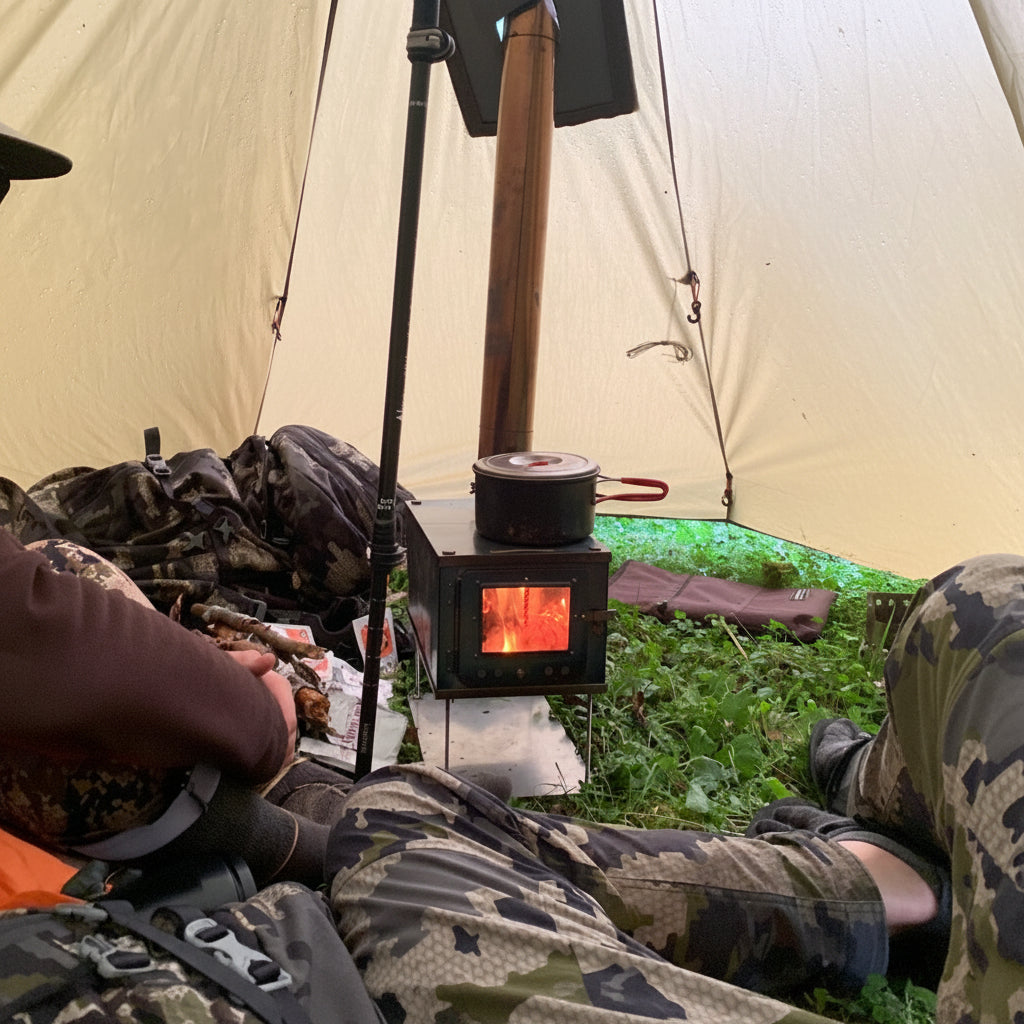
Beyond heat, a wood stove transforms your camping experience. You can cook on top of many models, brew coffee or tea, and even dry damp gear—all things that are awkward or impossible with a traditional campfire. The contained design also means less sparks flying around using spark arrestor, no embers to worry about, and no smoke constantly shifting with the wind to irritate your eyes.
For car camping and overlanding, a wood stove becomes the centerpiece of your camp setup. It creates a focal point for gathering without the mess and unpredictability of an open fire. In winter camping or hot tent setups, it's simply indispensable—providing reliable warmth that an open fire simply cannot match in an enclosed or semi-enclosed space.
Choosing the Right Stove for Your Setup
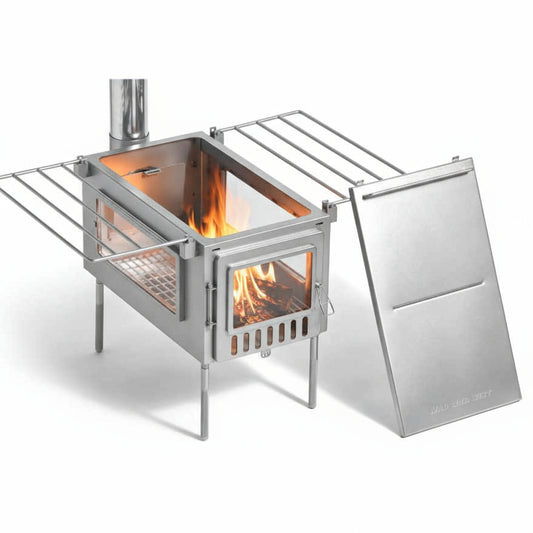
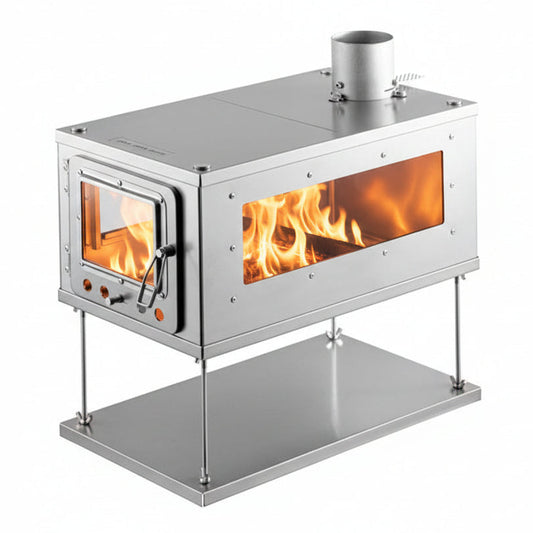
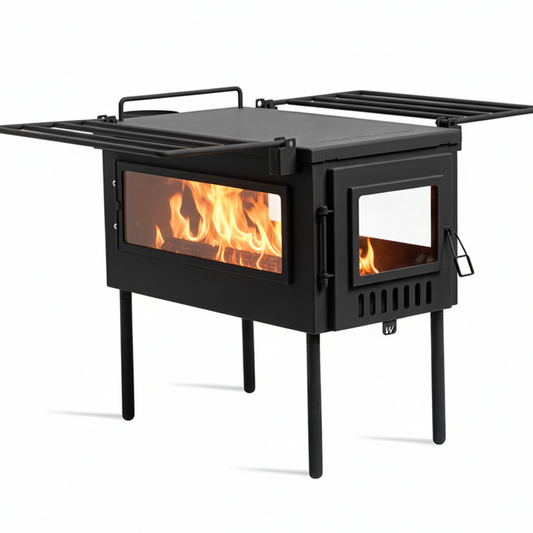
Portable wood stoves come in various sizes and styles, from compact models perfect for backpacking to larger units ideal for car camping or overlanding. Consider your tent size, the climate you'll be camping in, and how much heat you actually need.
Look for stoves with proper chimney pipes that safely direct smoke away from your tent. Ensure your stove has adequate clearance from tent walls and any flammable materials. Many modern stoves are designed specifically for use inside tents, with safety features that make them reliable even in close quarters.
Best Practices for Safe Operation
Even when burn bans permit wood stoves, responsible use is essential. Use seasoned firewood—it burns cleaner and more efficiently than wet or green wood. Keep your stove well-maintained, checking for cracks or damage before each trip. Always have a fire extinguisher or water source nearby, and never leave a burning stove unattended.
Proper ventilation is critical. Ensure your tent has adequate airflow to prevent carbon monoxide buildup. Most hot tent stoves are designed with this in mind, but always follow the manufacturer's guidelines for safe operation in enclosed spaces.
Making the Most of Your Camping Season
A reliable wood stove extends your camping season and gives you independence from fire restrictions. You can enjoy warmth and comfort even when open fires aren't permitted, turning a potential limitation into an opportunity for year-round outdoor adventures. With the right equipment and knowledge, burn bans don't have to end your camping plans—they just change how you stay warm.