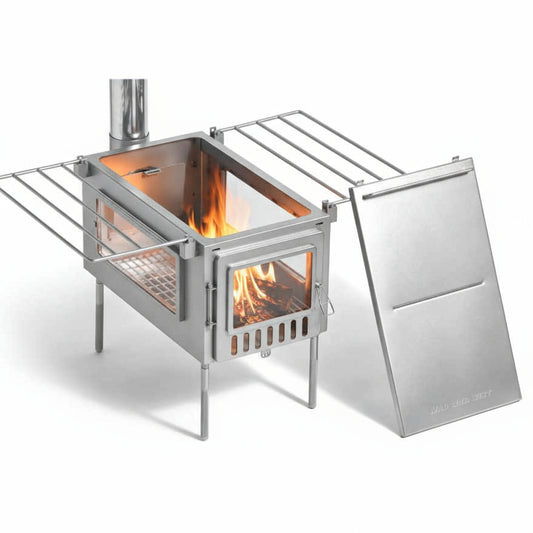
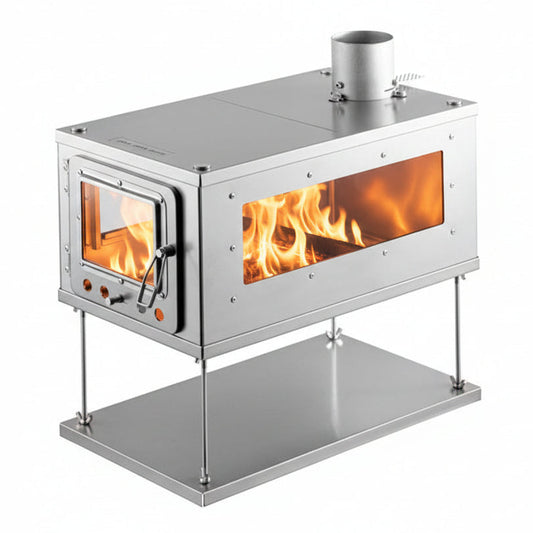
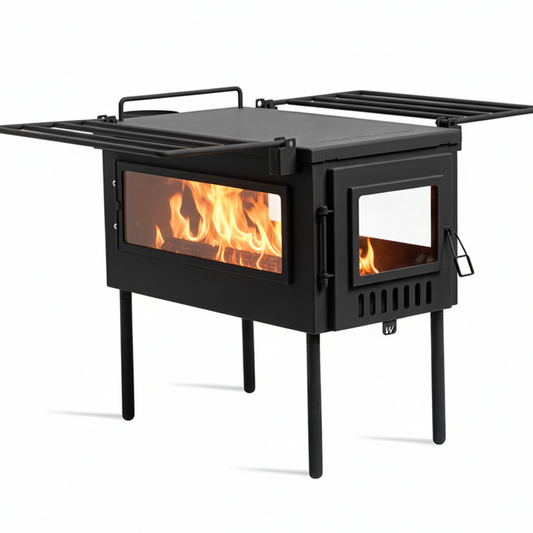
Weight of a Titanium Tent Stove Buyers Guide
Titanium tent wood stoves are prized for their ultralight durability, but weight and material quality are two sides of the same coin. Understanding what makes a titanium stove reliable—and what doesn't—helps you make an informed purchase.

The Weight Question
A quality titanium hot tent stove typically weighs between 2 to 8 pounds, depending on size and design. Smaller models designed for solo or two-person tents may weigh closer to 2 pounds, while larger expedition stoves can reach 8 pounds or more. This weight includes the stove body and basic hardware. Added components like chimney pipe, dampers, and spark arrestors will increase the total system weight.
The appeal of titanium isn't that it's the lightest material available—it's the balance. Titanium offers exceptional strength-to-weight compared to steel, meaning you get durability without unnecessary bulk. A comparable steel stove would weigh 40 to 50 percent more.
Why Titanium Thickness Matters
Not all titanium is created equal, and thickness is where compromises become visible—literally. Thinner titanium warps more easily than thicker stock. When exposed to intense, uneven heat from a fire, thin titanium panels flex and distort. This warping can lead to poor seals, air leaks at joints, and reduced heat efficiency. Over repeated heating and cooling cycles, warping accelerates, especially if the stove is subjected to hot spots or inconsistent loading.
Warping also makes repairs difficult. A bent panel is harder to seal, and replacing warped sections becomes costly. In extreme cases, warped stoves lose structural integrity and become unsafe.
The Cost-Cutting Problem
Many budget manufacturers use thin titanium specifically to hit lower price points. By reducing material thickness by just 0.5 to 1 millimeter, production costs drop significantly. The problem is immediate and cumulative:
- Rapid warping occurs within the first season of heavy use, especially in cold climates where thermal shock is severe.
- Reduced lifespan means your "budget" stove becomes unreliable after 1–3 seasons instead of lasting 10+ years.
- Poor heat retention because warped seams leak smoke into the tent walls.
- Safety risks from structural failure or uncontrolled drafts.
Premium titanium stoves use thicker stock—typically .5 to 2.5 millimeters—to withstand thermal cycling and maintain performance. The upfront cost is higher, but the durability justifies it for serious expeditions and frequent use.
What to Look For
When evaluating a titanium stove, ask the manufacturer about material thickness, metal certifications and thermal testing. Reputable makers will provide specifications and explain how their design resists warping. Be skeptical of suspiciously low prices for titanium; quality titanium construction is an investment.
Weight alone shouldn't drive your decision. A slightly heavier stove made from proper-gauge titanium will outperform a featherweight model built from thin material that warps under real-world use.