Why All the Heat Goes Up a Wood Stoves Chimney Pipe
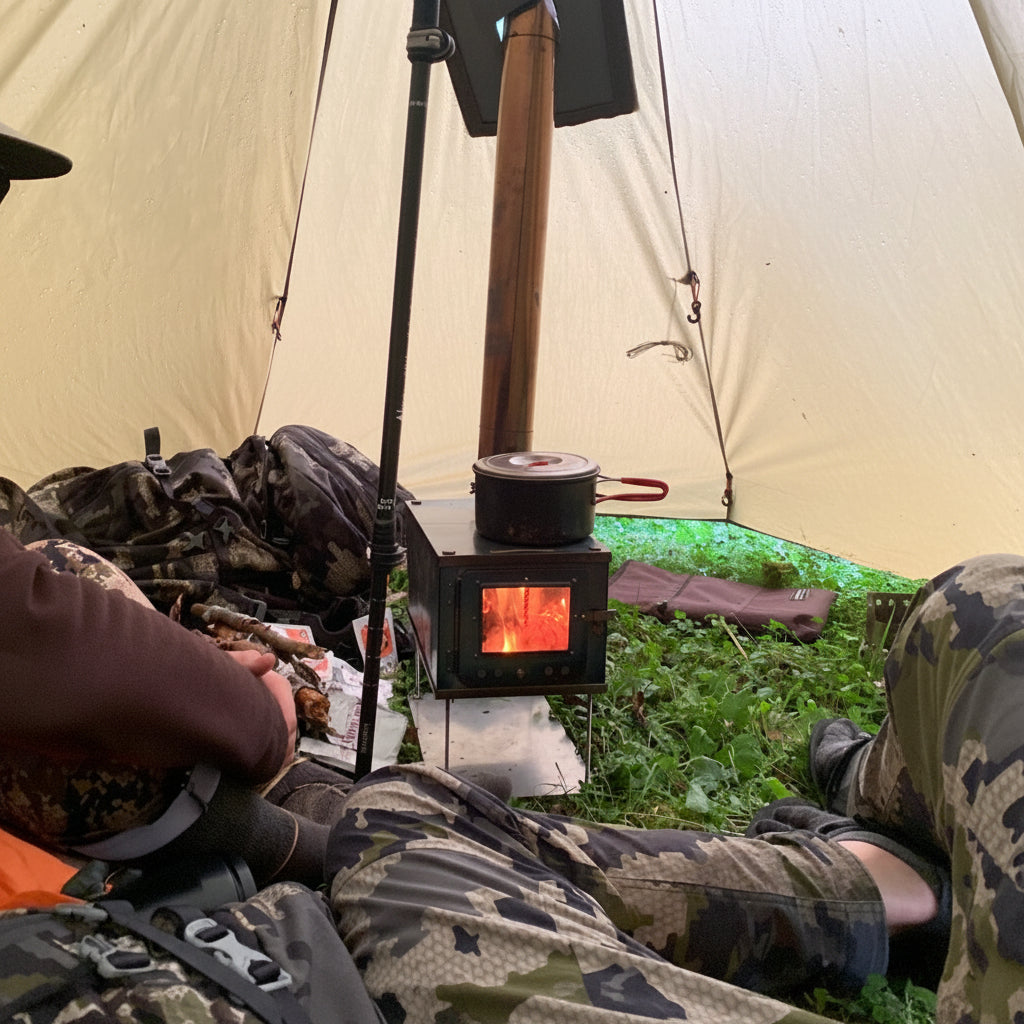
When you're running a hot tent wood stove, it can feel like all your heat is escaping up the chimney instead of warming your tent. Understanding why this happens—and what you can do about it—will help you get the most out of your stove and stay comfortable in the backcountry.

The Physics of Draft and Heat Loss
A wood stove needs draft to function properly. Draft is the natural flow of air that pulls combustion gases up and out through the chimney. The problem is that this same draft that keeps your fire burning efficiently also pulls warm air out of your tent along with the exhaust gases.
Hot air naturally rises. When your stove is running, the heat from the firebox warms the air around it, and that warm air wants to escape upward. The chimney creates a path of least resistance, so a significant portion of your heat follows the exhaust gases right out of the tent. This is especially true in the first few minutes after you light the fire, when the temperature difference between inside and outside is greatest.
Why This Is Actually Necessary
Before you try to block the chimney, understand that this heat loss is a necessary part of safe stove operation. Your stove needs adequate draft to:
- Burn wood completely and efficiently
- Prevent dangerous carbon monoxide and smoke buildup inside your tent
- Keep the stove and chimney at safe operating temperatures
- Maintain consistent combustion
Without proper draft, you risk incomplete combustion, which creates toxic gases and reduces heating efficiency even further.
How to Retain More Heat
Optimize your stove placement. Position your stove in the center of your tent when possible. This allows heat to radiate in all directions rather than being concentrated near one wall or corner. The longer the heat stays inside your tent before escaping, the more it warms your space.
Use a heat reflector. A metal reflector or shield behind or around your stove can redirect radiant heat back into the tent instead of letting it escape through the tent fabric. Stove mats also serve this purpose.
Fine tune damper and air intake. Shutting the air intake will reduce the amount of air the fire receives. Closing the damper, restricts the amount of heat is drawn up the chimney flue pipe.
Burn the right wood. Dry, seasoned hardwood burns hotter and more completely than wet or softwood. A hotter, cleaner burn means more usable heat and less wasted energy.
The Bottom Line
Some heat will always go up the chimney—that's how wood stoves work. But by understanding the mechanics and applying these strategies, you can maximize the heat that stays in your tent and keep yourself warmer on winter camping trips.