Why Most Hot Tents Don't Have Floors
Why Hot Tents Don't Have Floors: Design, Safety, and Practicality
Hot tent camping has become increasingly popular among backcountry enthusiasts, and one of the first questions newcomers ask is: why don't these tents have floors? The answer reveals a lot about how hot tents are engineered and why they're so effective for winter and shoulder-season adventures.

Heat Distribution and Safety
The primary reason hot tents are designed without floors is safety. A wood-burning stove generates intense heat—often reaching temperatures of 400°F or higher on the exterior. If a floor were present, there's a significant risk of melting the tent fabric or insulation comes into contact with the stove or heated surfaces. Without a floor barrier, you eliminate the risk of fires caused by radiant heat transfer through the ground.
Less Firewood and Stove Mess
One often-overlooked advantage of floorless hot tents is how much easier cleanup becomes. Traditional tents with floors trap ash, debris, and wood particles inside the fabric, creating tedious post-trip cleaning sessions. Hot tents eliminate this problem entirely.
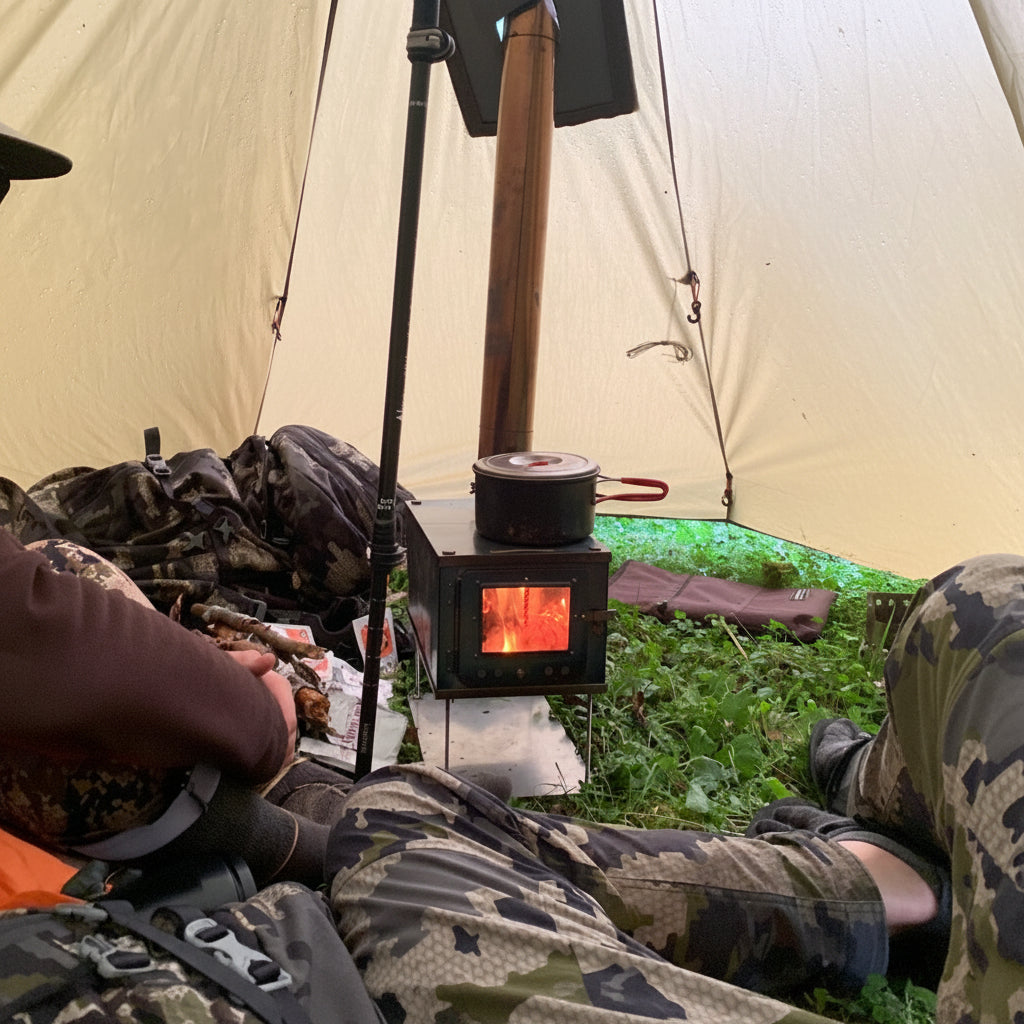
When you're cooking, melting snow, or tending the stove, inevitable ash and small wood fragments fall to the ground. In a floorless tent, these simply fall on the bare ground —no damage to your tent floor, because there is not one.
Ground Moisture and Insulation
Hot tents are typically used in snow-covered terrain where the ground is frozen solid. Rather than fighting moisture and ground contact, floorsless designs embrace the natural insulation of snow and frozen earth. The tent sits directly on a prepared Snow Platform or clear ground.
Weight and Packability
Every ounce matters on a backcountry expedition. Eliminating a floor reduces tent weight and packed size, making hot tents more portable without compromising their core heating function. This weight savings means you can carry more fuel, food, or other essential gear instead.
You Don't Have to Take Your Boots Off
One of the most practical benefits of a floorless hot tent is that you can keep your boots on the entire time you're inside. Unlike traditional tents where removing footwear is expected to protect the floor, hot tents let you maintain full mobility and readiness without the hassle of constant boot changes.
This matters more than it might seem. In winter or alpine conditions, your boots are part of your safety gear. Being able to step outside quickly to tend the stove, manage snow around the tent, or respond to an emergency without fumbling with footwear is genuinely valuable. Your feet stay warm, your gear stays accessible, and you maintain situational awareness—all without worrying about tracking dirt, snow, or ash onto a tent floor that doesn't exist.
Many experienced hot tent users find this freedom one of the most underrated comforts of the design. You're not constantly removing and replacing boots in cold conditions, which saves time, reduces heat loss, and keeps your camp operations efficient.
Setup Flexibility
Without a floor, you have greater flexibility in site selection and setup. You can adjust the tent's position on uneven or soft snow, and manage heat distribution more easily by repositioning the stove relative to sleeping areas.
The Reality of Hot Tent Use
In practice, hot tent campers use a groundsheet and insulated sleeping pads to create a barrier between themselves and the ground. These pads provide comfort, insulation, and protection. The combination of a good pad, proper ground preparation (leveling snow or clearing debris), and a well-maintained stove creates a warm, safe, and efficient shelter system.
The floorsless design isn't a limitation—it's a deliberate engineering choice that prioritizes safety, efficiency, and practicality for the unique demands of winter and alpine camping.