Why You Should Use Floorless Tent Wood Stove Camping
Floorless tents have been used outdoors for centuries. Using a floorless shelter significantly increases living space, run a hot tent wood stove and decreases the amount of bulky weight you carry. These kind of shelters can be set up on the dirt or by building a Snow Platform. Let's discuss some tips that you may use on your next camping adventure!

Why Choose a Floorless Tent for Your Next Adventure
When it comes to selecting the right shelter for backcountry camping, most people automatically think of a traditional tent with a full floor. But floorless tents—also called open-bottom or groundsheet tents—are gaining serious traction among experienced outdoor enthusiasts, and for good reason.
A floorless tent is exactly what it sounds like: a shelter that has walls and a roof but no sewn-in floor. Instead, you bring your own groundsheet or tarp to place underneath. This simple design shift opens up a world of practical advantages that can transform how you camp.
Weight and Packability
The most obvious benefit is weight savings. By eliminating the floor fabric, seams, and reinforcement, floorless tents are significantly lighter than their floored counterparts. For backpackers counting every ounce, this matters. A lighter shelter means you can carry more of what you need—or simply enjoy a less taxing hike to your campsite.
Ventilation and Condensation Control
Floorless tents excel at managing moisture. Without a floor trapping humid air, condensation buildup is dramatically reduced. Air flows freely underneath the shelter, keeping your sleeping area drier and more comfortable. This is especially valuable in wet climates or during shoulder seasons when temperature swings create condensation challenges.
Flexibility and Customization
You control what goes under your tent. A lightweight tarp works in dry conditions. A heavy-duty groundsheet provides maximum protection in wet terrain. You can even skip the groundsheet entirely in established campsites with minimal impact. This flexibility lets you adapt your setup to conditions and trip duration.
Durability Where It Counts
Tent floors take a beating. Rocks, roots, and sharp debris puncture and wear them down. With a floorless design, your groundsheet absorbs that abuse instead—and groundsheets are cheaper and easier to replace than repairing a tent floor.
Better Ground Contact and Stability
Some floorless designs allow you to stake directly through the tent walls into the ground, creating a more secure and stable pitch. This can be especially useful in windy conditions or on uneven terrain.
Floorless tents aren't for everyone—car campers and casual users may prefer the simplicity of a traditional tent. But for serious backpackers, mountaineers, and hunters who value weight savings, durability, and adaptability, a floorless shelter is a game-changing investment.
Why Use a Floorless Tent Video
Top 5 Floorless Tent Reasons
1. Increased Living Space: Most floorless tents are single wall. Meaning you don't have decreased space from extra walls of fabric. Additionally, some designs allow you to pitch tent tent at different heights, which will further increase the space inside.
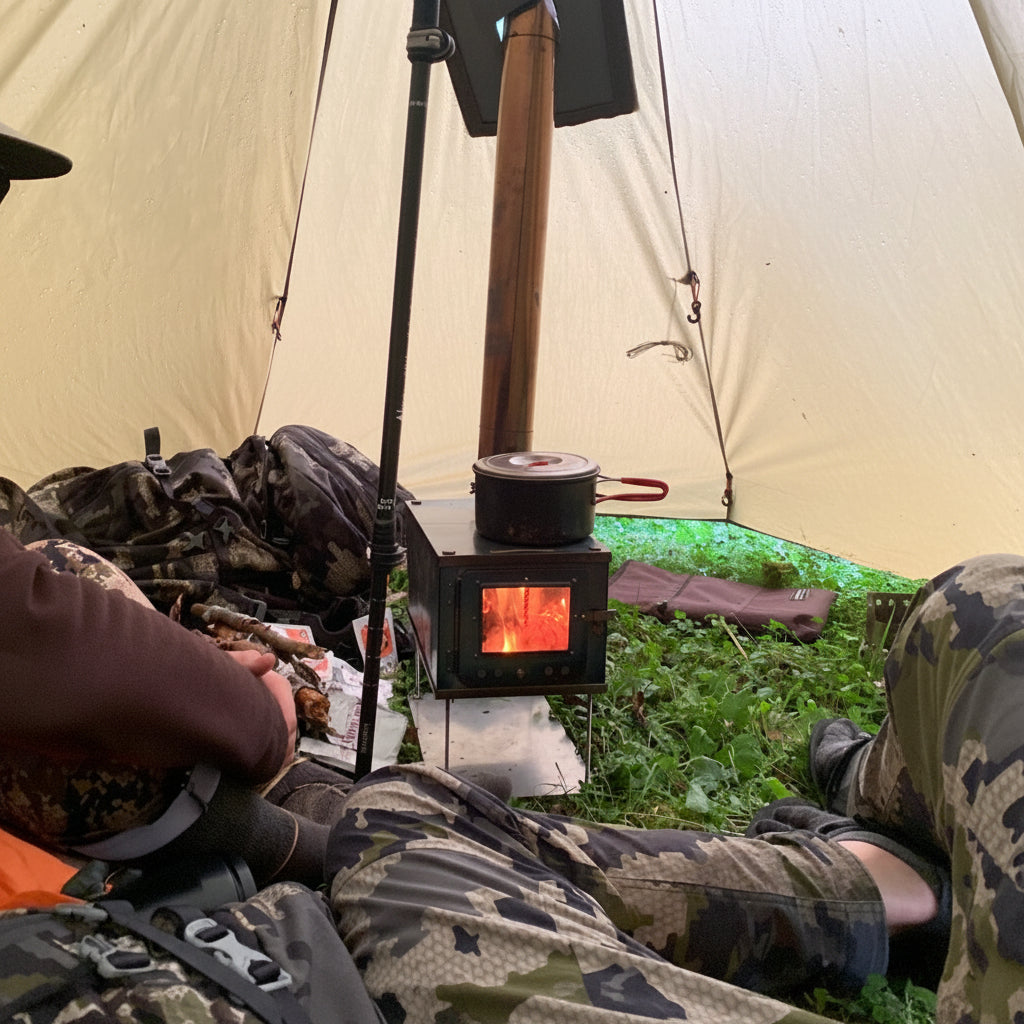
2. No Extra Mess: Adding a wood stove inside your shelter requires you to bring firewood inside the tent. The longer you stay in the campsite, the more firewood mess you will create. Bigger tents and wood stoves also need more wood to heat the same living space temperatures. Unless you want to pack a broom into the backcountry, it's best to go floorless. Additionally, unless you want to take your boots off and on all day, it's best to have no floor.
3. Drier to Setup and Take Down: Using a floorless tent is more efficient to set up in the rain. All you need to do is pitch the outer tent first, then you have the option to set up your inner tent, groundsheet or partial bathtub floor. Taking down in bad weather, all you need to do is to break camp in reverse order, keeping all your dry gear out of the weather until the last minute.
4. Uneven Campsite Ground: Many floorless tent designs allow you to set up camp on a hill if needed. All you need to do is make the stakeout point shorter on the upslope and longer on the downslope. Traditional dome style tent designs will not allow for this.
5. Hot Coals Falling from the Wood Stove: Hot coals from the burning firewood can easily fall out of the wood stove door, common when adding more firewood. Running a floorless tent this is not an issue, because they will land on bare ground. You have an option of running a stove mat, but this increase bulk and weight in your pack if your in the backcountry backpacking.