Why You Don't' Shovel Snow Away Before Tent Setup
When winter camping in deep snow, the instinct is often to shovel down to bare ground. But experienced cold-weather campers know a better way: build a snow platform beneath your tent instead. This technique offers superior insulation, better drainage, and a more stable foundation—especially when paired with a hot tent stove.

Why Build a Snow Platform?
Snow is an excellent insulator when compressed. A well-built platform creates a stable, insulated base that keeps cold from radiating up through the tent floor. This is far more effective than pitching directly on snow or trying to clear it away entirely. The platform also elevates your tent slightly, improving water drainage and reducing the risk of meltwater pooling underneath during warmer spells or when a stove is running inside.
How to Build a Snow Platform
Start with site selection. Choose a location with consistent snow depth and stable base snow, avoiding areas prone to wind scouring or avalanche zones. Clear any loose surface snow and brush away debris.
Compact the base. Pack down the snow with your feet, skis or shnowshoes, working in a circular or rectangular pattern roughly the size of your tent footprint plus an extra 2–3 feet on all sides. Make multiple passes, allowing each layer to settle slightly between passes.
Level and finish. Use your shovel to smooth the top surface and create a slight crown in the center for water runoff. The platform should be roughly level but with gentle slope away from where your tent entrance will be.
Tips for Success
Wet, heavy snow compacts more easily than light powder—you'll need fewer passes but more force. Light powder may require patience and multiple cycles of compacting and adding snow. Allow time for each layer to settle; rushing the process leads to unstable platforms.
Mark the edges of your platform with skis or sled so you don't accidentally step off in the dark. If you're setting up during or just before snowfall, plan to re-compact your platform in the morning.
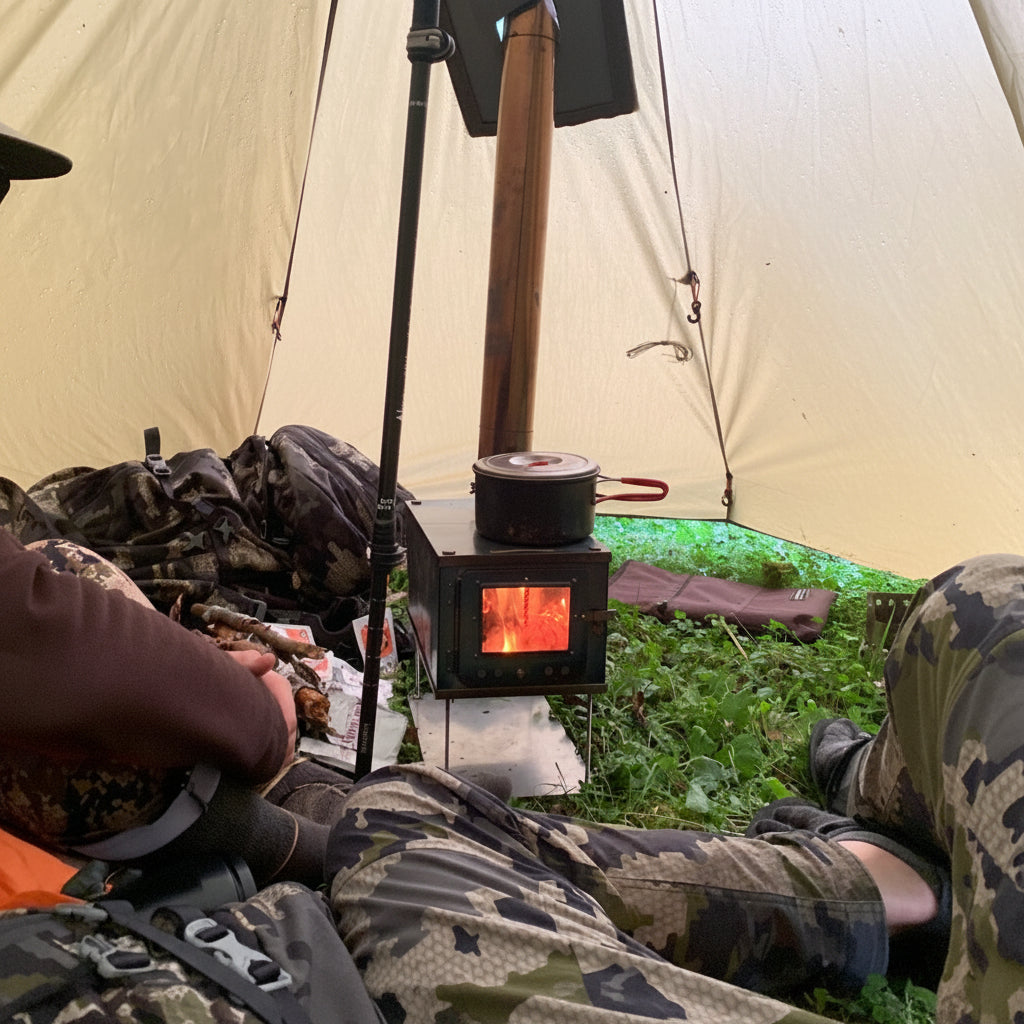
When using a hot tent stove, the platform method becomes even more valuable. The stove generates significant heat, and a properly compacted snow platform prevents that heat from creating a meltwater moat around your tent base. The density of compressed snow slows the rate of sublimation and melting, keeping your interior drier and warmer.
Final Thoughts
A snow platform takes 20–40 minutes to build depending on conditions, but it pays dividends in comfort and safety. You'll sleep warmer, stay drier, and have a more stable foundation for your winter camp. On your next deep-snow expedition, skip the shovel work and build up instead.