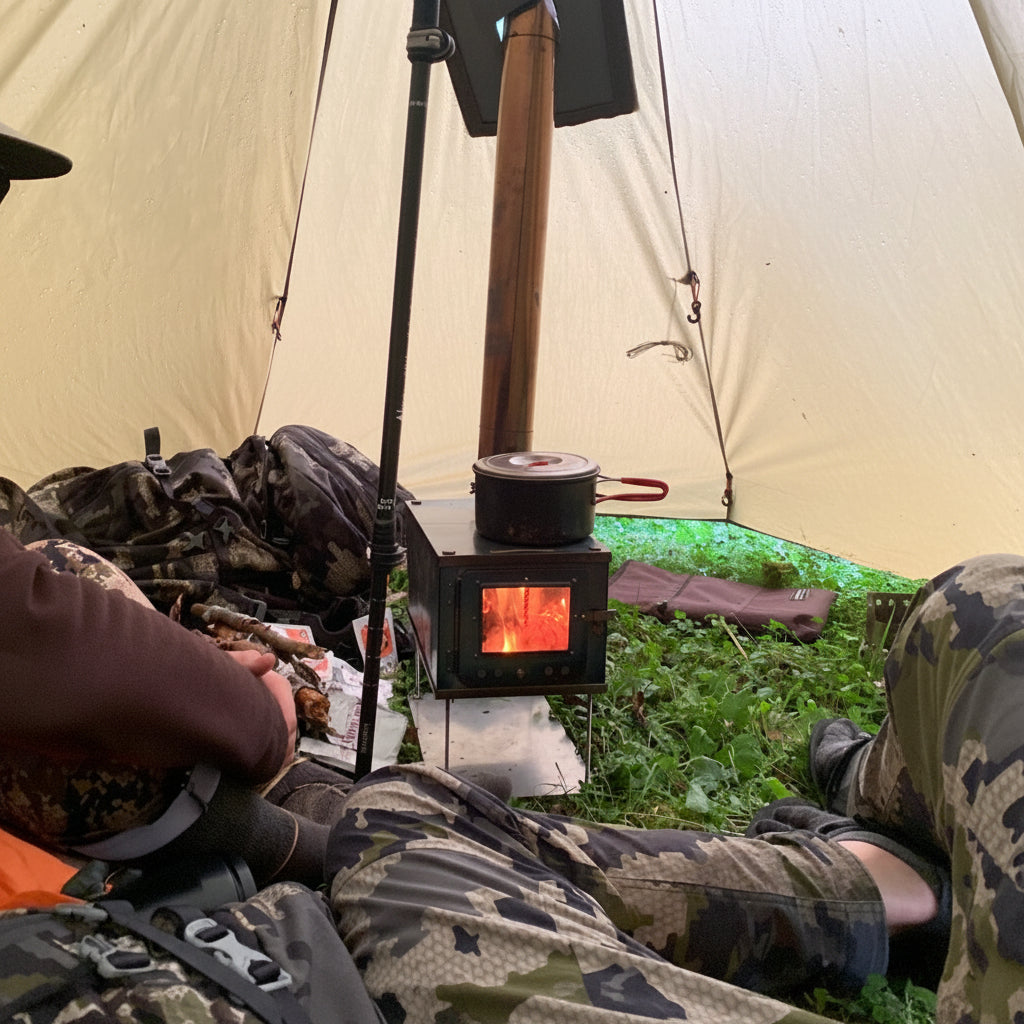
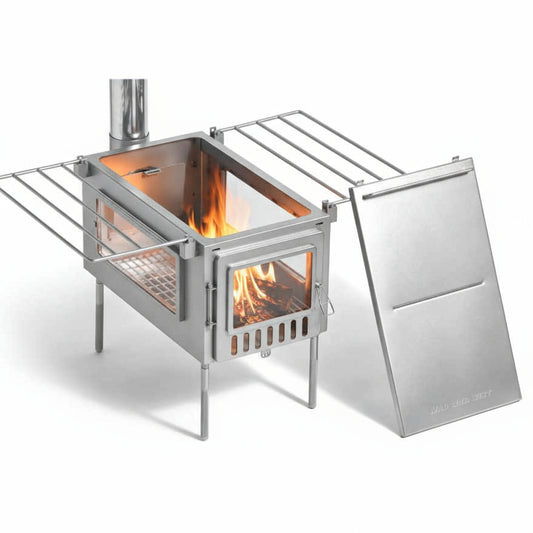
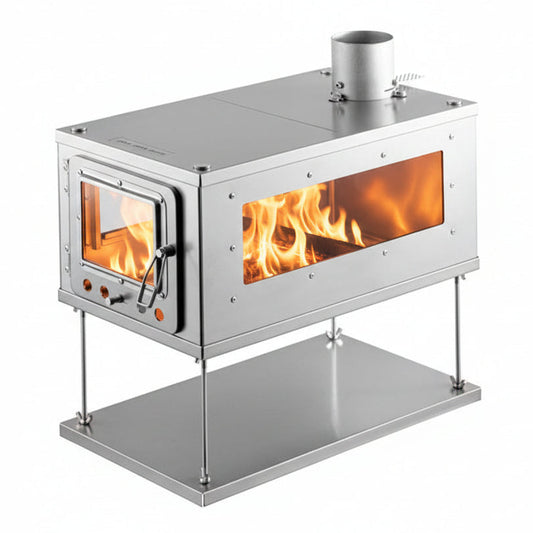
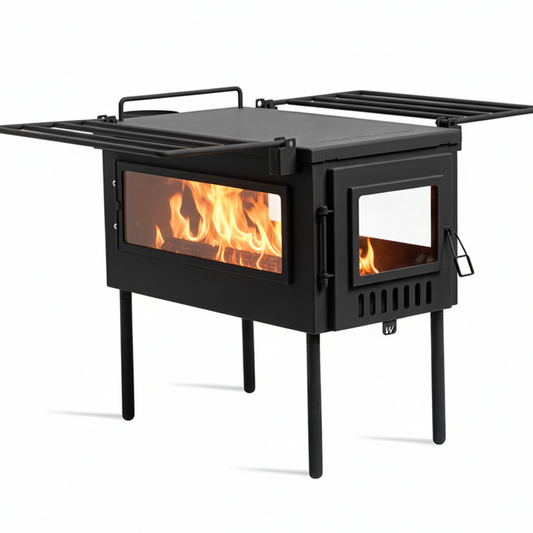
Tent wood stove set up on a snow covered campsite

Setting Up Your Hot Tent in Deep Snow with Stove

Choosing the Right Location

Finding the perfect spot is your first priority when setting up a hot tent with wood stove in deep snow. Look for areas that are relatively level and protected from wind—dense tree coverage or natural windbreaks make a significant difference in maintaining warmth and stability. Avoid setting up directly under heavy snow-laden branches, as they can collapse onto your tent. Check the snow depth and consistency; you want stable ground beneath the surface snow, not a hollow or creek bed hidden underneath.

Tent wood stove set up on a snow covered campsite

Preparing Your Foundation

Deep snow requires a solid base to prevent your tent from sinking and to ensure proper stove operation, called a Snow Platform. Stomp down a large area where your tent will sit, creating a compacted platform that's slightly larger than your tent footprint. This packed snow becomes firmer as it settles and provides insulation from the ground below. If you're staying multiple nights, allow time for the platform to set before pitching your tent. .

Setting Up Your Hot Tent Stove

Your stove placement is critical for safety and efficiency. Position the stove on a heat-resistant mat or wood ski platform inside the tent, keeping it away from fabric walls and any gear. Ensure your chimney pipe has proper clearance—typically at least 12 inches from tent fabric—and runs as vertically as possible through the stove jack roof vent. A slight angle is acceptable, but steep angles reduce draft efficiency. 

Ventilation and Safety

Proper ventilation is essential when using a stove in an enclosed tent. Crack a window or vent slightly to allow fresh air circulation and prevent carbon monoxide buildup. Monitor your stove throughout the night and never leave it unattended while burning. Keep water or snow nearby as a precaution. 

Insulation and Heat Management

Deep snow provides natural insulation, but you'll still want to use a quality sleeping pad to create a barrier between you and the cold ground. The combination of your tent, stove heat, and proper insulation creates a warm microclimate even in extreme cold. Start your fire, and adjust your stove output based on outside temperature and your comfort level. 

Breaking Camp

When it's time to leave, allow your stove to cool completely before disassembling it. Let the chimney cool as well to avoid burns. If snow has melted around your tent base, be prepared for potentially wet gear—pack items in waterproof bags. 

블로그로 돌아가기