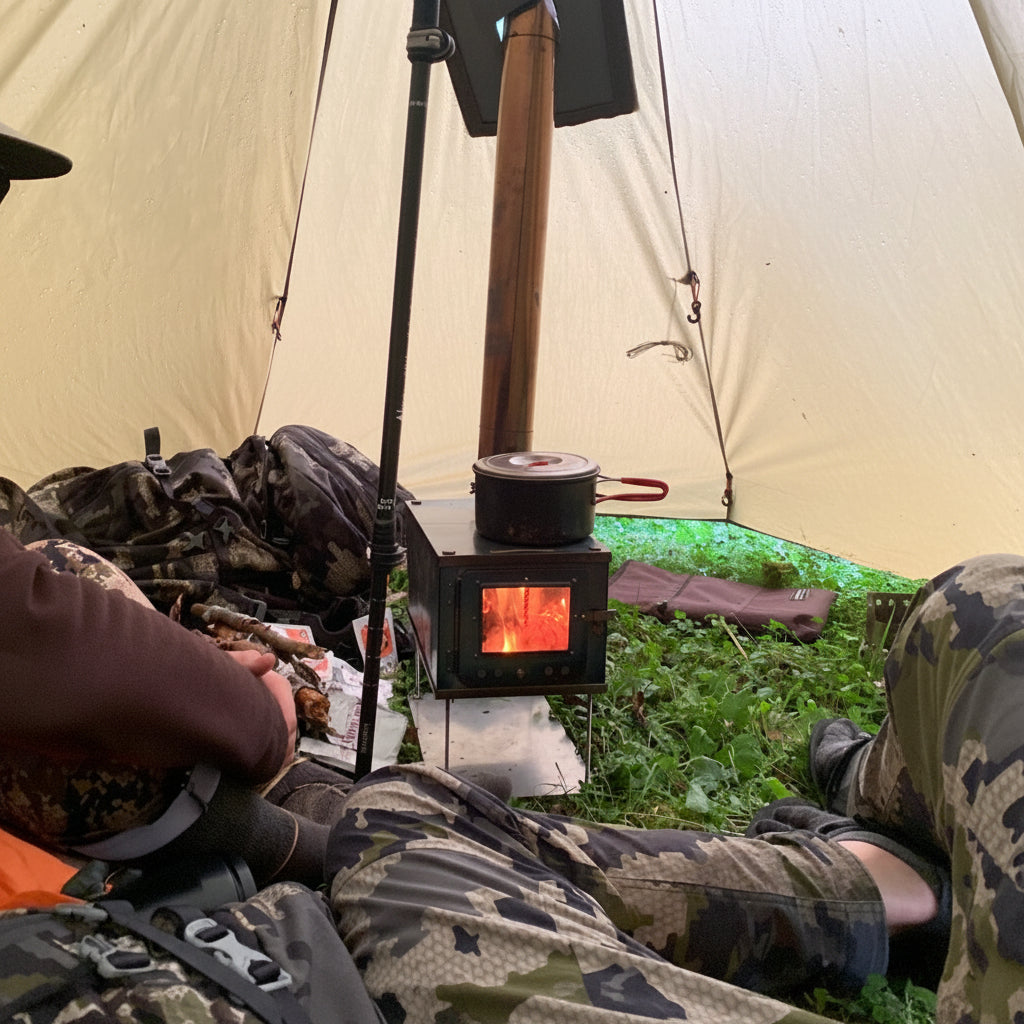
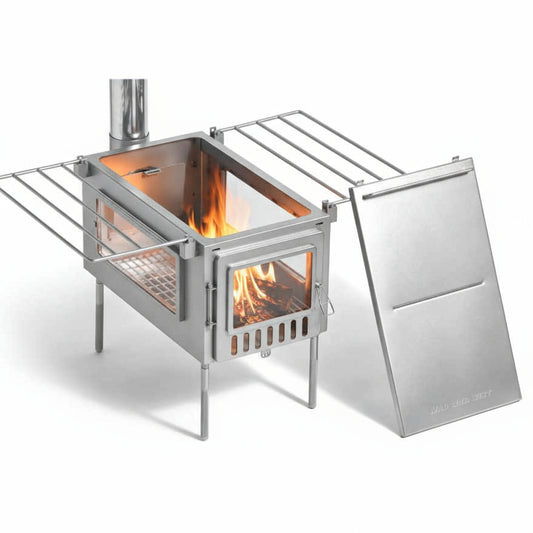
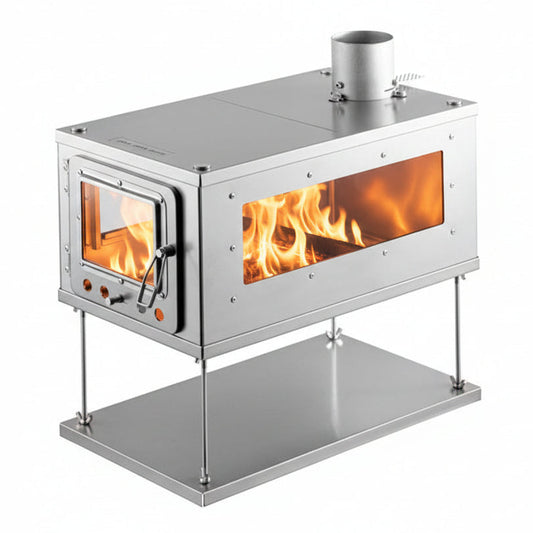
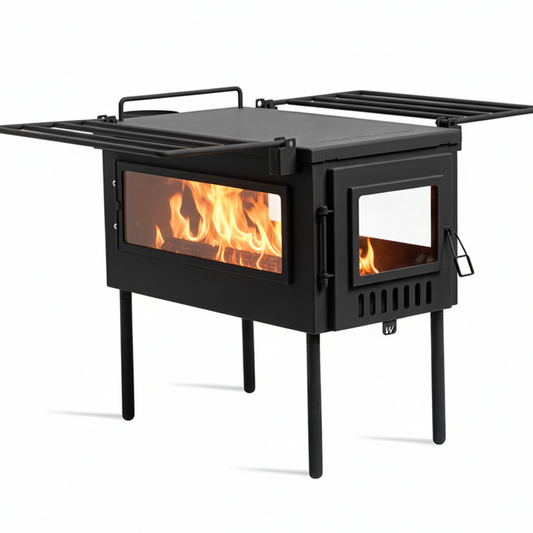
Burning Small Sticks and Branches in a Tent Wood Stove
Can You Burn Small Sticks and Branches in a Tent Wood Stove?
One of the most common questions we get from hot tent enthusiasts is whether small sticks and branches work well as fuel for tent wood stoves. The short answer: yes, but with important caveats. Understanding what burns efficiently—and safely—in your stove will extend its heat output and improve your camping experience.

The Ideal Fuel Size
Most tent wood stoves perform best with fuel that's roughly finger-thick to wrist-thick in diameter. Small twigs and branches fall into this sweet spot, especially if they're seasoned and dry. Properly dried wood ignites faster, produces more consistent heat, and generates less creosote buildup inside your chimney pipe.
Thinner kindling—pencil-thin or smaller—works great for starting a fire, but it burns through quickly and doesn't provide sustained heat. Thicker logs may require splitting to fit your stove's firebox and take longer to fully combust.
Moisture Matters Most
The moisture content of your branches matters far more than their size. Wet or green wood creates excessive smoke, smolders rather than burns, and deposits creosote inside your stove and chimney. This buildup reduces efficiency and increases fire risk. Always prioritize seasoned wood over fresh branches, even if the seasoned wood is slightly thinner.
On multi-day trips, collect dead branches from the ground—they're naturally seasoned and ready to burn.
What to Avoid
Avoid burning branches that are rotting, moldy, or still attached to living trees. Don't burn treated wood, painted materials, or anything chemically processed. These release toxic fumes and damage your stove's interior. Also skip softwoods like pine or spruce if possible—they produce more creosote than hardwoods.
Building an Efficient Fire
Start with pencil-thin kindling to establish your flame, then gradually add thicker branches as the fire builds. This graduated approach creates better airflow and more complete combustion. Arrange branches in a crisscross pattern rather than stacking them flat—this allows heat and smoke to move freely through your firebox.
Keep branches on hand throughout your trip so you're never caught scrambling for fuel in poor light or bad weather. A small bundle of pre-gathered, dry branches near your tent is a smart camp habit.
Final Thoughts
Small sticks and branches are perfectly suitable for tent wood stoves when they're dry and properly sized. The key is prioritizing seasoned wood, starting small with kindling, and building your fire progressively. With these practices, you'll enjoy a hot tent that's efficient, safe, and ready for whatever the backcountry throws at you.