Hot Tent Comparison Guide by Purpose 2026
Hot tents have forever transformed camping outdoors. By pairing a canvas or silnylon shelter with a wood-burning tent stove, you get a warm, dry basecamp even in sub-zero conditions. But not all hot tents are built the same. This guide breaks down the most popular styles so you can choose the right one for your adventure type.

Hot Tent Styles Explained
1. Ultralight Tipi / Pyramid Tents
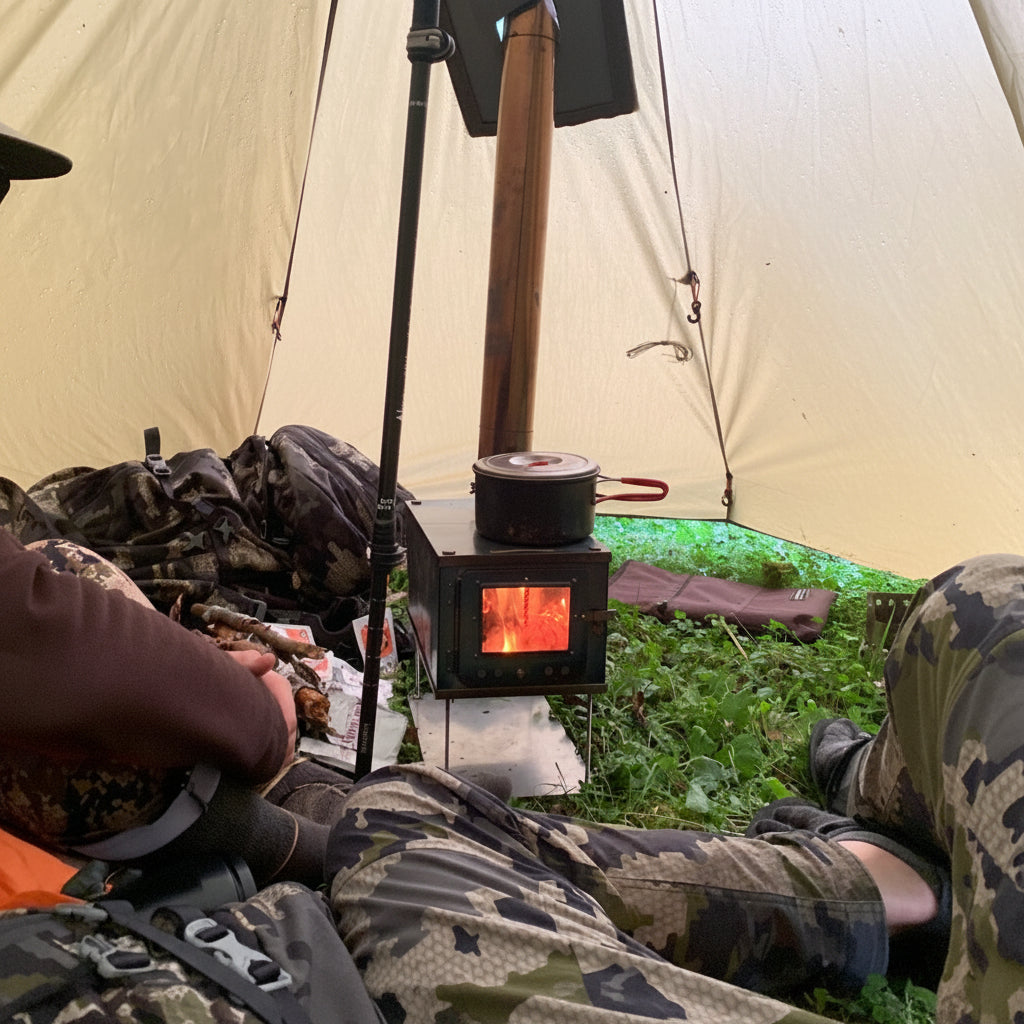
The classic hot tent silhouette. A single center pole (or trekking poles) supports a conical shape that sheds snow effortlessly. Tipis offer excellent heat efficiency because of their cone shape, making them a favorite for solo or group backcountry campers who prioritize packability. However, they are not freestanding and require tent stakes to pitch.
Best for: Ultralight backpacking, backpack hunting camps and winter camping.
2. Wall Tents (Canvas Frame Tents)
The gold standard for base camps and hunting camps. Wall tents feature near-vertical walls, generous standing room throughout, and heavy-duty canvas construction that retains heat exceptionally well. They require a dedicated frame and are not designed for backpacking or wet climates above freezing.
Best for: Drive-in base camps, horse packing, extended stays, large groups, near transportation hunting camps.
3. Dome Hot Tents
A familiar freestanding dome shape adapted for stove use, with a reinforced stove jack port built into the fabric. Dome hot tents are relatively easy to pitch, handle moderate wind speeds well, and feel familiar to three-season campers making the jump to winter. However, they are not as heat efficient as cone shaped tipi tents.
Best for: Car camping, beginner winter campers, moderate conditions.
4. Tunnel / Geodesic Hot Tents
Engineered for extreme conditions, tunnel and geodesic designs can use multiple crossing poles to create a rigid, wind-resistant structure. These tents maximize interior volume relative to weight and are popular with expedition teams.
Best for: Group campsites, overlanding and winter camping.
5. Cabin-Style Hot Tents
Cabin tents prioritize livability — near-vertical walls, multiple rooms or dividers, and large windows. They sacrifice packability for comfort and are typically made from heavier canvas or poly-cotton blends. They are also prone to wind storm issues.
Best for: Family winter camping, glamping, near car hunting camps.
Hot Tent Comparison Chart
| Style | Capacity | Weight | Setup Difficulty | Stove Jack | Price Range | Best Use Case |
|---|---|---|---|---|---|---|
| Tipi / Pyramid | 1–12 people | 2 - 6 lbs (1–3 kg) | Easy | Near pole or sidewall | $150–$600 | Ultralight backpacking, backcountry camps |
| Wall Tent | 4–12+ people | 44 - 132 lbs (20–60 kg) | Moderate–Hard | Side wall or roof | $500–$3,000+ | Base camps, hunting, extended stays |
| Dome | 2–8 people | 6 - 17 lbs (3–8 kg) | Easy–Moderate | Side panel or roof | $200–$800 | Car camping, backpacking, beginner winter use |
| Tunnel / Geodesic | 2–12 people | 8 - 26 lbs (4–12 kg) | Moderate–Hard | Side or roof panel | $400–$2,000 | Group camps, car camping, overlanding |
| Cabin-Style | 4–10 people | 33 - 88 lbs (15–40 kg) | Moderate | Side wall | $400–$2,500 | Family camping, glamping, hunting camps |
Key Factors to Consider
- Packability: If you're hiking in, tipi and dome styles win. If you're driving, wall tents and cabin tents offer unmatched comfort.
- Stove jack placement: Top-mounted jacks (tipis) allow the stove pipe to exit at or near the peak, maximizing draft and strength. Side-mounted jacks are more common in wall and dome tents.
- Material: Canvas breathes better and retains heat longer, but is heavier and not for wet climates. Nylon/silnylon is ultralight, but can condensate more in cold conditions.
- Group size: Always size up — you need floor space for sleeping, gear storage, and the stove itself.
- Conditions: For serious snow loads and wind, geodesic and tunnel designs outperform single-pole tipis, if the design has heavy duty poles that cross each other for strength (generally).
Final Thoughts
The best hot tent is the one that matches your style of travel. Ultralight solo adventurers will love a tipi; traditional hunting camp crews will swear by a canvas wall tent; families new to winter camping will appreciate the familiar feel of a dome, tunnel or cabin tent. Whatever you choose, pair it with a quality wood stove and proper stove pipe safety practices — and you'll be warm and dry no matter what the forecast says.