Ultralight Backpacking with Titanium Tent Stove in Heavy Rain
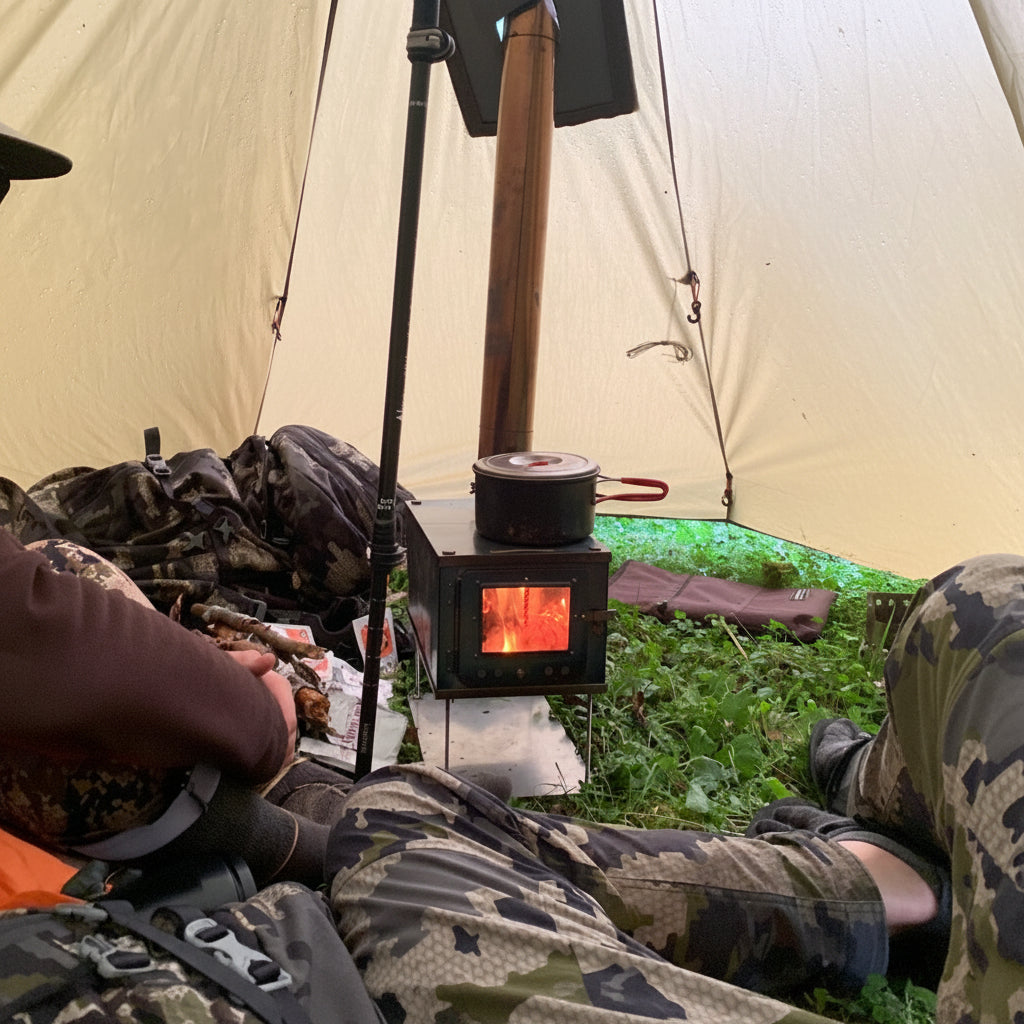
Ultralight backpacking in the great outdoors with a titanium wood stove. Be fully off grid by burning firewood as a heat source, dry clothes or cook real food on the stovetop. Learn why dry heat changes the backcountry game!

Ultralight Backpacking in the Rain: Why a Tent Stove Changes Everything
Rain is one of the biggest challenges ultralight backpackers face. When you're carrying minimal gear, staying warm and dry becomes a delicate balance between weight and comfort. A tent stove transforms that equation, turning a wet night into a cozy basecamp experience—without the guilt of extra pounds on your back.
The Ultralight Paradox: Staying Warm Without Weight
Traditional ultralight setups rely on insulation and layering to manage cold and moisture. But rain changes the game. Wet gear loses insulation value, condensation builds inside your shelter, and your sleeping bag becomes a liability instead of an asset. A compact tent stove solves this by creating active heat and airflow that dries moisture before it accumulates.
The best ultralight tent stoves weigh between 1 and 3 pounds—comparable to a heavy sleeping bag layer—but deliver warmth that lets you consider shedding weight elsewhere. The math works in your favor.
Choosing the Right Stove for Rain Camping
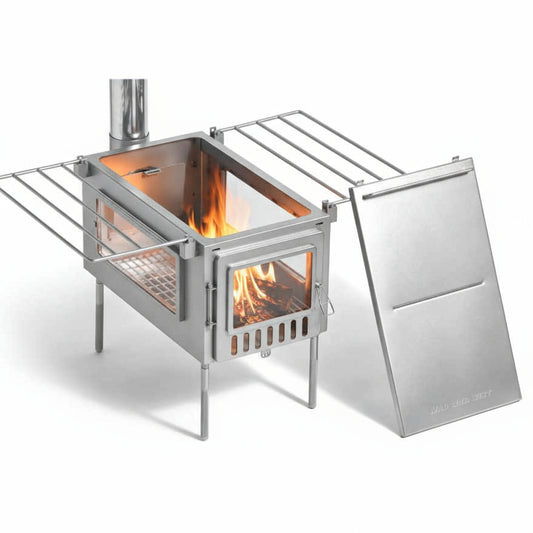
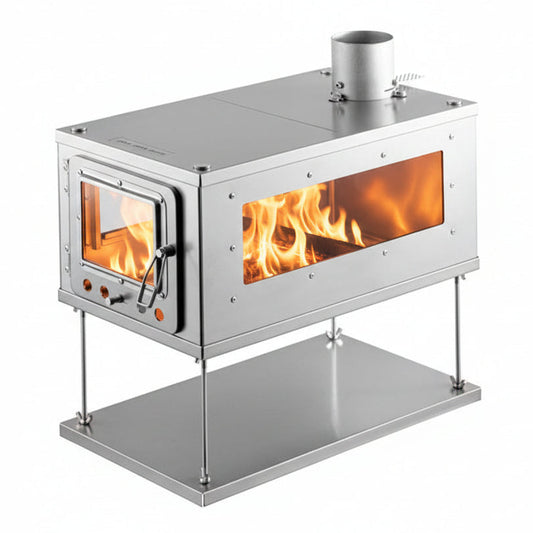
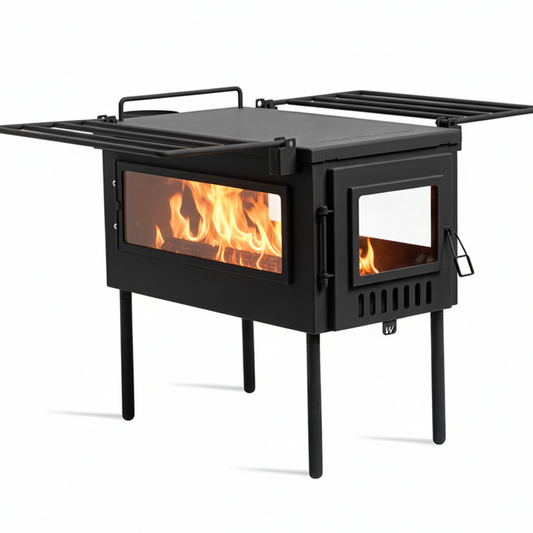
Not all tent stoves perform equally in wet conditions. Look for models with:
- Efficient combustion: Wood-burning stoves that reach full heat quickly minimize the time you're sitting in a cold, damp tent.
- Stable base: Rain means muddy ground. A wide, stable footprint prevents tipping and keeps the stove elevated above pooling water.
- Spark arrestor: Essential for safety in close quarters and for protecting your tent fabric from embers.
Setting Up Your Tent for Stove Safety and Comfort
A tent stove requires proper ventilation and clearance. Position your stove away from tent walls—at least 18 inches is standard—and ensure your tent has adequate venting, even if it means cracking a door or window slightly.
Use a Sand and Snow Plate beneath the stove to improve stability on wet ground. In heavy rain, a small vestibule or covered area outside the tent entrance makes refueling and ash removal safer and keeps your interior dry.
Fuel Strategy for Wet Conditions
Wet wood is the enemy of tent stove efficiency. Collect and store dry wood before the rain intensifies—dead standing wood, branches under dense tree cover, and wood split to expose dry interior are your best bets. Bring a small amount of ultra-dry kindling in a waterproof bag as insurance.
If you're in extended rain, consider a hybrid approach: use your stove for evening warmth and cooking, then switch to a sleeping system that doesn't rely on the stove for overnight survival. This reduces pressure on fuel supply and gives you flexibility if conditions worsen.
The Mental Edge
Beyond the physics of warmth, a tent stove provides psychological comfort. Sitting by a small fire inside your shelter, watching rain stream down the fabric, transforms a miserable night into an adventure. That mental shift keeps you engaged with the backcountry instead of just enduring it—and that's worth every ounce.
Ultralight backpacking in the rain isn't about suffering less; it's about choosing your battles. A tent stove lets you carry less overall weight while gaining genuine comfort when conditions demand it. For serious rain-country explorers, it's one of the smartest investments you can make.