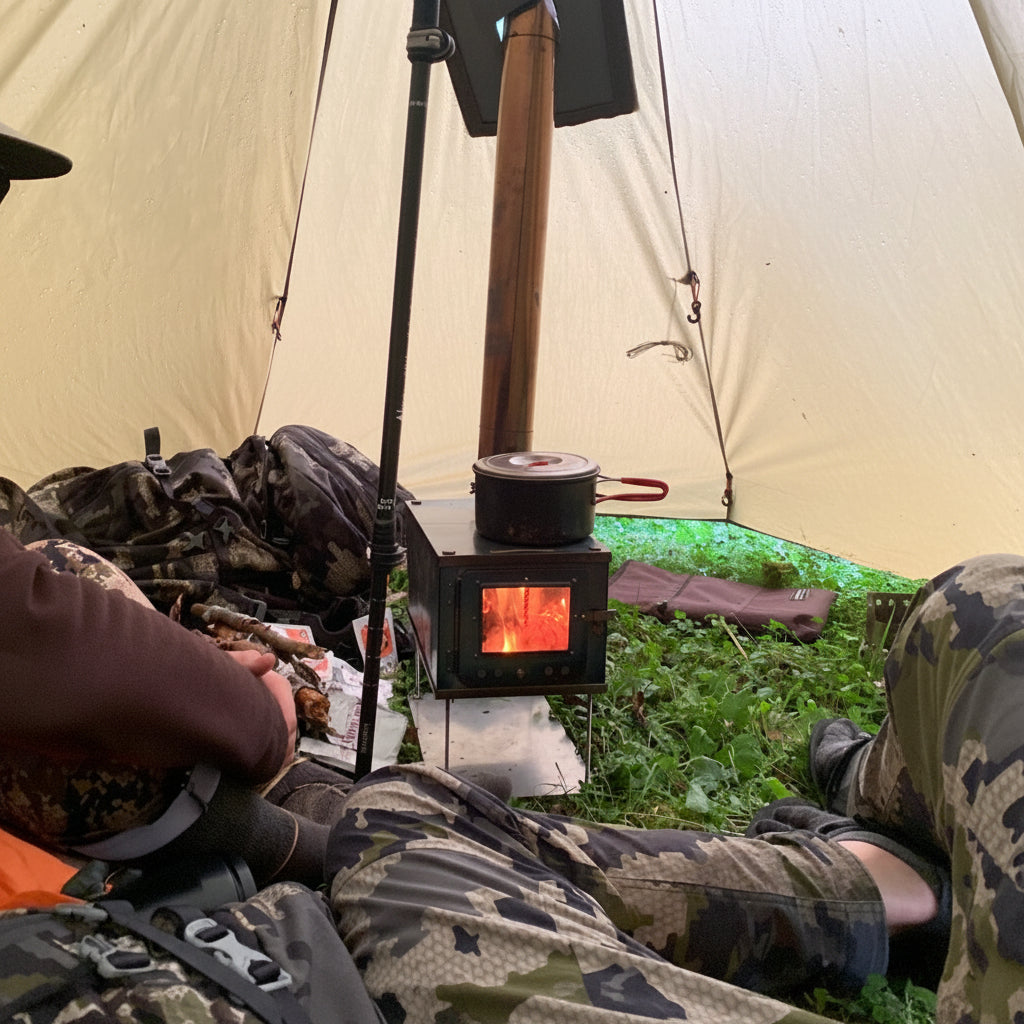
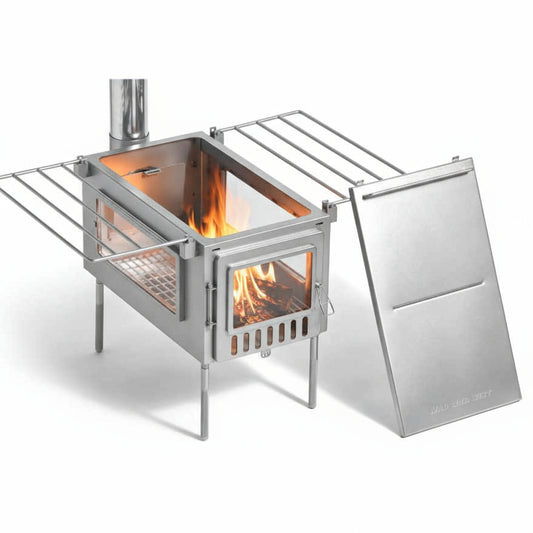
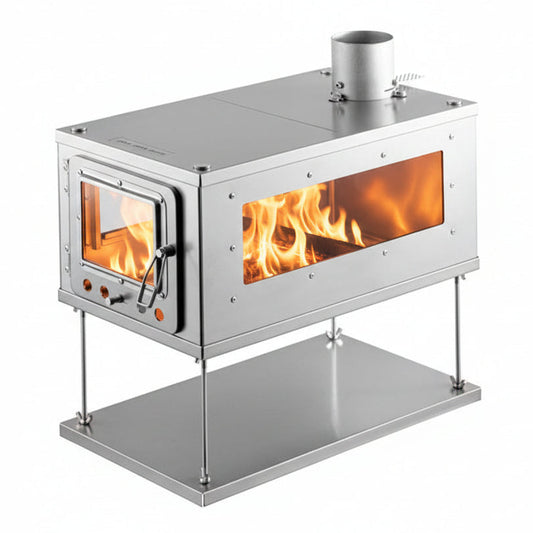
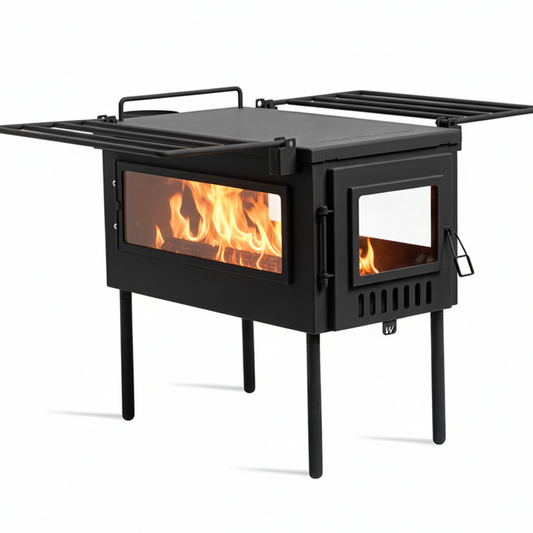
#1 Biggest Mistake When Starting a Tent Wood Stove
One of the most common mistakes beginners make with tent stoves is jumping straight to large firewood and restricting airflow before establishing a solid coal bed. This approach leads to incomplete combustion, excessive smoke, wasted fuel, shorter burn times, lower heat output and frustration in camp.

Why a Coal Bed Matters
A coal bed is the foundation of efficient, sustained heat. Unlike a flame-driven fire, coals burn hotter, longer, and more consistently—exactly what you need when you're trying to warm a tent or cook a meal in backcountry conditions. Without it, you're relying on active flames that consume wood quickly and produce uneven heat.
Coals also give you better control. Once established, a coal bed responds predictably to airflow adjustments, letting you dial in the perfect temperature without constantly feeding the stove or dealing with temperature swings.
How to Build Your Coal Bed Properly
Start with tinder and kindling—dry bark, small twigs, or fatwood that catches quickly. Light it and let it burn freely with full airflow. Gradually add pencil-sized pieces of wood, allowing each layer to catch before adding more.
This process takes patience. Resist the urge to load the stove with large splits right away or to close off air vents to "control" the fire. You're not controlling it yet—you're building the foundation that will let you control it later.
Once you have a bed of glowing coals at the bottom of your stove, roughly 3–4 inches deep, then you can add larger pieces of firewood. Then you can begin adjusting airflow to fine-tune your heat output.
The Payoff
A properly established coal bed transforms the stove experience. You'll burn less wood, produce steadier heat, and spend less time tending the fire. On a cold night in the backcountry, that's the difference between a comfortable camp and a frustrating one.