Best Firewood Size for Tent Wood Stove
Choosing the Right Firewood Size for Your Tent Wood Stove
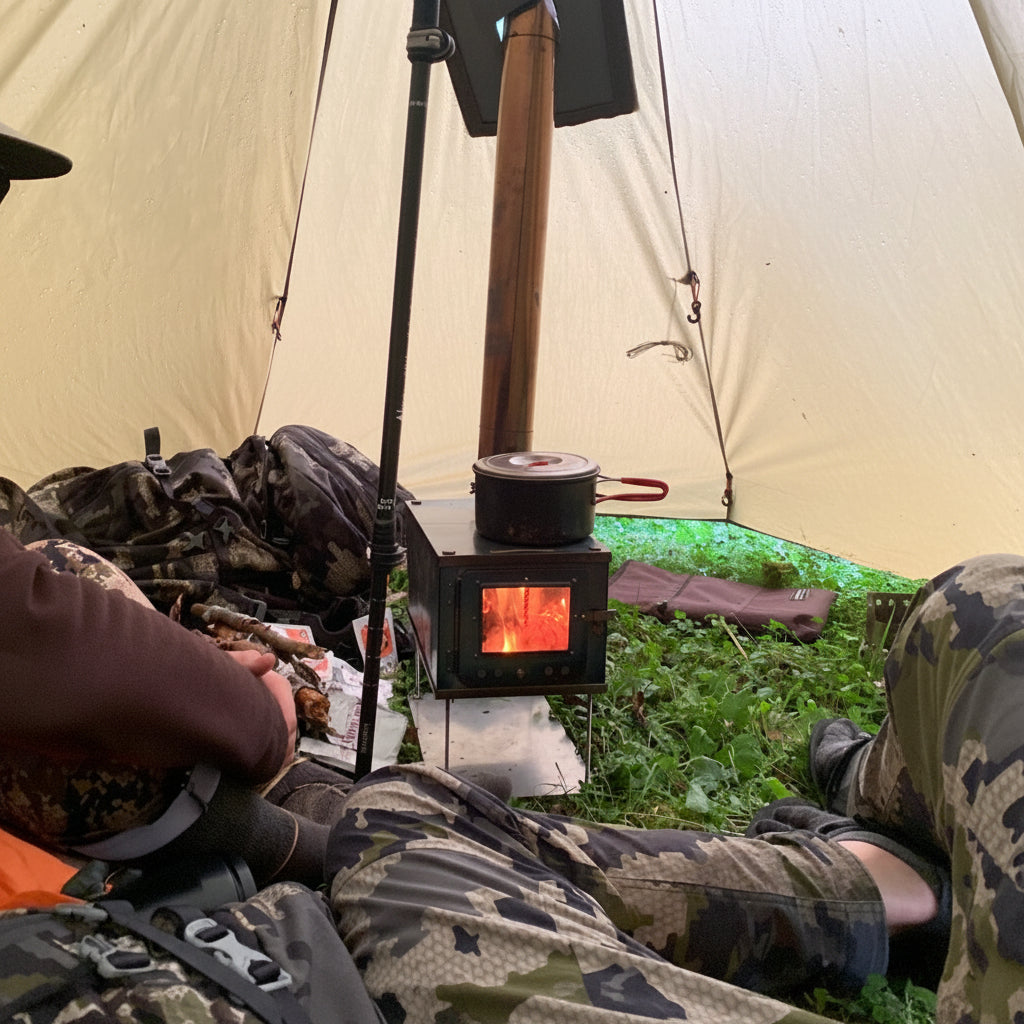
Getting the most out of your tent wood stove starts with understanding one of the simplest but most important factors: firewood size. The diameter and length of your wood directly impact heat output, burn efficiency, and how long your fire lasts. Whether you're camping in the backcountry or setting up a base camp, selecting properly sized firewood makes the difference between a cozy night and a frustrating struggle to keep the fire going.

The Ideal Firewood Diameter
For most tent wood stoves, firewood between 2 and 4 inches in diameter is the sweet spot, after a coal base is established. This size range allows wood to ignite quickly while providing enough mass to burn steadily and produce consistent heat. Wood thinner than 2 inches burns too fast and creates excessive ash, while pieces thicker than 4 inches take longer to catch fire and can be difficult to position inside smaller stove chambers.
If you're splitting wood yourself, aim for pieces that fit comfortably in your hand with your fingers just touching around the circumference. This visual guide works well in the field when you don't have calipers handy.
Length Matters Too
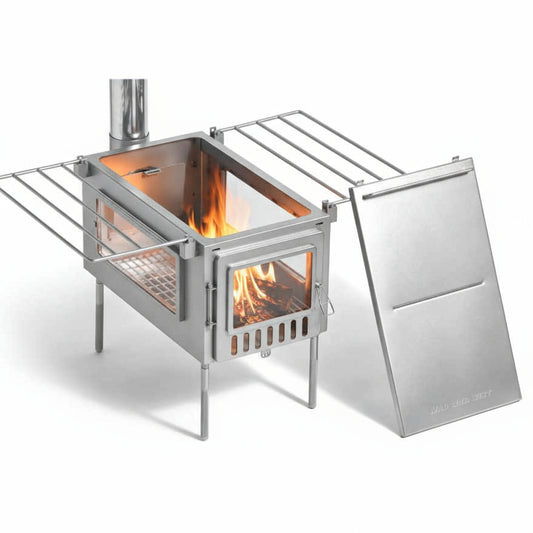
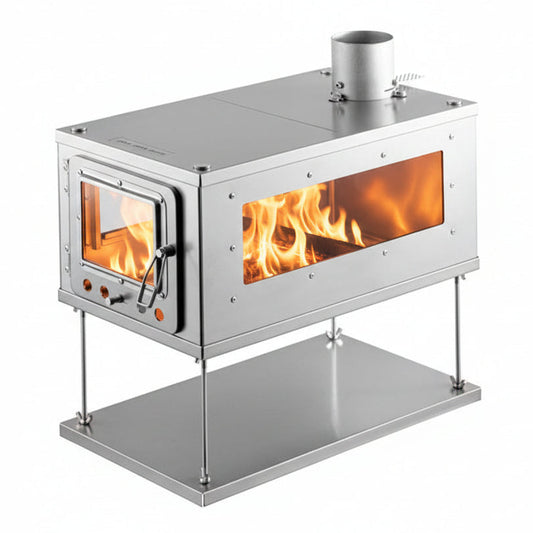
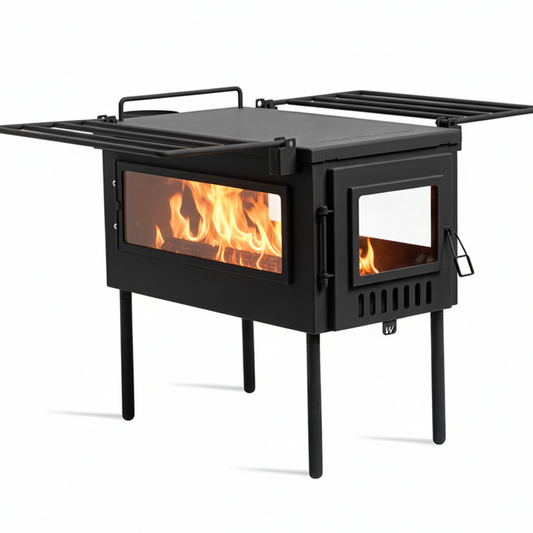
The length of your firewood should match your stove's interior dimensions. Most tent wood stoves have a firebox depth between 6 and 18 inches, so cut your wood to fit within that range with a small margin for adjustment. Wood that's too long won't fit properly and forces you to leave the door partially open, which reduces efficiency and lets heat escape. Wood that's slightly shorter is always better—you can stack pieces to fill the space and create better airflow.
Moisture Content Is Critical
Regardless of size, your firewood must be dry. Seasoned hardwoods with moisture content below 20 percent ignite faster, burn hotter, and produce less creosote buildup in your stove pipe. Wet or green wood creates excessive smoke, smolders rather than burns, and wastes the heat you need. If you're gathering wood in the field, look for dead standing wood or branches that snap cleanly when bent—these are signs of proper dryness.
Stacking and Storage Tips
Once you've cut your wood to size, store it in a dry location with good airflow. Stack pieces loosely rather than tightly packed so air can circulate and any residual moisture can evaporate. Keep your firewood off the ground and covered from rain but not sealed in plastic, which traps moisture.
When you're ready to use your stove, load wood strategically. Place larger pieces on the bottom grate, add kindling and smaller splits on top, and leave space between pieces for flames to move through. This arrangement maximizes heat transfer and ensures your fire burns efficiently throughout the night.
Final Thoughts
Properly sized, dry firewood transforms your tent wood stove from a temperamental heat source into a reliable companion on your outdoor adventures. Take time to prepare your wood before your trip, and you'll spend less time tending the fire and more time enjoying the warmth and ambiance it provides.