How to Keep Water From Freezing While Winter Camping
Winter camping presents unique challenges, and keeping water from freezing is one of the most critical. Whether you're relying on melted snow or brought water from home, having access to liquid water can mean the difference between a comfortable night and a miserable one. Here are two proven methods that work exceptionally well in cold-weather camping.

Storing Water Near Your Wood Stove
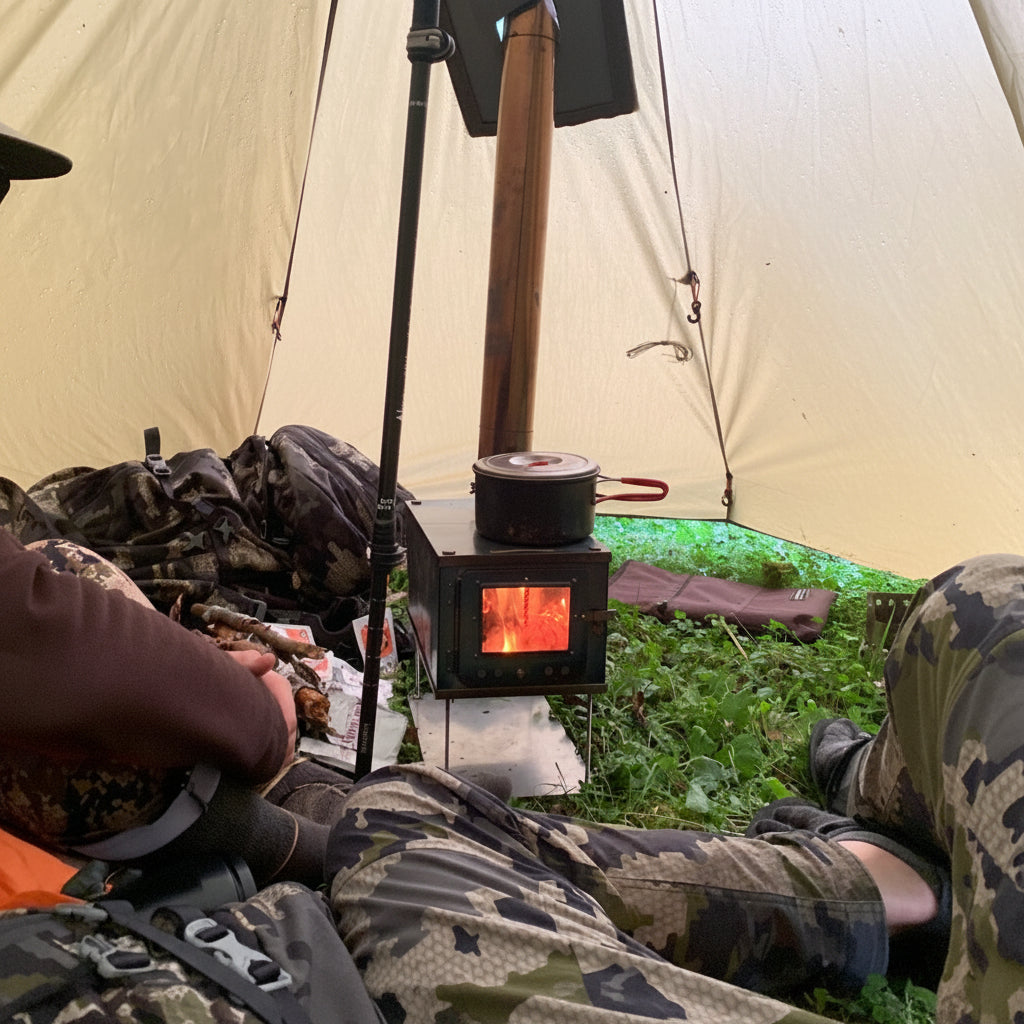
If you're using a hot tent stove—the centerpiece of winter camping—you have a natural heat source that can keep water from freezing throughout the night. Place your water bottles or containers on a stable surface near the stove, but far enough away to avoid melting plastic or creating a safety hazard. A wide-mouth insulated bottle works best because you can easily access the water and the insulation keeps it warm longer once you move it away from direct heat.
The key is positioning. Keep bottles within a few feet of the stove where ambient warmth radiates outward. Metal containers conduct heat more efficiently than plastic, so consider a stainless steel bottle or thermos. Monitor the temperature of your bottles periodically—if they're too hot to touch comfortably, they're storing enough heat to stay liquid for hours. Many winter campers rotate two bottles: one stays warm by the stove while the other is used, then they swap when the active bottle cools.
This method is especially effective because your stove is already burning to keep the tent warm. You're simply taking advantage of existing heat without additional effort or fuel consumption.
Sleeping with Water in Your Sleeping Bag
Another reliable approach is to keep a water bottle with you inside your sleeping bag. Your body generates significant heat while you sleep—easily enough to prevent a well-insulated bottle from freezing. Place the bottle at your feet or alongside your torso where it benefits from your core warmth without being uncomfortable.
Use an insulated bottle for this method. A wide-mouth design allows you to drink easily without exposing yourself to cold air when you wake up thirsty. Some campers wrap their bottle in a thin cloth or place it inside a sock for extra insulation and to create a comfortable barrier between cold plastic and skin.
The advantage here is convenience: water is within arm's reach when you need a drink during the night, and it stays warm and ready. This is especially valuable if you need to stay hydrated for safety or comfort, or if your tent lacks a stove.
Combining Both Methods
Many experienced winter campers use both strategies together. Keep one bottle warming near the stove for use during evening hours and morning, then transition another bottle into your sleeping bag for the night. This ensures you always have access to unfrozen water and maximizes your comfort throughout your camping trip.