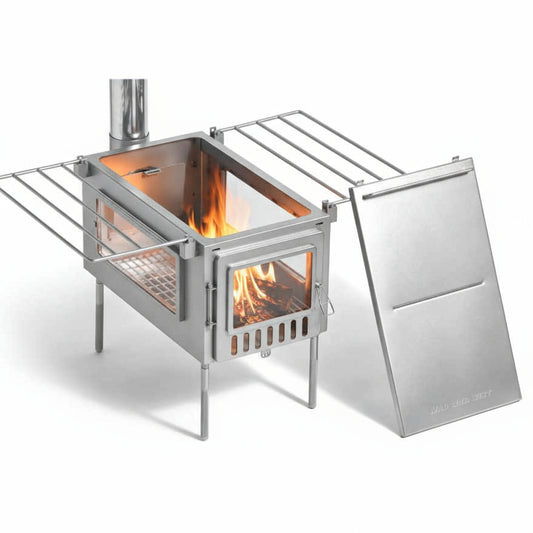
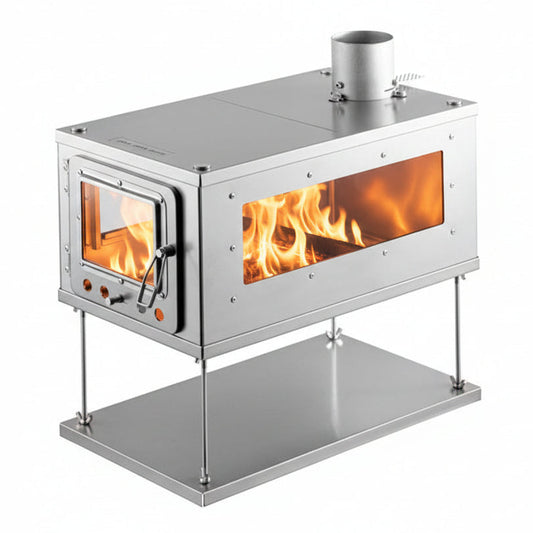
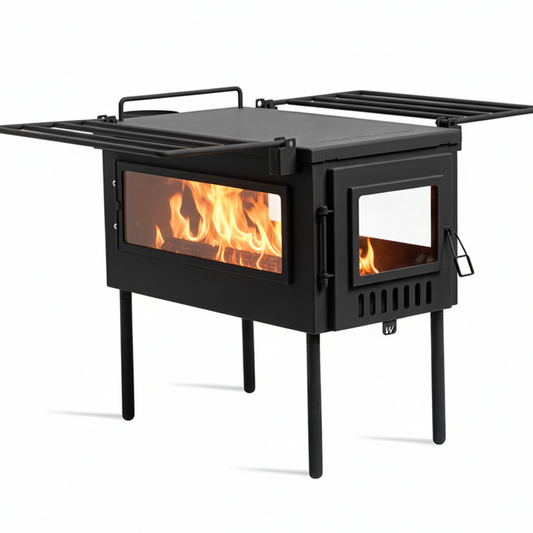
How Securely Should Titanium Tent Stove Panels Lock Together
How Titanium Tent Stove Panels Should Lock Together for Maximum Security and Durability
When you're relying on a hot tent stove in the backcountry, the last thing you want is for critical components to shift, warp, or fail when you need them most. The way stove panels lock together isn't just a design detail—it's a foundational element of safety, longevity, and reliable heat output in extreme conditions.

The Risk of Panel Warping and Why Locking Mechanisms Matter
Titanium tent stove panels experience intense thermal stress. When exposed to repeated heating and cooling cycles, unsecured or loosely fitted panels naturally want to warp, bend, or separate. This warping compromises the stove's structural integrity and can lead to dangerous gaps where heat escapes, smoke leaks into your tent, or—worse—the stove becomes unstable.
A robust locking system keeps panels perfectly aligned and prevents this movement before it starts and after it happens. Secure panel locks distribute stress evenly across joints and seams, ensuring that thermal expansion and contraction happen uniformly rather than creating weak points.
Thick Gauge Metal: The Foundation of Long-Term Performance
Not all titanium is created equal, and not all thickness is the same. High-quality tent stove panels are manufactured from thick gauge titanium—material substantial enough to withstand repeated thermal cycling without thinning, cracking, or losing structural rigidity over years of use.
Thick gauge metal resists warping naturally and pairs perfectly with locking mechanisms to create a stove that maintains its shape and function season after season. When panels are thin, even the best locking system struggles to prevent long-term deformation. When panels are thick and properly locked, the entire assembly becomes more resilient and predictable in the field.
Certified Metals and Manufacturing Standards
The metals used in your stove should always come from certified sources that verify composition, purity, and performance specs. Certified titanium meets industry standards for strength, heat resistance, and durability. This certification isn't marketing—it's a guarantee that the material can handle the thermal demands of a hot tent environment without failure.
Reputable manufacturers source certified metals and use precision manufacturing processes to ensure that every panel, every lock, and every seam meets exact tolerances. This consistency means you can trust your stove's behavior in the field and expect it to perform the same way next season as it did this one.
The Complete Picture: Integration Over Components
The best tent stoves don't rely on any single element—not the locking mechanism alone, not thick gauge metal alone, and not certified materials alone. Instead, they integrate all three. Certified titanium provides the raw material reliability, thick gauge construction gives structural strength, and engineered locking systems keep everything stable and aligned under thermal stress.
When you invest in a stove built this way, you're buying confidence. You know the panels won't separate mid-season, the metal won't warp under repeated heating, and the certified materials mean the stove will perform safely year after year in the harshest conditions.