Best Horse Packing Tent Wood Stove for Backcountry
Choosing the Best Horse Packing Tent Wood Stove for Your Backcountry Adventures
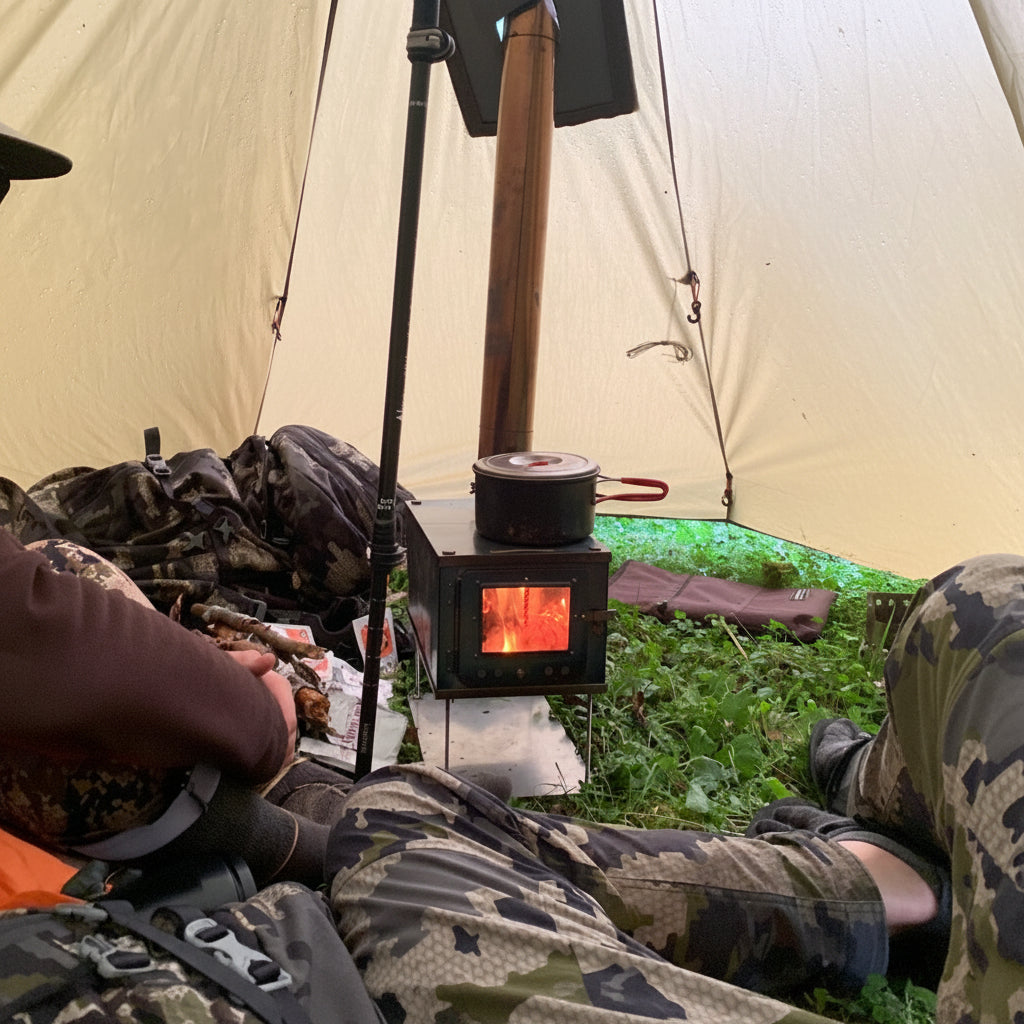
When you're planning a multi-day backcountry camping trip on horseback, every piece of gear matters—especially your shelter and heat source. A quality wood stove designed for tent use can transform your camping experience, providing reliable warmth, a place to cook, and a gathering point during long mountain nights. But with so many options available, how do you choose the right one for horse packing?

Why a Wood Stove Matters for Horse Packing
Unlike car camping or base camps where weight is less of a concern, horse packing requires careful consideration of load distribution and total pack weight. A wood stove offers distinct advantages: it burns a renewable fuel source you can gather near a campsite, requires no fuel canisters to pack in and out, and provides both heat and cooking capability in a single piece of equipment.
The right stove also extends your camping season. Spring and fall trips that might otherwise be uncomfortable become genuinely enjoyable when you can maintain a warm interior temperature. For hunters, anglers, and wilderness explorers who spend weeks in the backcountry, this comfort translates to better rest and safer conditions.
A Wood Stove Alternative During Campfire Restrictions
Even in prime backcountry territory, fire restrictions can limit or prohibit open campfires. When you encounter these restrictions, you'll need alternative heating and cooking solutions that comply with local regulations, like a wood stove with spark arrestor.
Check Local Regulations Before You Go
Always verify current fire restrictions with the Forest Service, Bureau of Land Management, or local land management agencies before your trip. Regulations change seasonally and vary by location. Some areas permit wood stoves year-round (with spark arrestor), while others restrict them during specific months. Understanding these rules in advance lets you plan appropriate gear..
Having backup heating and cooking methods ensures your horse packing trips stay comfortable and compliant, no matter what restrictions you encounter in the backcountry.
Key Features to Look For
Compact and Lightweight Design
Your stove should pack efficiently without consuming excessive horse load capacity. Look for models that disassemble into manageable pieces and nest compactly. Weight matters, but not at the expense of durability—a stove that fails mid-trip is far more costly than a few extra pounds.
Durable Construction
Steel or titanium construction withstands repeated packing, unpacking, and the rigors of backcountry use. Check that seams are welded securely and that the design can handle thermal stress from heating and cooling cycles.
Proper Ventilation and Safety
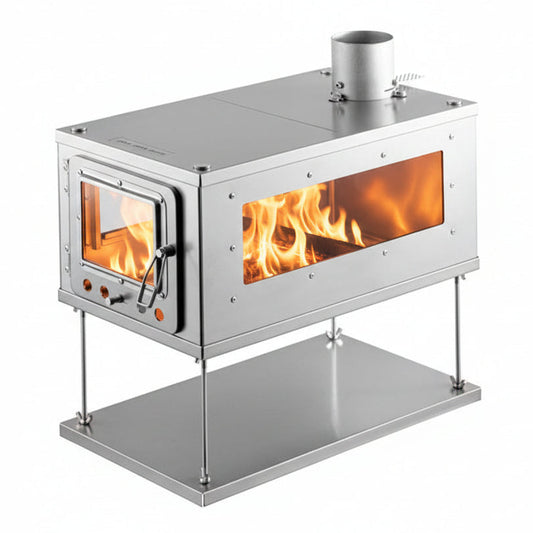
Your tent stove must work safely with your shelter. Look for models designed specifically for tent use, with appropriate chimney height and draft characteristics. A stove that creates excessive draft will waste fuel; one with insufficient draft produces smoke and carbon monoxide risk. The stove should have a spark arrestor to prevent embers from escaping the chimney.
Cooking Surface
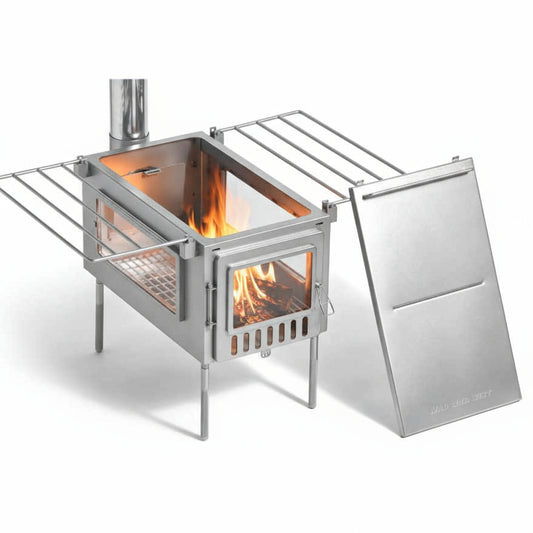
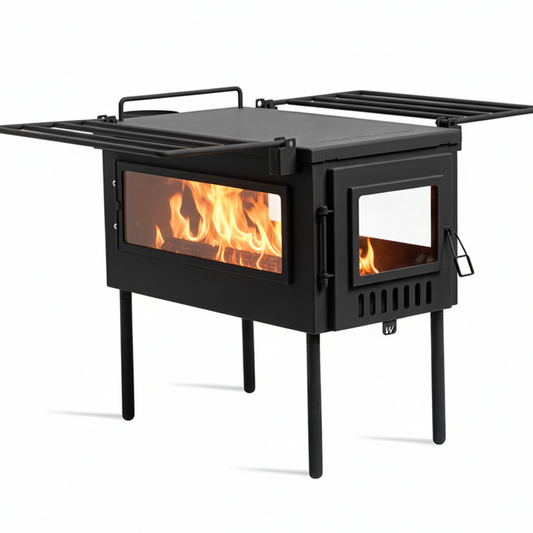
A flat top or grill surface lets you heat water, cook meals, and dry gear. Some stoves include removable cooking grates or adjustable heights to accommodate different cookware sizes.
Fuel Efficiency
A well-designed stove maximizes heat output from available wood, reducing the amount you need to gather and process. This is especially valuable in alpine or sparse timber zones where firewood may be limited.
Matching Your Stove to Your Tent
Not every stove works with every tent. Hot tents—shelters specifically designed with stove jacks, a reinforced fabric—are engineered to handle the heat and exhaust from a wood stove safely. If you're using a standard tent, you'll need to carefully manage the stove placement and chimney routing to prevent fabric damage and ensure proper ventilation.
Consider your tent's size and layout. A larger wall tent or canvas shelter can accommodate a bigger stove with more cooking surface. Smaller backpacking tents require compact, lightweight models. The stove jack opening size also matters—measure your tent's specifications and match them to your stove's chimney diameter.
Setup and Maintenance in the Field
The best stove is one you can set up quickly and maintain easily during your trip. Look for designs with straightforward assembly, minimal moving parts, and accessible areas for ash removal.
A stove that clogs with creosote mid-trip becomes a liability, so choose a model with good draft characteristics and plan to clean the chimney regularly. Clean spark arrestor daily to keep your wood stove performing well.
Making Your Decision
The best horse packing tent wood stove balances weight, durability, heat output, and compatibility with your shelter system. Test your setup at home or on shorter trips before committing to extended backcountry use. Pay attention to how the stove performs in different weather conditions, how efficiently it burns various wood types, and how comfortable you feel operating it safely.
Your stove is an investment in comfort, safety, and self-sufficiency in the wilderness. Choose one built to last, designed for the specific demands of horse packing, and matched to your tent and camping style. With the right stove, those cold mountain nights become some of your favorite memories.