Bug-out Bag vs Bug-out Camp: Where a Titanium Tent Wood Stove Fits In
When wilderness survival comes down to two fundamental strategies, most outdoor enthusiasts find themselves choosing between mobility and comfort. A bug-out bag prioritizes speed and portability—you're moving fast, traveling light, and covering ground. A bug-out camp, by contrast, emphasizes establishing a secure, sustainable position where you can shelter, rest, and wait out a situation. The real question isn't which approach is better; it's understanding when each makes sense and how the right gear bridges the gap.

The Bug-Out Bag Philosophy
A bug-out bag is built for rapid deployment. You grab it and move. The focus is on essentials: water, shelter, navigation, first aid, and fire-starting capability. Weight matters enormously because every pound affects your speed and endurance. Most bug-out bags weigh between 20 and 40 pounds, designed to be carried for extended distances without exhaustion. The mindset is tactical—get to safety, reach a destination, or establish distance from a threat.
Shelter in a bug-out bag typically means a lightweight tarp, emergency bivy, or ultralight tent. The goal is protection from elements with minimal weight penalty. Cooking and heating are often secondary; you might carry a small camp stove or rely on cold rations.
The Bug-Out Camp Approach
A bug-out camp is a different animal entirely. You're establishing a position—whether that's a remote property, a designated retreat location, or a pre-positioned cache site. Here, comfort, sustainability, and functionality take priority over weight. You have time to set up properly, and you're likely staying put for days or weeks rather than hours.
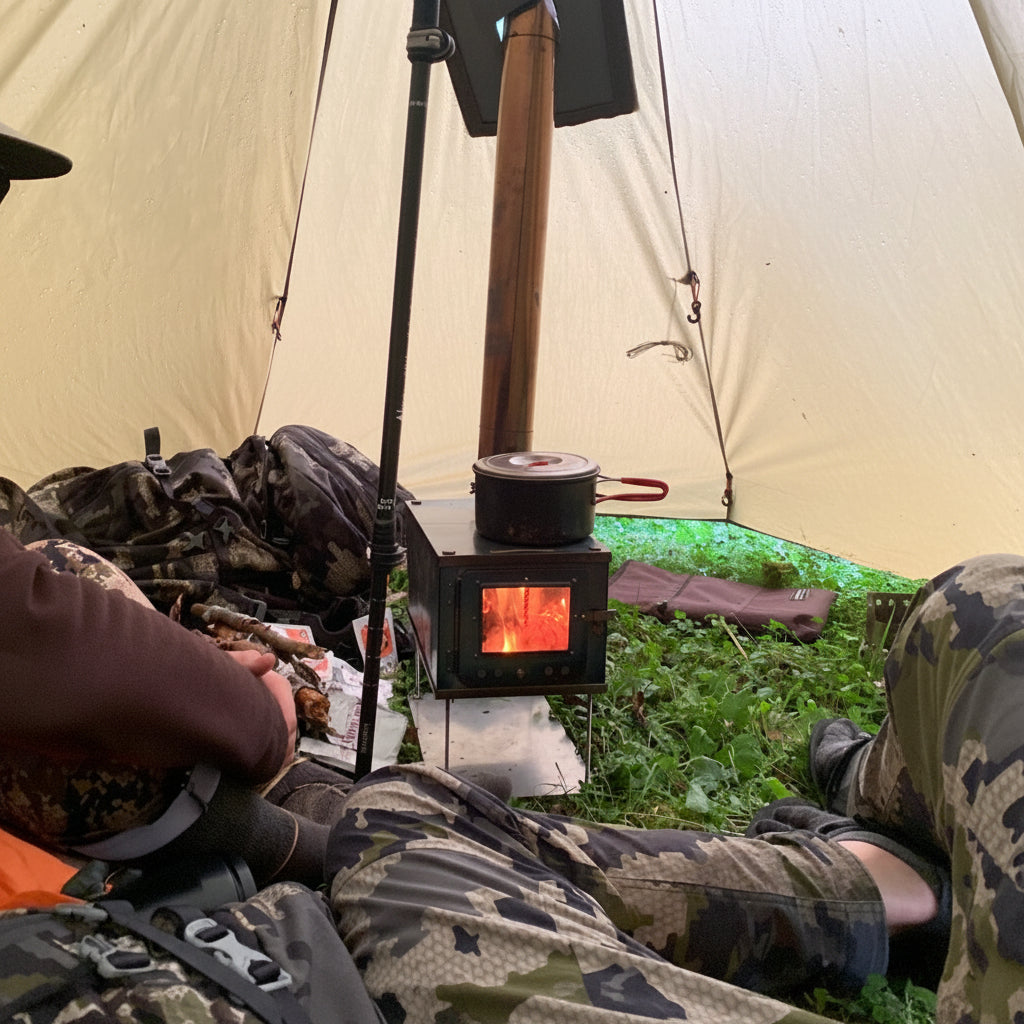
This is where heating and cooking infrastructure becomes practical. A proper shelter—whether a hot tent, cabin, or insulated structure—can be equipped with real amenities. You can store supplies, maintain a fire, prepare meals, and create a defensible, livable space.
Where a Titanium Tent Stove Fits
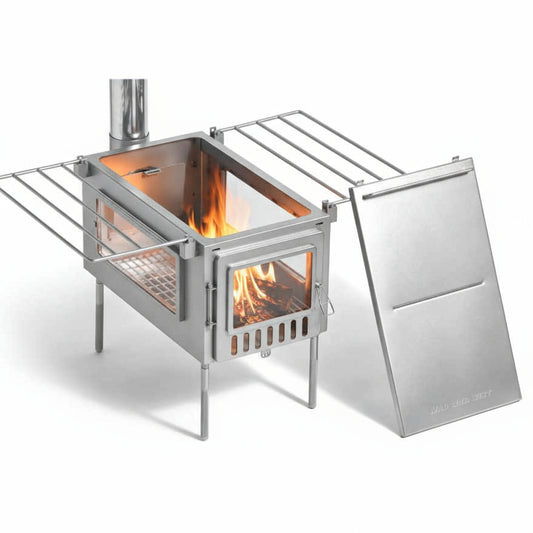
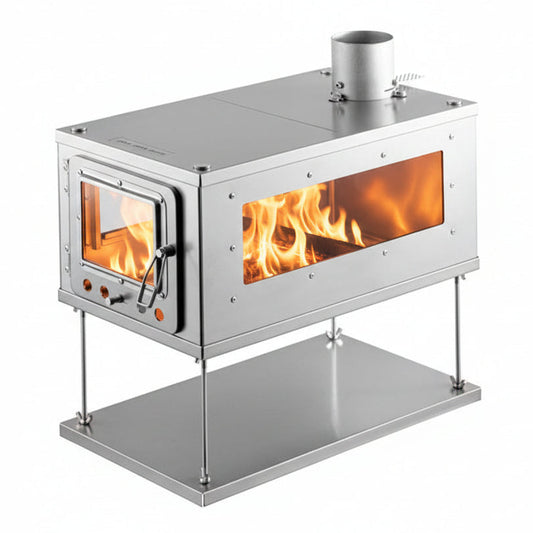
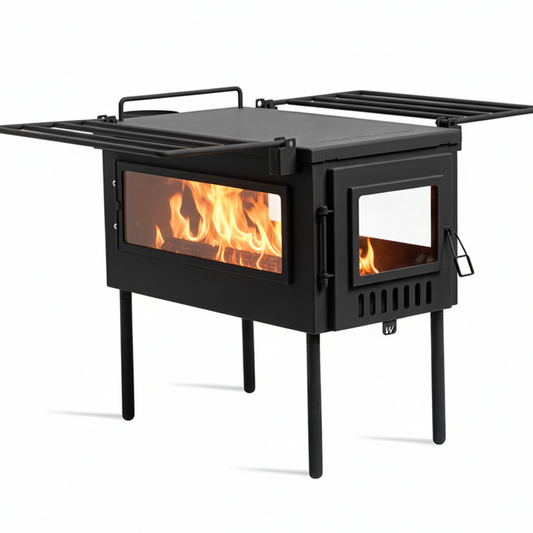
A titanium tent stove occupies a unique position in outdoor preparedness. Some think it's too heavy and bulky for a traditional bug-out bag—most weigh 2 to 10 pounds, which is a significant load for mobile operations. However, it's the ideal solution for a bug-out camp.
In a camp setting, a titanium stove delivers multiple critical functions. It provides reliable heat in cold conditions, enabling you to maintain core body temperature and stay alert. It allows you to cook hot meals and purify water through boiling, improving morale and reducing foodborne illness risk. The stove creates a focal point for your camp—a place to gather, dry gear, and maintain psychological stability during extended shelter-in-place scenarios.
Titanium specifically matters because it's lightweight relative to steel alternatives, corrosion-resistant, and durable enough to handle years of use. If you're pre-positioning gear at a bug-out location or transporting it by vehicle, the weight is manageable. Once installed in a tent, it becomes an asset that justifies its presence.
Practical Integration
The most effective preparedness strategy often combines both approaches. Your primary bug-out bag stays lean and mobile—designed to get you moving if immediate evacuation is necessary. Simultaneously, you maintain a bug-out camp location with proper infrastructure, including heating and cooking capability. A titanium tent stove becomes part of that secondary position, not your primary escape kit.
This dual-layer approach acknowledges reality: sometimes you need to move fast, and sometimes you need to establish security and wait. Having both options, with gear appropriately scaled to each scenario, gives you flexibility when circumstances are uncertain.
The titanium tent stove isn't just a bug-out bag item—it's a bug-out camp essential. Understanding that distinction helps you build a preparedness strategy that actually works.