Canvas vs Synthetic (Nylon and Polyester) Hot Tent Differences
When it comes to choosing a hot tent for wood stove camping or backcountry adventures, one of the most important decisions you'll make is selecting the right fabric. Canvas and synthetic (nylon and polyester) are the two dominant materials in the market, each with distinct advantages and trade-offs. Understanding the differences will help you pick the tent that best matches your needs and budget.

Canvas: The Traditional Choice
Canvas has been used in outdoor shelters for generations, and for good reason. This natural cotton-based fabric offers exceptional durability and a proven track record in extreme cold conditions. Canvas breathes naturally, which helps reduce condensation buildup inside your tent—a critical factor when using a hot tent stove in below freezing cold weather.
One of canvas's biggest strengths is its fire resistance. When used with a hot tent stove, canvas provides a safer barrier against sparks and radiant heat. The fabric also ages gracefully; with proper care, a quality canvas tent can last decades. Many experienced winter campers prefer canvas specifically for its reliability in harsh environments and its ability to handle the thermal stress of stove use.
The downsides are waterproofness, weight, bulk and maintenance. Canvas tents are heavier than their synthetic counterparts, which matters if you're hiking into remote locations. Canvas also requires regular treatment to maintain water resistance and prevent mildew, adding to long-term care demands. It's not a good choice for camping in rainy wet climates.
Synthetic (Nylon and Polyester): Modern Convenience
Synthetic fabrics have revolutionized tent design with their lightweight construction and low-maintenance appeal. Modern nylon is treated with coatings like silicone or polyurethane to provide excellent water resistance right out of the box. Setup is quick, and cleanup is minimal—just brush off dirt and let it dry.
Synthetic tents are significantly lighter and less bulky than canvas, making them ideal if portability is a priority. They're also more affordable upfront, which appeals to newcomers testing the hot tent lifestyle. The fabric is durable and resists rot and mildew naturally.
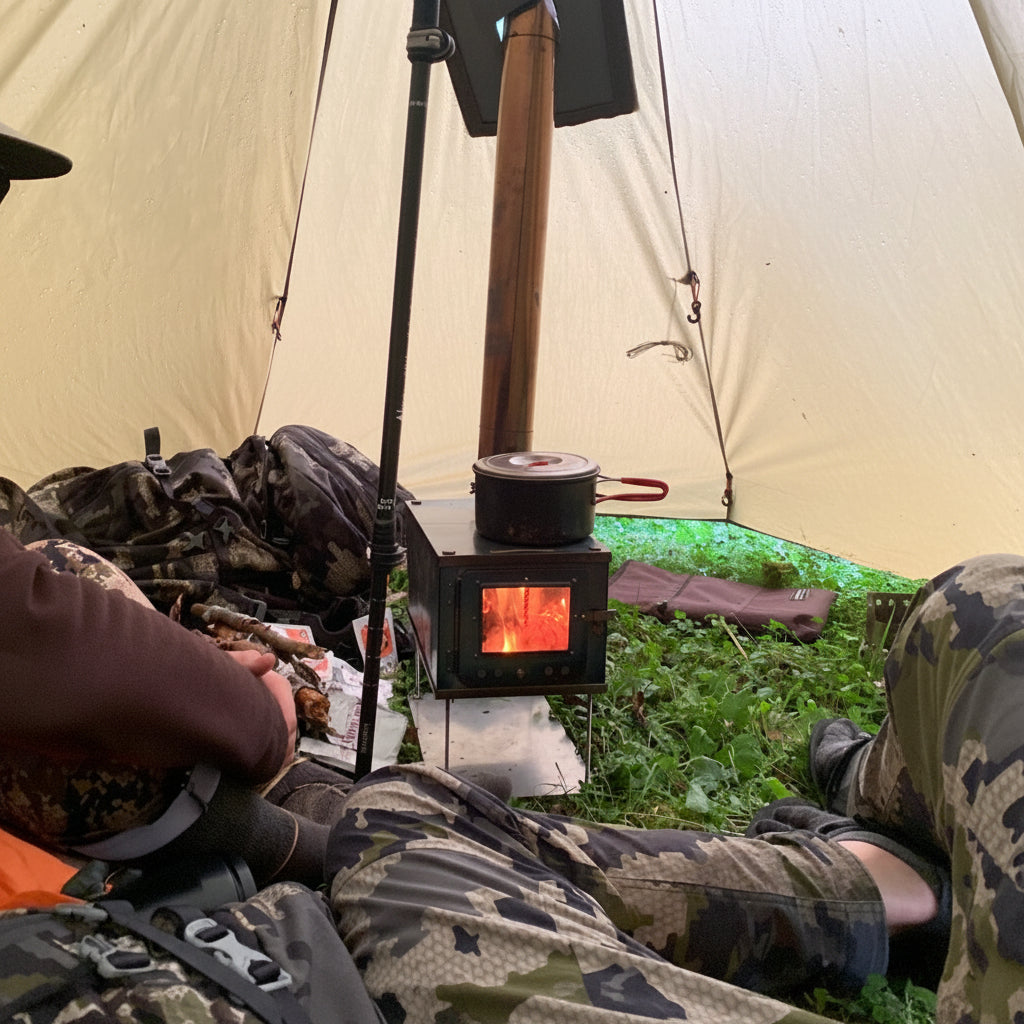
However, synthetic fabric has limitations in hot tent applications. The fabric is less breathable than canvas, which can lead to condensation accumulation when not using a stove. Synthetic fabric is also more susceptible to heat damage; prolonged exposure to high temperatures or direct contact with sparks can melt pinholes in the material.
Making Your Decision
Choose canvas if you plan to use a hot tent stove regularly in below freezing temperatures, prioritize longevity, or camp in extreme cold where condensation management is critical, and don't bike the cost, weight and bulk penalty.
Choose synthetic if you value lightweight portability, waterproofness, prefer minimal maintenance, or are exploring hot tenting on a budget. Just be mindful of stove placement and heat exposure to extend the tent's lifespan.
Ultimately, both materials can work in a hot tent setup—it's about matching the fabric to your specific use case and comfort with maintenance demands. Most serious adventures own one of each!