Choosing the Right Flue Pipe Height for Better Tent Stove Draft
A wood stove inside your tent is only as effective as the draft it creates. One of the most overlooked factors in stove performance is pipe height—and getting it right can mean the difference between a roaring fire and a smoky, inefficient setup.

Why Pipe Height Matters
Draft is the natural flow of air and exhaust gases up through your stove and out the chimney. The taller your pipe, the greater the temperature difference between the inside and outside of the pipe, which creates stronger draft. A stronger draft pulls more air through the firebox, allowing your wood to burn hotter and more completely while reducing smoke and creosote buildup inside the tent.
Pipe height also affects how heat is distributed. A taller pipe gives the exhaust more time to cool slightly before exiting, which means more radiant heat stays inside your tent rather than escaping up the chimney.
Finding the Right Height
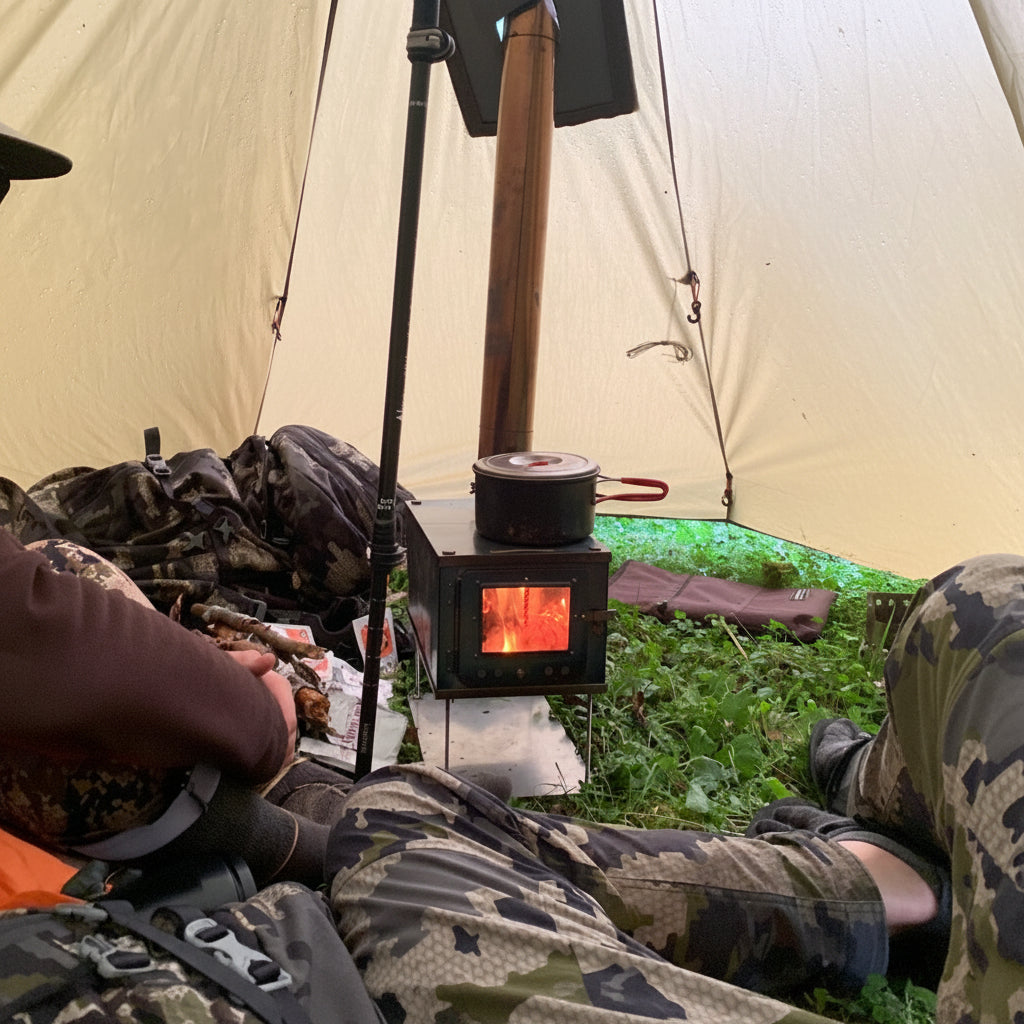
Most tent wood stove systems perform best with a pipe height of 4 to 6 feet above the stove's firebox, and 12" - 15" above the peak height of the shelter. This range provides enough draft for efficient combustion without creating excessive draw that pulls too much warm air out of your tent.
Several factors influence your ideal height:
- Tent size and volume — Larger tents may benefit from slightly taller pipes to ensure adequate air circulation
- Outside temperature — Colder conditions naturally improve draft, so you may need less height in winter
- Stove model — Check your manufacturer's recommendations; some designs are optimized for specific pipe configurations
- Pipe diameter — Wider pipes (typically 4 inches) require less height than narrower ones to achieve good draft
- Fuel type and moisture — Dry hardwood burns more efficiently and requires less draft than wet or softwood
Common Height Mistakes
Too short: Pipes under 3 feet often struggle with draft, leading to smoke backing into the tent, incomplete combustion, and wasted fuel.
Too tall: Pipes over 12 feet can create excessive draft, pulling heat out faster than your tent can retain it and making the stove harder to control.
Uneven or kinked pipes: Any obstruction or angle greater than 45 degrees disrupts airflow and weakens draft, regardless of total height.
Installation Tips for Best Results
Keep your pipe as straight as possible. Each bend or horizontal section reduces draft efficiency. If you must use elbows, limit them to gentle angles and keep the overall path vertical.
Ensure your pipe exits through a proper roof stove jack. A poorly installed exit point allows cold air to enter around the pipe, cooling the exhaust and weakening draft.
Check that your tent has adequate ventilation. Even with perfect pipe height, your stove needs fresh air to draw from. Crack a door or vent slightly to allow oxygen to reach the firebox.
Testing Your Setup
Light a small fire and observe the smoke behavior. Smoke should flow steadily up the pipe without hesitation or backflow. If you see smoke curling back into the tent, your draft is too weak—consider adding height or checking for obstructions.
Feel the pipe at different heights. It should be hot near the stove and progressively cooler as you move up. If the top section is still very hot, you may have excessive draft pulling heat away too quickly.
Pay attention to how the stove responds to adjusting the air vents. A properly drafted stove should respond smoothly to vent adjustments without sudden surges or drops in burn rate.
Getting your tent wood stove pipe height right takes a bit of experimentation, but the payoff is worth it—better heat, cleaner air, and a more enjoyable camping experience.