Floorless Tents are Cleaner and Dryer Explained
A Cleaner Backcountry Shelter
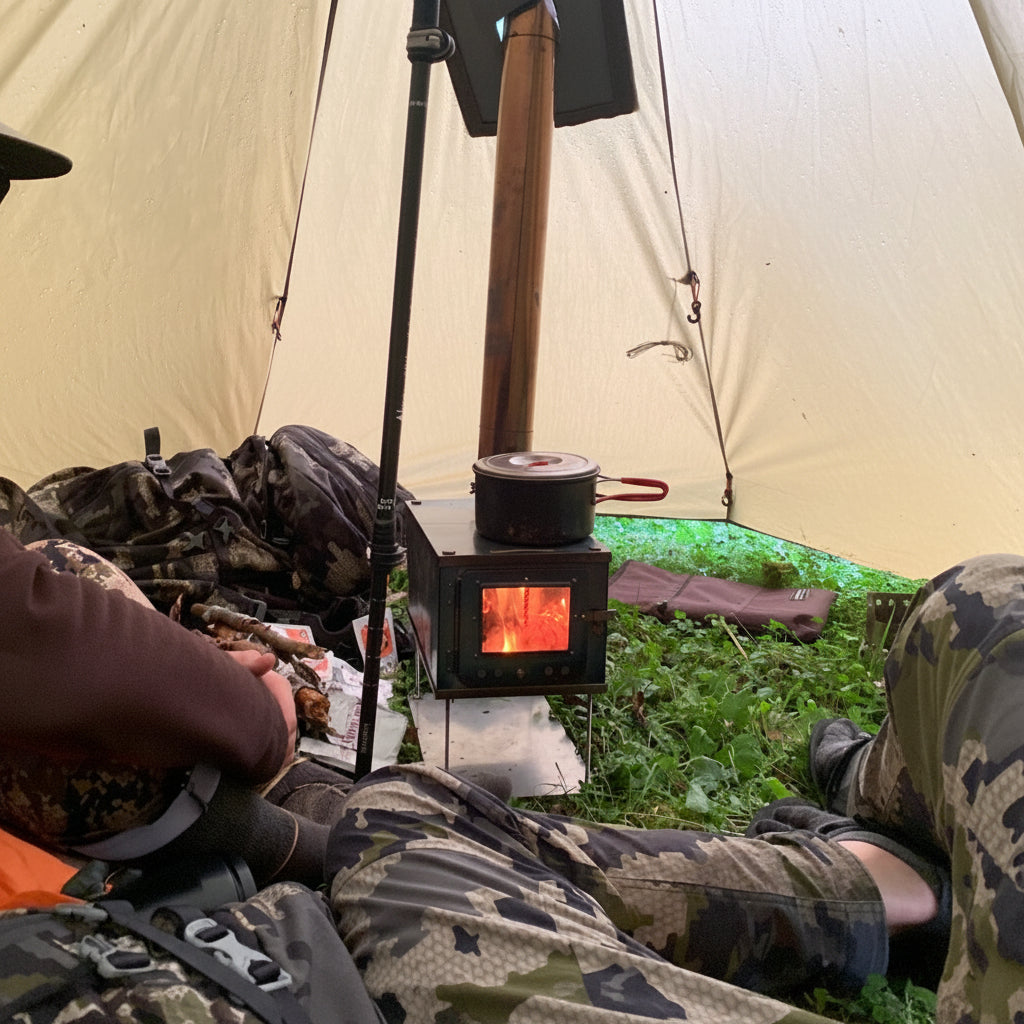
Floorless tents offer a cleaner, drier experience that traditional tent designs simply can't match. If you've spent time in the backcountry, you know how quickly a tent floor accumulates dirt, snow, and mud—especially when you're coming and going with wet boots during a long campouts.

No Tent Floor to Damage with Firewood or Embers
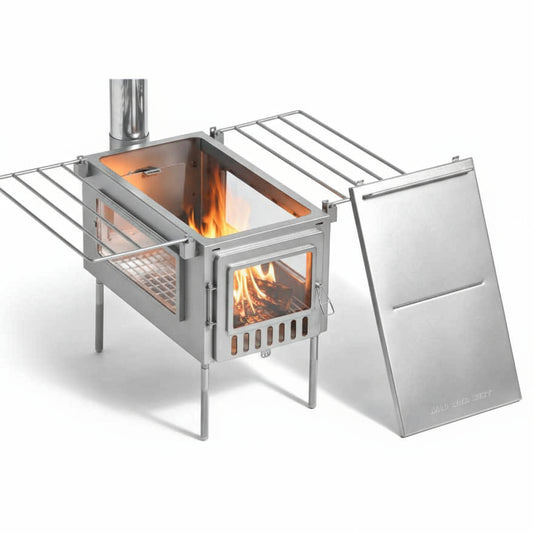
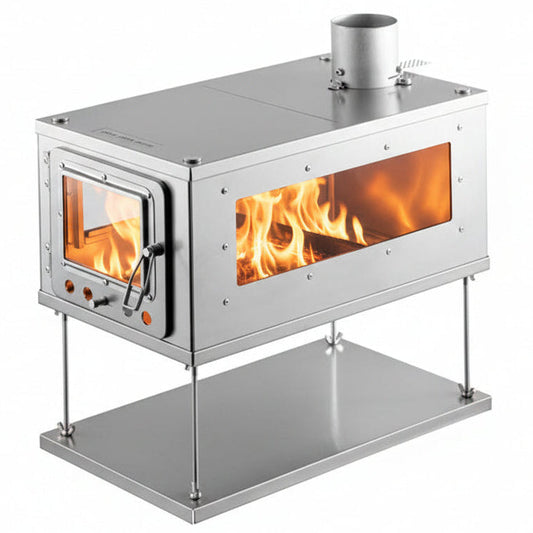
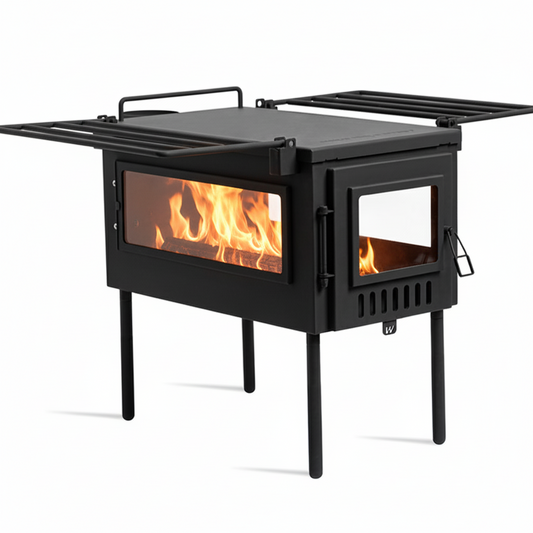
One of the biggest advantages is the elimination of floor damage from firewood and stove use. When you're running a hot tent stove, managing fuel becomes messy. Logs tracked in from outside leave bark, debris, and moisture on every surface. More importantly, hot embers inevitably escape from the firebox—it's not a question of if, but when. In a traditional tent with a fabric floor, those embers burn holes and create weak spots that compromise waterproofing and structural integrity. A floorless design eliminates this risk entirely, since there's no floor to damage.
Better Moisture Control for Multi-Day Trips
The moisture control is equally significant. Snow and slush melting off boots and gear naturally drain through open ground instead of pooling on a floor. This means less dampness, fewer odors, and a healthier interior environment for multi-day trips. Your sleeping bag, gear, and clothing stay drier, which translates directly to better insulation and comfort—critical factors when temperatures drop.
A Practical Choice for Winter Camping
For serious winter camping and backcountry use, a floorless tent with a quality hot tent stove isn't just a convenience choice. It's a practical investment in durability, safety, and the long-term performance of your shelter system.