Handling Damp and Frozen Firewood for Tent Wood Stove
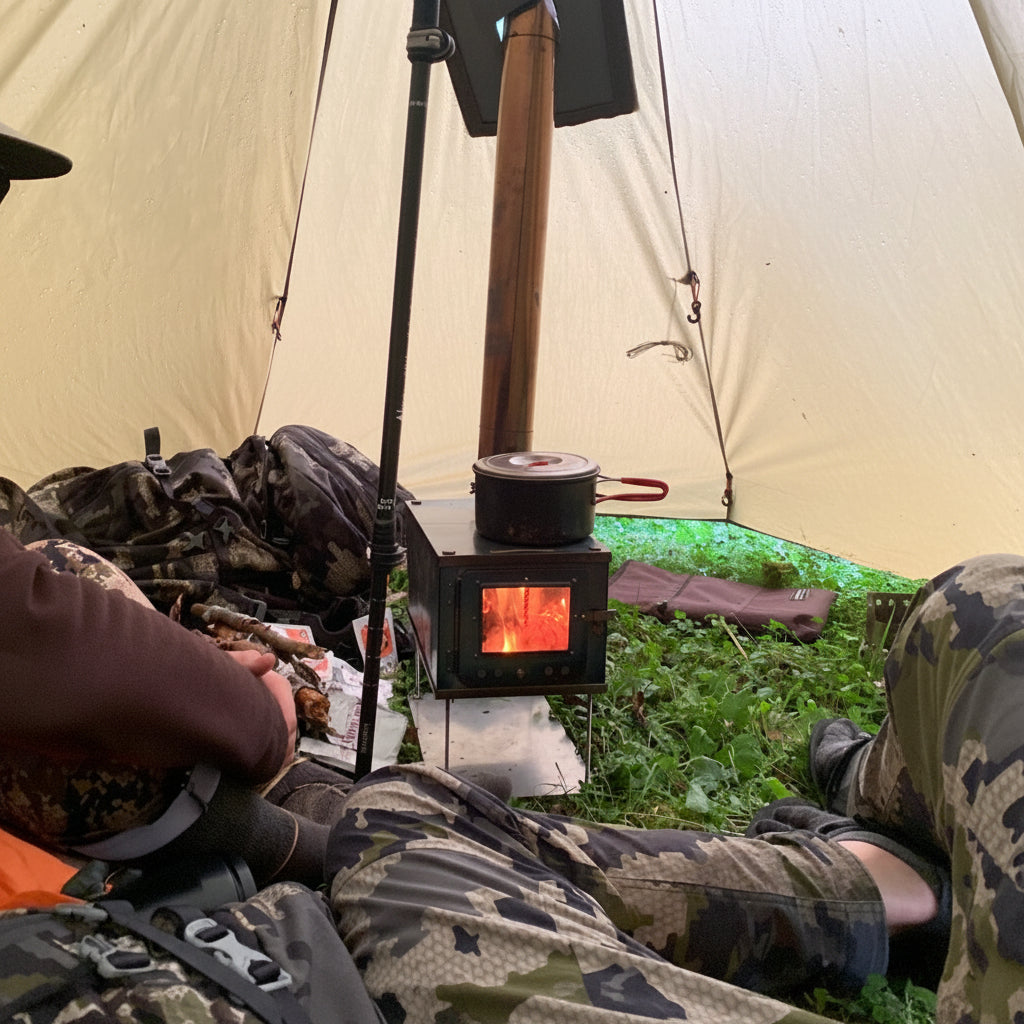
Dealing with damp or frozen firewood can be one of the biggest challenges when using a tent wood stove in the backcountry. Wet wood produces excessive smoke, burns inefficiently, and generates far less heat than properly seasoned fuel. Frozen wood presents similar problems—ice crystals prevent proper combustion. Here's how to handle both situations and keep your tent warm.

Cheat the Problem Before You Head Out
Pack kindling and firestarter in a waterproof bag or dry bag separate from your other gear. Even in a dry camp, morning dew and condensation can rehydrate wood overnight. A dedicated firewood bag keeps moisture away and gives you peace of mind.
Dealing with Damp Wood in Camp
If you arrive at camp and discover your wood is damp, don't panic. Start by splitting any larger pieces into smaller kindling. Expose the dry interior wood—the outside may be wet, but the core is often usable. Stack these pieces loosely near your stove (at a safe distance) to allow air circulation and gentle warming.
Build your fire with the driest wood you can find first. Softwoods like spruce and pine ignite more easily than hardwoods, even when slightly damp. Use plenty of tinder—dry grass, bark, or commercial fire starters—to establish a strong initial flame. Once you have a hot bed of coals, gradually add slightly damp wood. The heat from the coals will dry the new pieces as they catch fire.
Avoid smothering a young fire with too much wet wood at once. Add pieces gradually and be patient. A slower, hotter fire will eventually dry and burn damp wood more effectively than a cool, smoky blaze.
Managing Frozen Firewood
The exterior of frozen wood is essentially locked moisture. The ice can prevents the wood from releasing gases needed for combustion. If your wood is frozen solid, allow it to thaw near the stove before attempting to burn it. Place pieces in a safe location close enough to benefit from radiant heat, but far enough away to avoid fire hazard.
As the wood thaws, moisture will be released. This is normal and temporary. Once thawed, treat it like damp wood—split it into smaller pieces, build a strong initial fire, and add thawed pieces gradually to the coals.
Long-Term Camp Strategy
On extended trips, establish a firewood drying station. Create a simple rack or lean-to near your tent where split wood can sit in the sun and wind. Even a few hours of exposure helps. Rotate your wood supply—burn the driest pieces first, and let fresher wood dry while you cook and heat with the seasoned fuel.
Keep a small emergency supply of ultra-dry kindling in a waterproof container. Commercial fire starters, cotton balls soaked in petroleum jelly, or dryer lint are lightweight, reliable backups when conditions are wet.
Stove Maintenance in Damp Conditions
Burning damp wood produces more creosote and tar buildup inside your chimney and stove. After trips in wet conditions, inspect your stove's interior, spark arrestor and chimney for deposits. A clean stove burns more efficiently and safely.
With proper preparation and these field techniques, you can keep your tent warm and comfortable even when firewood conditions aren't ideal. The key is starting with dry wood, managing moisture carefully in camp, and being patient as you establish a hot, efficient fire.