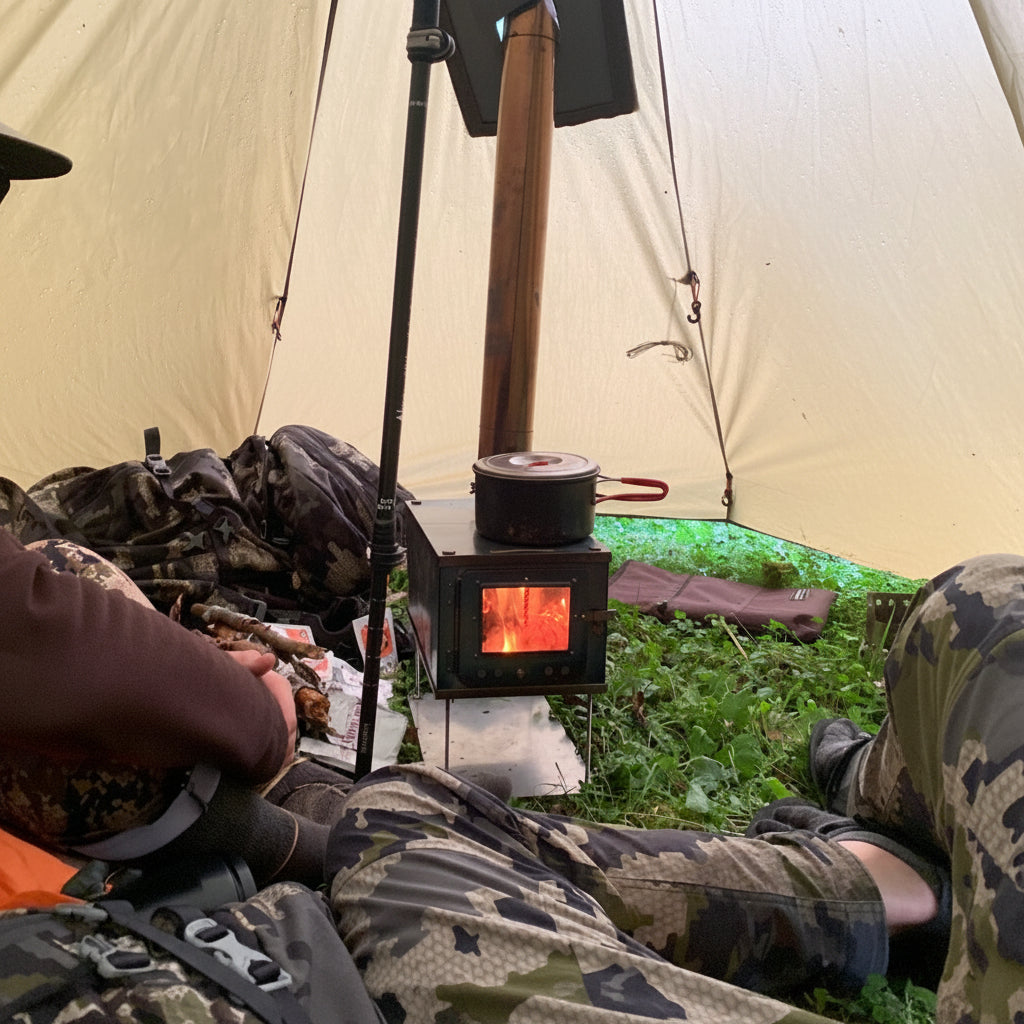
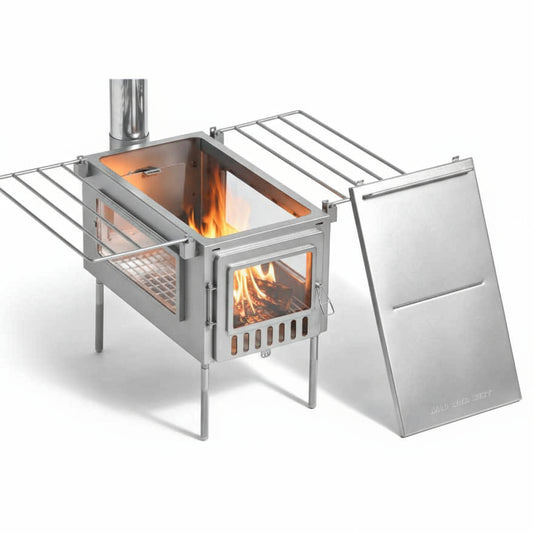
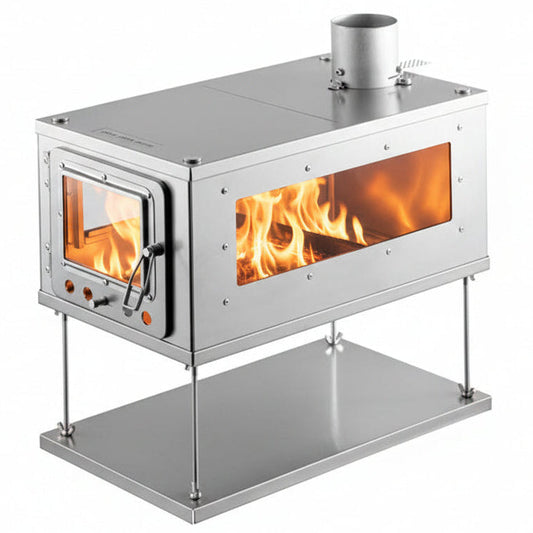
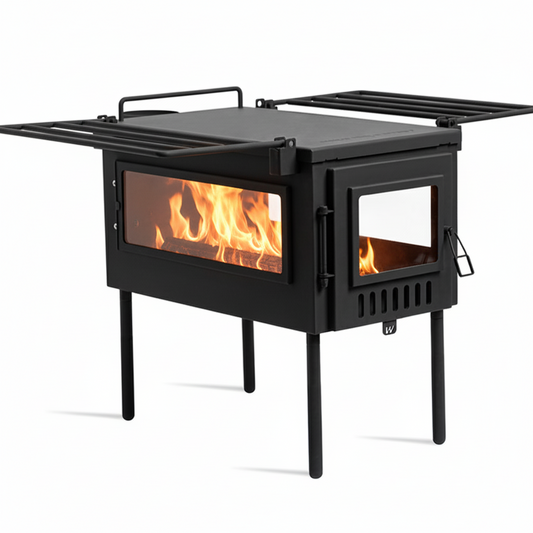
How Long a Titanium Tent Stove Burns from a Single Load of Firewood Explained
How Long Does a Titanium Stove Burn?
The burn time of a titanium tent wood stove on a single load of firewood depends on several factors, including the size of your stove, the type and moisture content of the wood, coal bed, how tightly you pack the firebox, and your ventilation settings.
Most quality titanium hot tent stoves will burn for 2 to 6 hours on a full load of seasoned hardwood. Softwoods like pine or spruce burn faster, while dense hardwoods like oak or maple can sustain a fire longer, especially if you pack the stove efficiently and manage airflow carefully.

Factors That Affect Burn Time
Several variables affect actual burn time:
- Wood moisture — Seasoned wood (below 20% moisture) burns longer and hotter than green or wet wood. Properly dried firewood is essential for maximum performance.
- Wood type — Hardwoods produce more BTUs and longer coals than softwoods. Mixing wood types can optimize both heat output and duration.
- Stove size and design — Larger fireboxes hold more fuel and burn longer per load. Titanium's thermal properties allow efficient heat retention even as coals diminish.
- How you load the stove — Tightly packed, uniform pieces burn more evenly. Larger splits may burn slower but require less frequent refueling.
- Airflow control — Restricting airflow after coals are established through dampers or draft adjustments extends burn time but reduces heat output. Finding the right balance is key for overnight heating.
- Ambient temperature — Colder conditions may draw more heat from the stove, affecting perceived burn duration and coaling time.
Why a Thick Coal Bed Matters
One often-overlooked factor that dramatically improves burn time and stove performance is establishing a thick coal bed before adding larger loads of wood. Many new users skip this step or rush through it, which leads to shorter burn cycles and wasted fuel.
A proper coal bed acts as a heat foundation that ignites fresh wood more efficiently and sustains an even, long-lasting fire. Here's why it matters:
- Better ignition — Hot coals ignite incoming wood faster than a thin flame alone, reducing the time your stove spends in a low-heat, inefficient state.
- More consistent heat — A thick bed of glowing coals distributes heat evenly across the firebox, preventing cold spots and temperature dips between loads.
- Longer burn cycles — Coals sustain themselves longer than active flames. A robust coal bed can keep your tent warm for hours even with reduced airflow and minimal new fuel.
- Less wood waste — Proper coal management means less incomplete combustion and fewer partially burned pieces. You extract more heat per log.
- Easier overnight operation — If you're planning an 8-hour burn, starting with a solid coal base lets you load larger hardwood pieces confidently, knowing they'll catch and burn steadily through the night.
How to Build a Thick Coal Bed
To build a thick coal bed, start with dry kindling and smaller splits to create active flames and early coals. Once you have a 2–3 inch layer of bright coals across the firebox floor, then add your larger hardwood pieces. Avoid the temptation to pack the stove too full too soon—let the coal bed establish itself first, and you'll see a noticeable improvement in both burn time and heating reliability.
Getting Longer Burns for Winter Camping
For winter camping in a hot tent, many users load their stove in the evening with larger hardwood pieces, close vents partially, and achieve 6 to 8 hours of steady warmth—enough to sleep through a cold night with minimal refueling. Testing different wood types and loading techniques with your specific stove will help you dial in the best burn pattern for your trips.