How to Start a Tent Wood Stove Quickly
How to Start a Tent Wood Stove Quickly
Getting your tent wood stove lit efficiently is essential when you're out in the field. Whether you're setting up camp at dusk or facing dropping temperatures, a fast start means warmth, comfort, and peace of mind. Here's how to do it right.

Pack-in Kindling and Firestarter in Waterproof Bag
The real secret to starting your tent stove quickly isn't just technique—it's preparation before you leave home. Pack a dedicated waterproof bag or dry bag containing pre-sorted kindling, tinder, and firestarter materials. This eliminates the scramble to find dry materials in the field and guarantees you have what you need the moment you need it.
Include pencil-thin kindling cut to uniform lengths (4–6 inches works best), a mix of natural tinder like fatwood or birch bark, and a reliable firestarter. Cotton balls soaked in petroleum jelly, or commercial fire starters all work—choose based on weight and reliability. Firestarter gives you insurance: even if your kindling is marginal, a quality accelerant can bridge the gap between tinder and established flame.
On arrival, set the bag near your stove setup so your materials are ready before you touch a match. This simple habit—packing fuel in advance—shaves minutes off your fire start and removes the stress of hunting for dry wood in fading light.
Prepare Your Materials Before You Light
The fastest fires start with organization. Gather three categories of fuel before striking a match: tinder (dry grass, bark, small twigs), kindling (pencil-thin branches), and split firewood. Keep them dry and within arm's reach of your stove. Wet or damp materials will slow your ignition dramatically, so store fuel under a tarp or in a dry bag until you're ready to use it.
Check your stove's damper and air vents before you begin. Make sure they're fully open—airflow is what turns slow smoldering into a roaring fire. A closed damper is the number-one reason fires struggle to catch.
Build Your Fire in Stages
Start with a small nest of tinder in the center of your stove's firebox. Light it with a match or lighter, then immediately add kindling in a loose teepee formation around the flame. Don't pack it tight—fire needs oxygen to spread. As the kindling catches and flames grow, gradually add progressively larger pieces of wood, always leaving space for air to flow through.
Once you have a solid bed of flames and glowing coals, add your first split logs. Place them parallel to each other rather than stacked, which again allows air to circulate underneath and around them.
Optimize Your Stove Setup
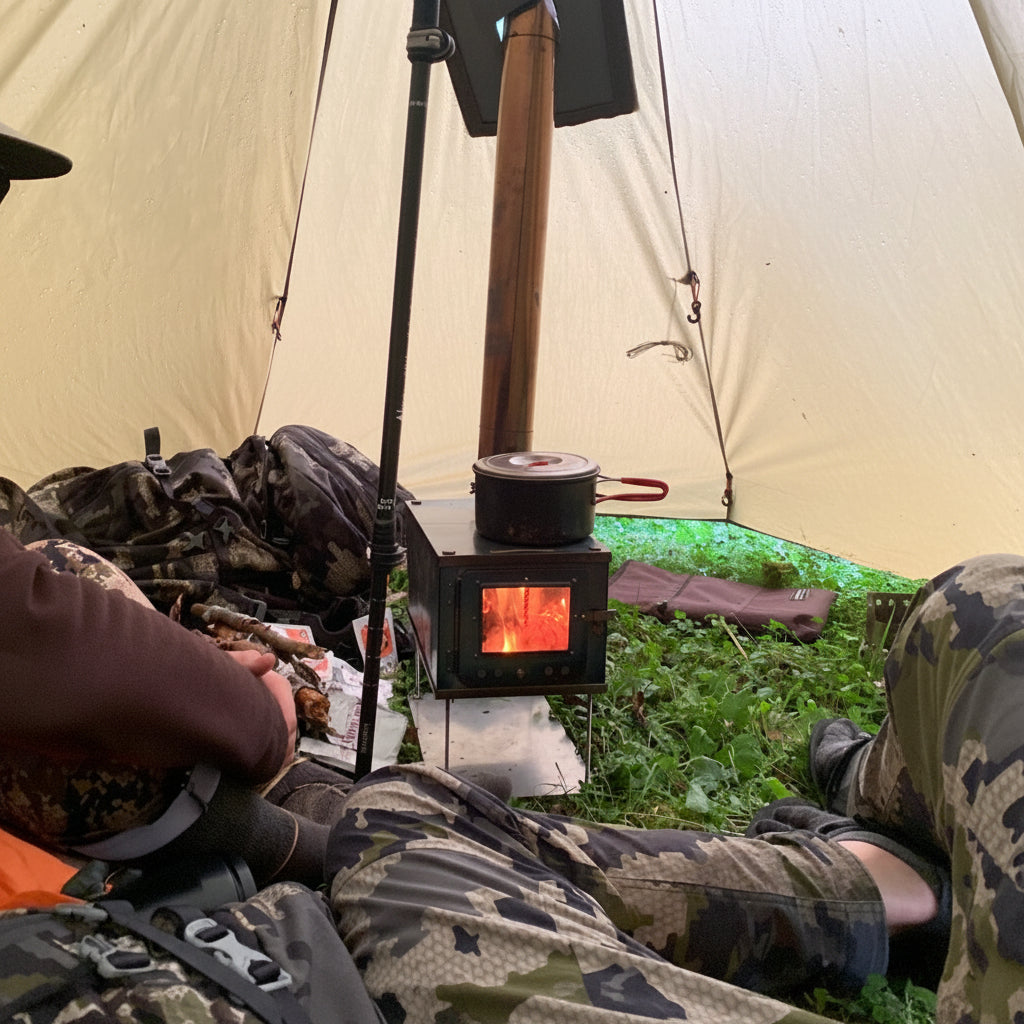
Position your stove in the center of your tent for even heat distribution and airflow on all sides. Make sure the chimney is fully assembled and seated properly—gaps or loose sections kill draft and slow heat output. A clean chimney also ignites faster than one clogged with creosote or ash from previous fires.
Open your tent's ventilation slightly, even on cold nights. A small vent opposite the stove's air intake creates a draft that feeds oxygen to your fire and helps it catch faster.
Speed Comes with Practice
Your first tent stove fire might take 10–15 minutes to reach full heat. As you become familiar with your stove's personality, your materials, and the timing, you'll cut that down to 5 minutes or less. Keep notes on what works—wood type, kindling size, damper position—so you can replicate success on future trips.
With dry fuel, open dampers, and a little patience, you'll have a warm, roaring fire faster than you'd expect.