How to Stay Dry During Rainy Hot Tent Camps
Rainy weather doesn't have to ruin your hot tent camping experience. With the right preparation and gear, you can stay warm, dry, and comfortable even when the skies open up. Here's how to master wet-weather camping in your hot tent setup.

Choose the Right Hot Tent Design
Not all hot tents are created equal when it comes to rain protection. Look for models with a steep roof pitch—typically 45 degrees or steeper—that sheds water quickly and prevents pooling. Make sure your tent has a full-coverage rain fly that extends well past the base, protecting the walls from wind-driven rain.
Seal Every Seam and Gap
Even small gaps become problems in heavy rain. Before your trip, inspect all seams on your tent body and rain fly. Apply seam sealer to any areas that look worn or compromised. Check the junction where your stove pipe exits the tent—this is a common leak point. Use high-temperature silicone or specialized tent repair tape to create a watertight seal around the edge of the stove jack opening.
Master Your Stove Setup
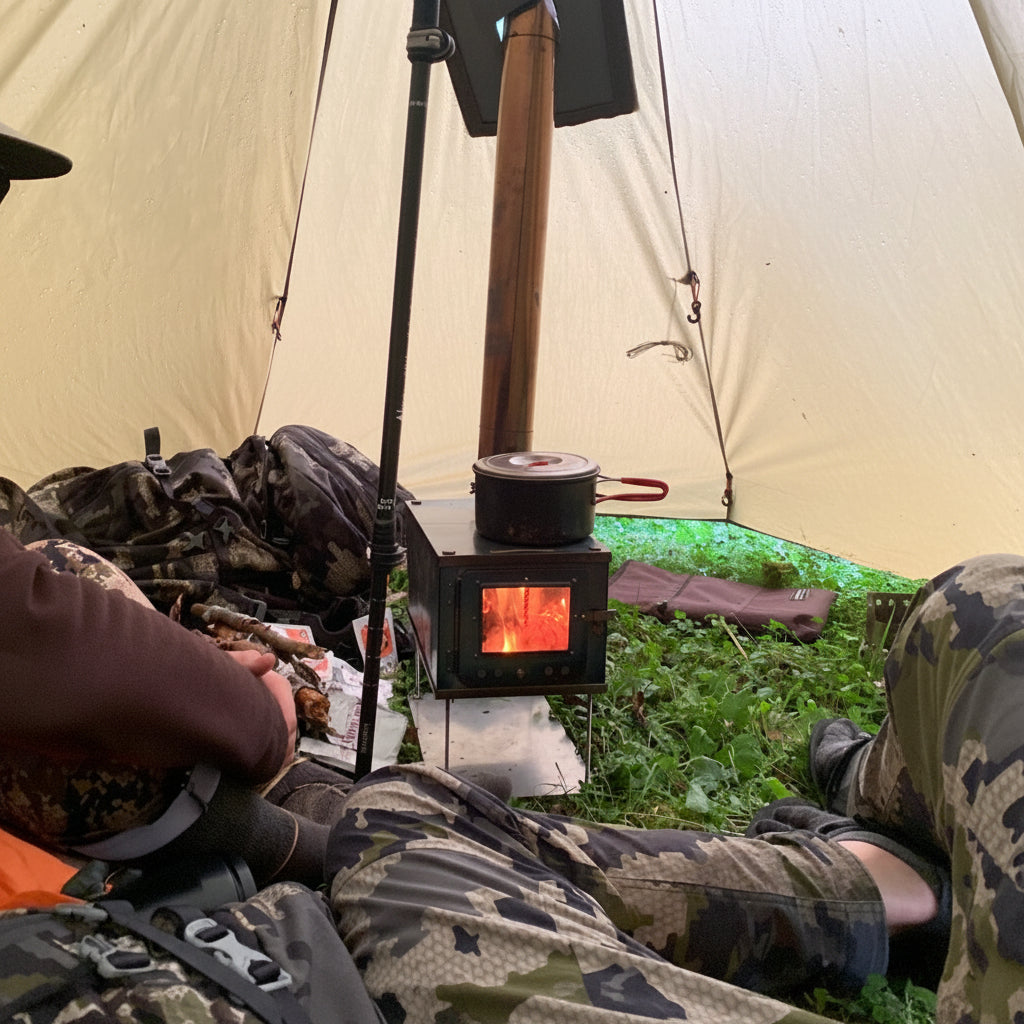
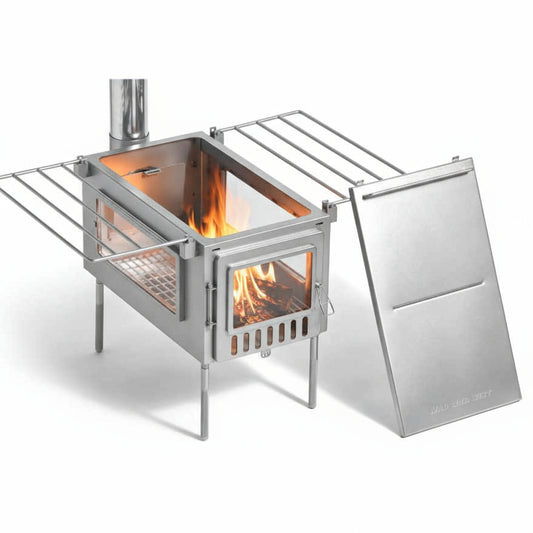
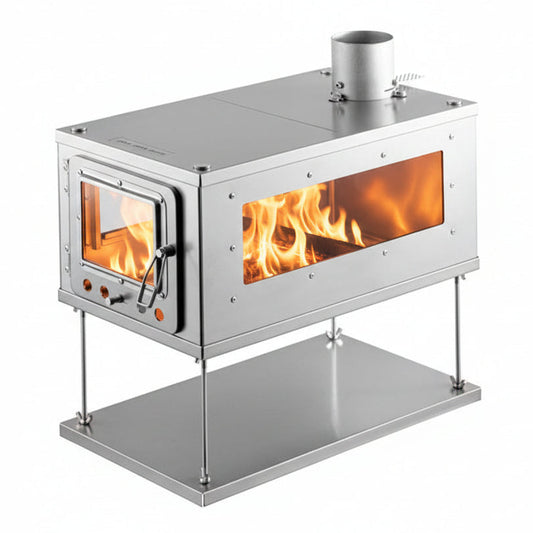
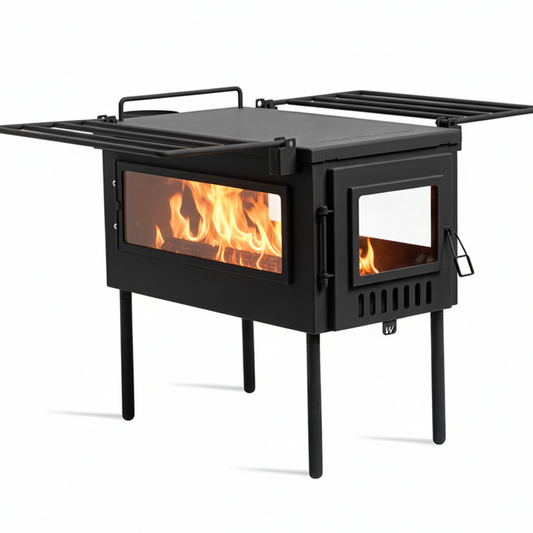
Your tent wood stove is your best defense against moisture inside the shelter. A properly functioning stove creates warm, dry air that naturally reduces condensation. Ensure your stove pipe has adequate clearance from tent fabric, to prevent heat damage and allow proper ventilation. Keep your stove burning steadily rather than in intense bursts; consistent heat is more effective at managing humidity than sporadic fires. Always use dry wood, as wet wood produces excess smoke and moisture.
Manage Ventilation Wisely
Ventilation is critical in wet conditions. Open your tent's roof vents or a door slightly to allow moist air to escape, even when it's raining. The warm air inside your tent will rise and exit through these openings, carrying moisture with it. This prevents the buildup of condensation on your tent walls and ceiling. Adjust ventilation based on conditions—more open in light rain, slightly more restricted in heavy downpours—to balance moisture control with heat retention.
Organize Your Gear Strategically
Keep wet gear separated from your sleeping area. Create a designated zone near the tent entrance for boots, jackets, and other damp items. Use waterproof bags or dry bags to store sleeping bags, clothing, and other essentials. Hang wet items on a line inside the tent away from your sleeping zone, allowing air circulation to dry them out. Never pile wet gear directly on your sleeping surface or against tent walls.
Invest in Quality Ground Protection
A waterproof groundsheet or footprint under your tent is non-negotiable in rainy conditions. This barrier prevents water from seeping up through the tent floor. Floorless tents require a good campsite selection.
Prepare Your Campsite
Site selection makes a huge difference in staying dry. Choose a location on slightly elevated ground that naturally sheds water. Avoid low spots, valleys, or areas near streams that could flood. Clear away vegetation and debris around your tent to improve water drainage. Position your tent so the entrance faces away from the prevailing wind direction to minimize rain blowing inside.
Keep Your Sleeping System Dry
Your sleeping bag is your lifeline in wet conditions. Store it in a waterproof compression bag until you're ready to sleep. Use a sleeping pad rated for moisture resistance, and consider a vapor barrier liner inside your sleeping bag for extra protection. Keep a dry change of clothes in a sealed bag—change into these before getting into your sleeping bag, even if you've been dry all day. Moisture from your body can accumulate in your bag over time.
Monitor Condensation Throughout the Day
Condensation is often the biggest culprit in wet-weather camping. Check your tent's interior regularly, especially the ceiling and upper walls. Wipe down any moisture with a microfiber cloth or towel. This simple habit prevents water from dripping onto your gear and keeps the interior environment drier. The effort takes just minutes but pays dividends in comfort and safety.
Rainy hot tent camping is entirely achievable when you understand how moisture moves through your setup and take proactive steps to manage it. With proper tent design, maintenance, ventilation, and gear organization, you'll stay dry and comfortable no matter what the weather brings.