How to Stop the Chimney Pipe from Catching Wind Using a Tent Stove
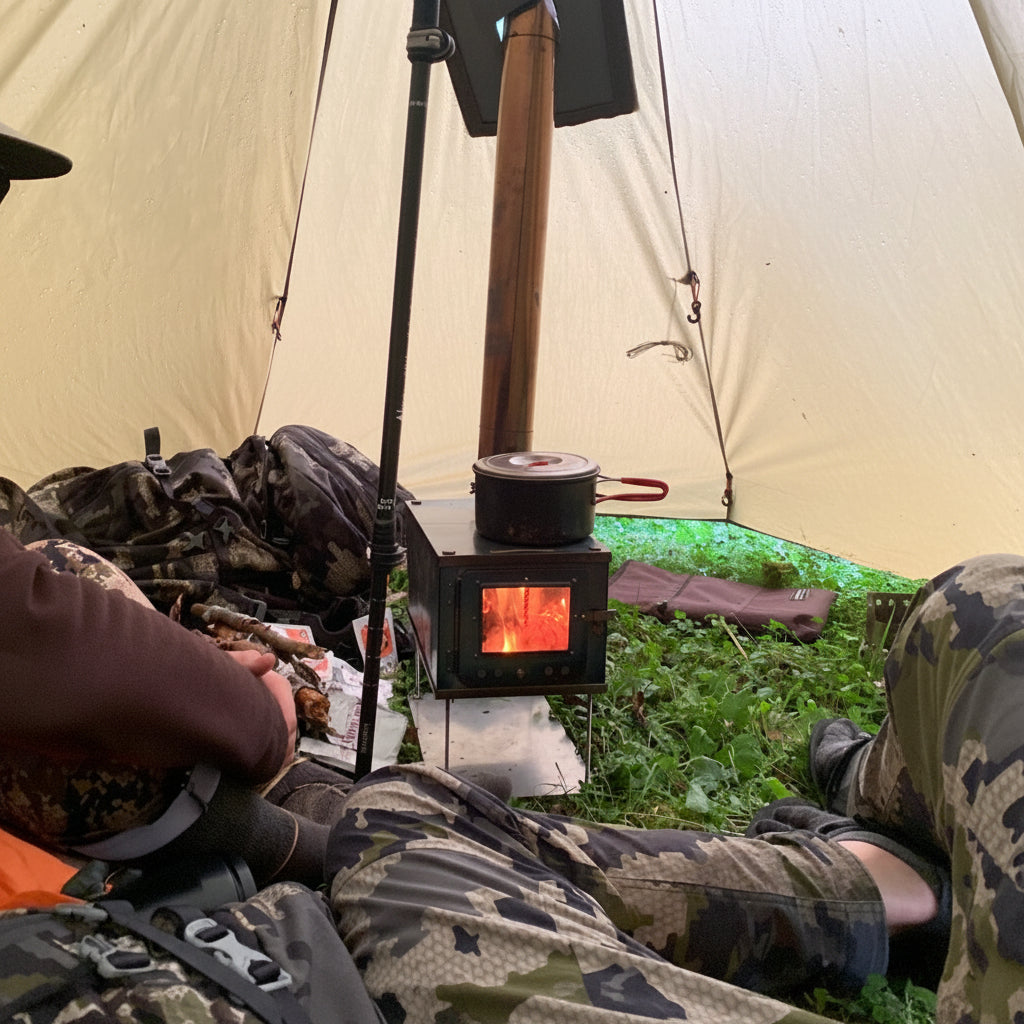
Wind can be one of the biggest challenges when setting up a hot tent with a wood stove. A chimney pipe that catches the wind doesn't just look unstable—it can compromise your stove's draft, reduce heating efficiency, and create safety hazards. If you've experienced your tent stove chimney swaying, vibrating, or pulling smoke back into your tent, you're not alone. Here's how to keep your chimney pipe steady and secure.

Understand Why Wind Affects Your Chimney
Chimney pipes are tall, narrow structures that act like sails in windy conditions. When wind hits the pipe at an angle, it creates lateral pressure that causes movement. This isn't just uncomfortable—it can disrupt the natural draft your stove needs to burn efficiently and safely. A moving chimney also puts stress on connection points and the stove jack, increasing the risk of leaks or separation.
Optimize Your Tent Stove Jack Placement
Where your chimney exits the tent matters. Position the stove jack on the side of your tent that faces away from prevailing winds when possible. If you're camping in an area with consistent wind direction, orient your tent so the chimney is on the lee side. This simple positioning can dramatically reduce the wind pressure your pipe experiences.
Check Your Chimney Diameter and Material
Thicker-walled chimney pipes are naturally more resistant to wind movement than thin-walled alternatives. If you're upgrading your setup, consider a heavier-gauge pipe. Stainless steel pipes also tend to be more rigid than single-wall alternatives, though they come with their own tradeoffs in weight and cost.
Trim Your Chimney Pipe to the Right Height
One of the most overlooked solutions is simply cutting your chimney pipe to the correct length with scissors. A chimney that extends too far above your tent peak becomes a longer lever arm for wind to act upon, making it far more susceptible to movement and swaying. The ideal height is approximately 15 inches above the peak of your tent.
This height is engineered to provide adequate draft for your stove while minimizing wind exposure. A pipe that's too short won't draw properly and can allow smoke to spill back into your tent, especially in calm conditions. One that's too long creates unnecessary wind resistance and structural stress on your stove jack and connections.
Inspect and Maintain Regularly
Before each camping trip, inspect your chimney pipe for dents, warping, or damage that could affect its structural integrity. A bent pipe is more prone to catching wind and creating draft problems. Also check all connection points, clamps, and stabilizers to ensure nothing has loosened or corroded.
A stable chimney pipe means better stove performance, safer operation, and a more comfortable camping experience. Take the time to secure your setup properly, and you'll enjoy consistent heat and reliable draft even on windy days.