How Wind Affects Tent Wood Stove Performance
How Wind Affects Tent Stove Performance
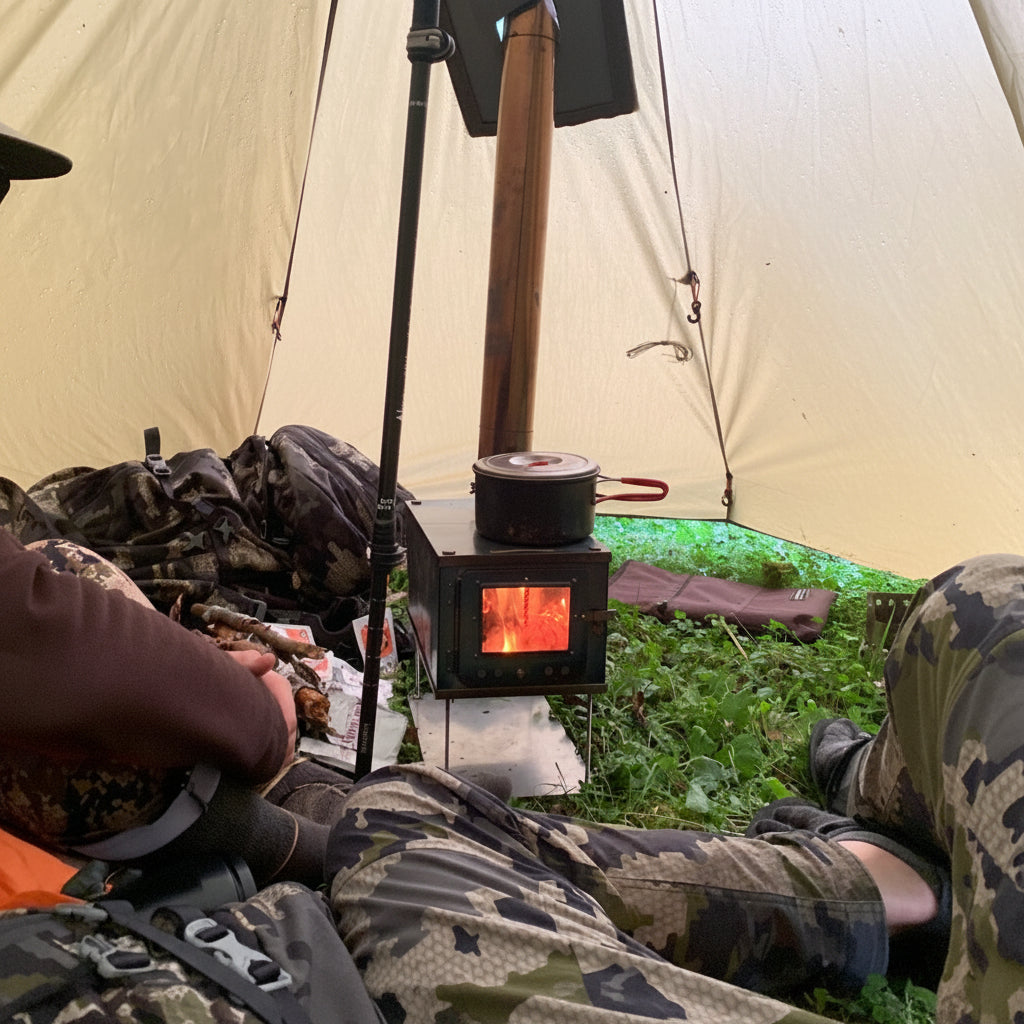
Wind is one of the most underestimated factors that can impact how well your tent wood stove performs in the field. Whether you're running a wood stove in a hot tent or relying on a portable heating solution for backcountry camping, understanding wind dynamics will help you maintain consistent heat output and fuel efficiency.

Wind and Draft Dynamics
Your tent stove relies on natural draft—the flow of air that pulls combustion gases up and out through the chimney. Wind can either enhance or severely disrupt this process depending on direction and intensity. When wind hits your tent from certain angles, it can create pressure zones that interfere with the natural updraft your stove needs to burn efficiently.
A strong headwind against your chimney can reduce draft. Conversely, wind flowing parallel to your tent or from behind can sometimes improve draft by creating a low-pressure zone that pulls air through the stove more aggressively.
Positioning Your Tent for Optimal Stove Performance
Site selection matters more than most campers realize. Position your tent so the chimney exit faces away from prevailing winds whenever possible. If you're in an area with consistent wind direction, orient your setup so gusts hit the side or back of the tent rather than the stove outlet directly.
Natural windbreaks like tree lines, rock formations, or terrain features can significantly reduce wind impact on your stove's performance. Even a modest reduction in wind speed around your tent can improve combustion efficiency and reduce the amount of fuel you need to maintain your desired temperature.
Chimney Design and Wind Resistance
The height and design of your chimney pipe influence how vulnerable your stove is to wind interference. A taller chimney creates more draft potential, which can help overcome moderate wind effects. However, excessive height can also increase exposure to wind shear at higher elevations.
Fuel Consumption in Windy Conditions
Wind doesn't just affect how your stove burns—it impacts how much fuel you'll need. In exposed, windy locations, your stove may work harder to maintain the same heat output compared to sheltered camps. This means you'll burn through wood faster and need to refuel more frequently.
Plan your fuel supply accordingly when camping in consistently windy terrain. Bring extra wood and monitor your stove's performance during the first few hours of a trip so you can adjust your fuel strategy if needed.
Temperature Stability and Wind Gusts
Sudden wind gusts can cause temporary fluctuations in your stove's draft, leading to brief temperature swings inside your tent. While these variations are usually minor, they're more noticeable in smaller tents or when you're relying on the stove as your primary heat source during cold weather camping.
Understanding this behavior helps you set realistic expectations for temperature consistency. A well-positioned stove in moderate wind will still provide reliable warmth—you just may notice slightly more variation than in a sheltered camp.
Final Thoughts
Wind is a natural part of outdoor camping, and your tent stove is designed to handle it. By paying attention to site selection, chimney positioning, and fuel planning, you can minimize wind's negative effects and keep your stove running efficiently in almost any conditions. The more you camp with your stove, the better you'll become at reading the landscape and positioning your tent for optimal performance.