Increase Burn Times Using a Tent Wood Stove with Skill Growth
Why Your Tent Stove Won't Burn as Long as You Expected
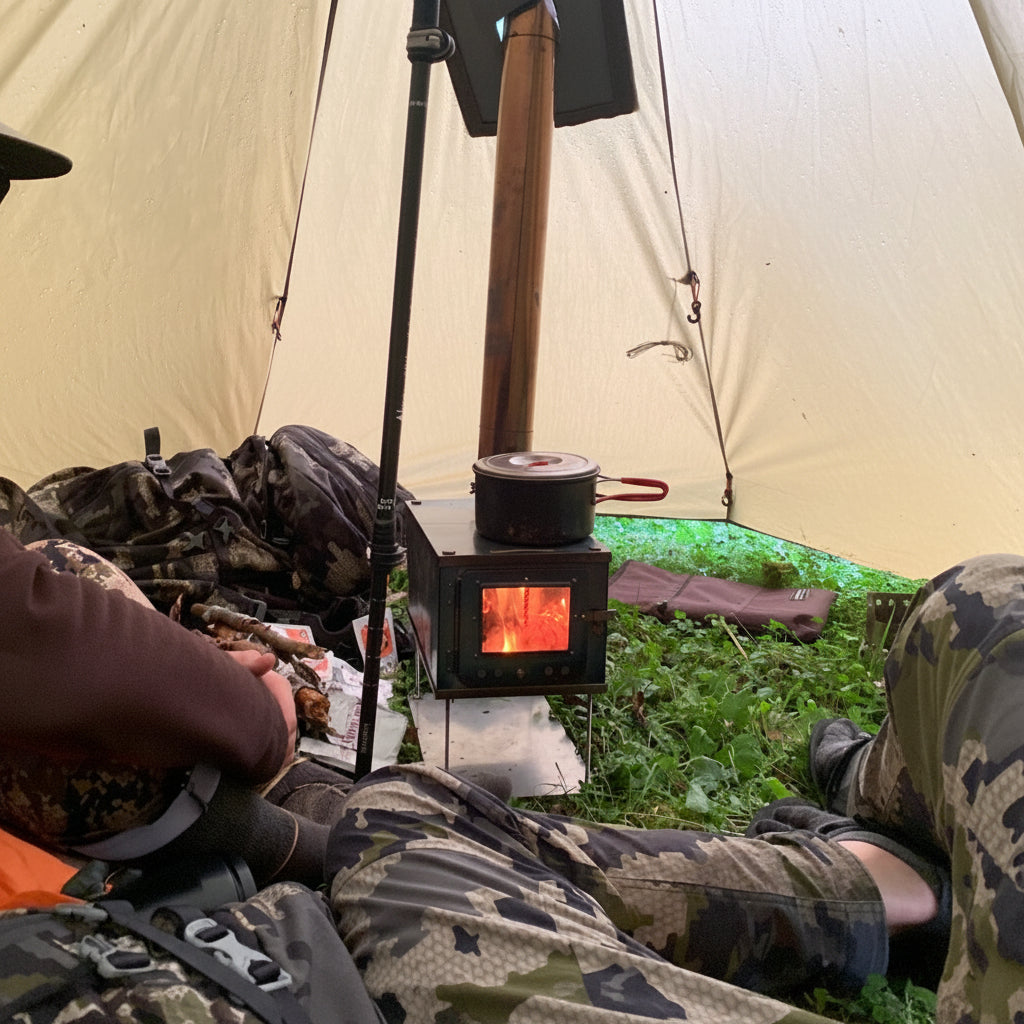
A hot tent wood stove is one of the most reliable ways to stay warm in the backcountry, but getting the most out of your burns requires technique. If you're finding that your stove isn't holding heat as long as you'd hoped, the issue often comes down to how you're managing the fire itself—not necessarily the stove.
The key to extended burn times lies in understanding the relationship between fuel, airflow, and heat retention. Most people try to extend their burns by restricting air intake and damper draft controls too early. This backfires quickly. Instead, build a thick coal bed first, then dial back your controls once those coals are established and glowing.

Build a Thick Coal Bed First
The foundation of a long, steady burn is a substantial bed of coals. When you first light your stove, don't think about conservation—think about establishing a solid coal base. Load your firebox generously with small fuels, and let those flames do their work. A thick coal bed radiates heat more effectively and burns much longer than a thin one. It's the difference between embers that last hours and ones that peter out in minutes.
Burn Seasoned Firewood Only
Internally wet or green firewood is the silent killer of long burns. Unseasoned wood wastes energy on moisture evaporation instead of heat production, and it creates excessive creosote buildup in your chimney. Always use firewood that's been properly seasoned—ideally split and air-dried for at least 6 months. In a backcountry setting, this look for wood that has been naturally seasoned off the ground.
Don't Restrict Airflow Too Early
This is the most common mistake. Once your coal bed is thick and you have a hot fire, you can begin carefully reducing your air intake and damper settings to slow the burn rate. But if you choke off airflow before your coals are fully established, you'll end up with smoldering, inefficient heat and a fire that dies out faster than you'd expect. The rule of thumb: get hot first, then throttle back.
Practice at Home Before the Backcountry
Your first burns shouldn't happen in a remote camp. Spend time at home experimenting with your stove's controls, learning how it responds to different loading patterns and airflow adjustments. You'll develop an intuition for when your coal bed is thick enough, when your fire is hot enough to dial back, and how your specific stove behaves under different conditions. This hands-on practice translates directly to longer, more reliable burns in the field. These skills are worth their weight in gold in the backcountry.