Rooftop Tent vs Hot Tent for Overland Camping
When planning an overland camping adventure, choosing the right shelter is one of the most critical decisions you'll make. Two popular options that often come up in conversation are rooftop tents and hot tents with wood stoves. Each offers distinct advantages depending on your camping style, climate, and vehicle setup. Understanding the differences will help you select the shelter that best fits your needs.

Rooftop Tents: Convenience and Elevation
Rooftop tents mount directly to your vehicle's roof rack, keeping you elevated above the ground. This design offers several practical benefits. You're protected from ground moisture, insects, and ground-dwelling wildlife. Setup is straightforward—most rooftop tents deploy in minutes, making them ideal for travelers who move camp frequently. They also free up valuable cargo space inside your vehicle, allowing you to pack more gear or supplies.
The elevated position provides excellent views and airflow, which can be refreshing on warm nights. Rooftop tents work well in moderate climates and are particularly popular for summer and shoulder-season camping. However, they do add weight and wind resistance to your vehicle, which can affect fuel efficiency and handling on rough terrain.
Additionally, rooftop tents are prone to wind and rain exposure. Not as ideal in a storm because of being up off the ground.
Hot Tents: Warmth and Winter Capability
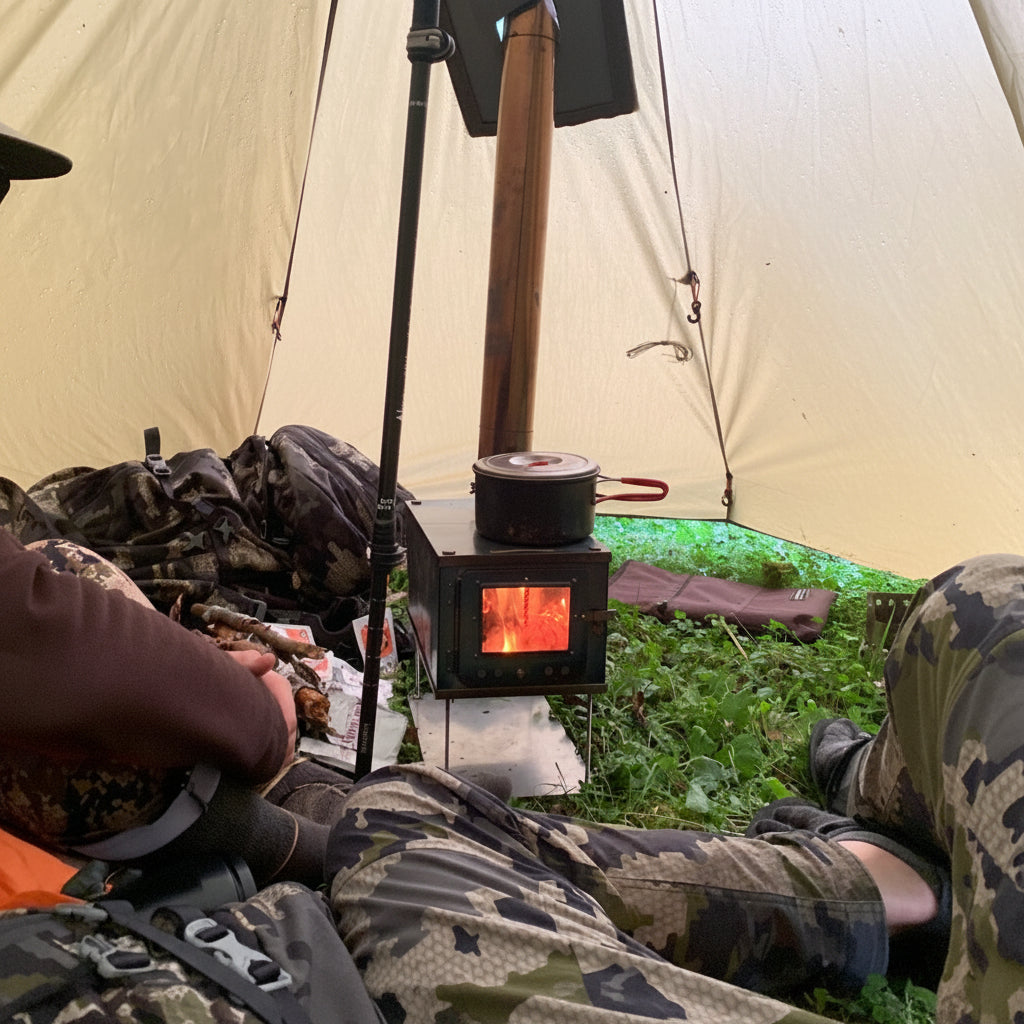
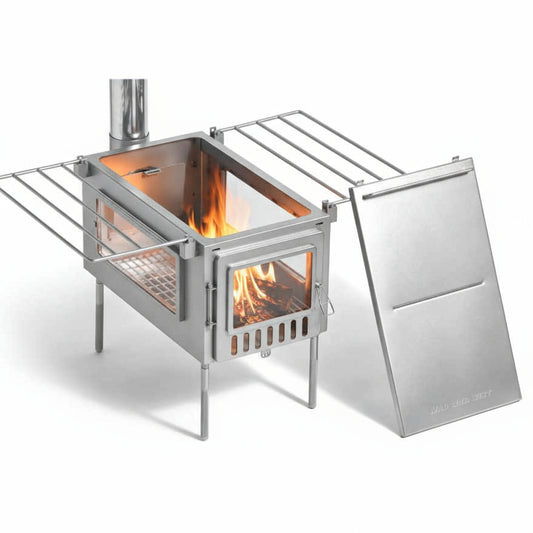
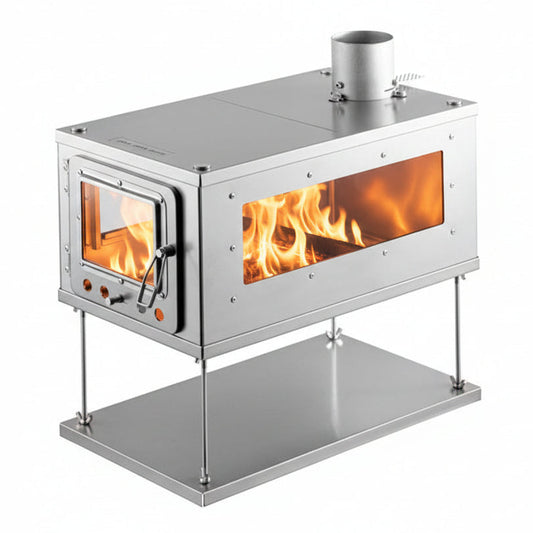
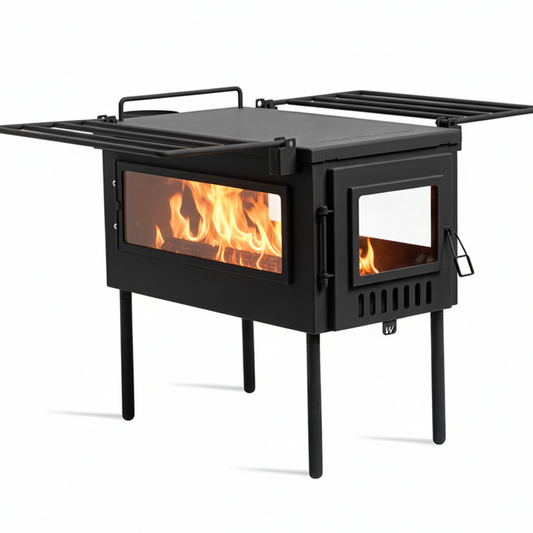
Hot tents are ground-based shelters designed to accommodate a wood stove, making them ideal for cold-weather and winter camping. The stove provides consistent heat, transforming your tent into a comfortable basecamp even in harsh conditions. This capability opens up year-round camping possibilities and extends your season well into fall and winter months.
Hot tents offer more interior space than most rooftop options, giving you room to move around (stand up and walk around), cook, and store gear inside during bad weather. They're also more affordable than quality rooftop tent systems. The trade-off is that some setups can take longer, and you need to manage the stove safely, including proper ventilation and fuel storage. Hot tents usually work more efficient when you're staying in one location for multiple nights.
Key Differences to Consider
Climate and Season: Rooftop tents excel in warm and moderate climates. Hot tents dominate in wind, cold weather and winter camping where heat is essential.
Setup Time: Rooftop tents deploy in minutes. Hot tents require 15–30 minutes to establish, including stove setup.
Vehicle Impact: Rooftop tents add weight and affect aerodynamics. Hot tents don't impact your vehicle, but require ground space at camp.
Cost: Quality rooftop tents are a significant investment. Hot tents are generally more budget-friendly, though a good wood stove adds to the expense.
Mobility: Rooftop tents suit frequent camp moves. Hot tents work better for base camps where you stay multiple nights.
Making Your Choice
Your decision ultimately depends on where and when you camp. If you're exploring diverse regions in the summer months, and want the flexibility to move camp daily, a rooftop tent offers a certain type of convenience. If you're drawn to camping in bad weather, extended stays in one location, or the comfort of a heated shelter, a hot tent is the better choice.
Many experienced overlanders use both—a rooftop tent for mobile sleeping area, and a hot tent for the living space for cooking and hanging out. Consider your primary camping scenarios, budget, and vehicle capacity when making your decision. Either way, you're investing in experiences that will take your overland adventures to the next level.
Leave No Trace Campfires
Tent wood stoves also embody the principles of Leave No Trace camping, a philosophy that prioritizes minimal environmental impact. Unlike traditional campfires that scar the landscape and consume deadwood, a wood stove operates within an enclosed firebox, containing ash and preventing ground damage.
You can camp responsibly in sensitive areas without leaving visible traces of your presence. The stove burns wood efficiently, reducing the amount of fuel needed compared to open fires. When you pack up and leave, there's no fire ring to dismantle, no charred earth to restore, and no scattered ash.
This makes a wood stove an excellent choice for backcountry adventurers and environmentally conscious campers who want to enjoy remote locations while preserving them for future generations. If Leave No Trace principles guide your camping philosophy, a tent stove transforms your shelter into a tool for responsible outdoor stewardship.