What Happens to a Floorless Tent in Rain and Snow?
Floorless tents have become increasingly popular among backpackers and campers seeking lightweight shelter options, especially those who pair it with a tent wood stove. However, one of the most common questions we hear is: what happens when rain or snow falls? Understanding how these tents perform in wet conditions is essential before you invest in one for your adventures.

How Rain Interacts with Floorless Tent Design
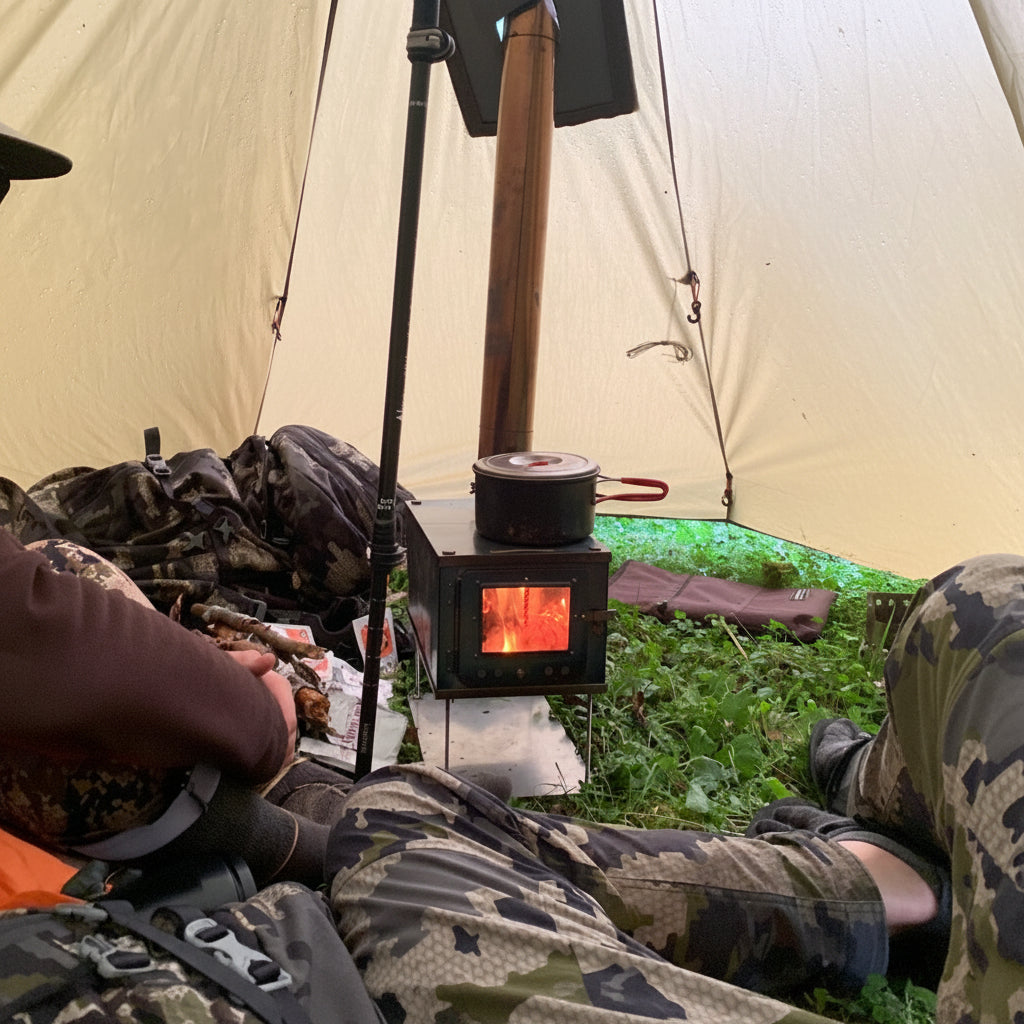
A floorless tent relies on a groundsheet placed beneath it to manage the cold ground. When rain falls, the water runs down the tent's exterior walls and onto the ground around the tent's perimeter. Without a floor, any water that pools near the base can seep underneath, if the tent isn't set up on slightly higher terrain.
The key to staying dry is that you've chosen a campsite with good drainage. Many experienced campers set up their shelters on slightly higher ground. This simple technique prevents water from accumulating under the tent during heavy downpours.
Snow Performance and Weight Distribution
Snow presents a different challenge than rain. When snow accumulates on a floorless tent, the weight is distributed across the fabric and poles. Without a rigid floor structure, the tent's integrity depends entirely on fabric tension and pole strength. Heavy, wet snow can compress the tent walls inward if the structure isn't adequately supported. We always recommend periodically cleaning the shelter walls through the night in blizzard conditions.
Condensation and Interior Moisture
One often-overlooked aspect of floorless tents is interior condensation. Without a floor barrier, moisture from the ground can rise into the tent, especially in cool, damp conditions. Proper ventilation through the tent's design and strategic opening of the vents helps manage this moisture, or simply crack a door. Keeping your sleeping area elevated on a sleeping pad also creates an insulating layer between you and the ground. Burning a tent wood stove also addresses this issue by drying out the air and interior tent walls.
Best Practices for Wet Weather
To maximize the performance of your floorless tent in rain or snow, follow these guidelines:
- Always use a quality groundsheet under your sleeping area
- Set up on slightly higher ground, well-draining terrain away from low spots where water collects
- Ensure the tent fabric is properly tensioned to maintain tent shape and stability
- Position your tent so the entrance faces away from prevailing wind and rain direction
- Use a sleeping pad to insulate from ground moisture
- Monitor snow accumulation and brush off heavy loads to prevent structural stress
Floorless tents excel in many conditions when properly set up and maintained. With attention to site selection, groundsheet placement, and weather awareness, you can stay comfortable and dry even when the elements challenge your shelter.