Why BTU Ratings Are Not Listed on Tent Wood Stoves
If you've shopped for a tent wood stove, you may have noticed something conspicuously absent from most product listings: a BTU (British Thermal Unit) rating. It's a fair question—after all, traditional heating appliances come plastered with thermal output specs. So why do tent stoves do things differently?
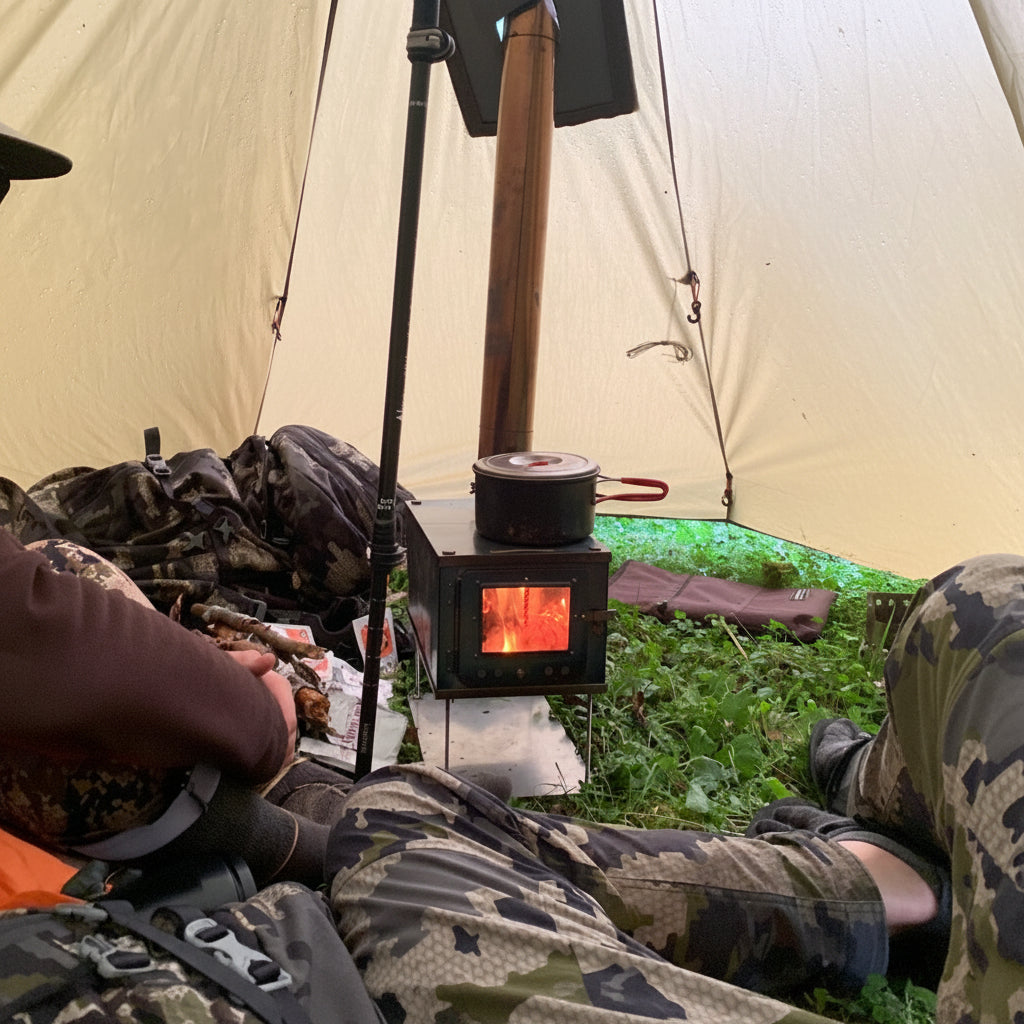
The short answer is that BTU ratings don't translate cleanly to tent heating because the variables are too unpredictable. Unlike a fixed home furnace or space heater operating in a controlled environment, a tent stove's performance depends heavily on factors that change every time you set up camp: tent size, insulation quality, outside temperature, wind conditions, wood moisture content, and how the stove is vented.

Why Traditional BTU Specs Don't Work for Tents
A standard space heater's BTU rating assumes a sealed room with fixed dimensions and insulation values. Manufacturers can test it in a lab and guarantee a result. A tent stove operates in the opposite conditions—an inherently variable, temporary shelter that's exposed to the elements on all sides. Even two identical stoves in two identical tents will perform differently depending on ambient temperature, firewood seasoning, and airflow patterns.
Some manufacturers do publish BTU estimates, but these come with heavy caveats: they're based on ideal conditions, optimal wood quality, and specific tent sizes. They can be misleading and rarely match real-world performance.
What Matters More Than BTU
Instead of chasing a number, focus on these practical indicators of stove performance:
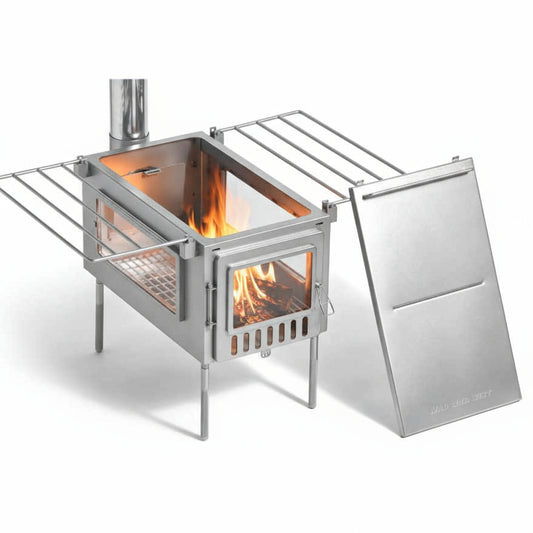
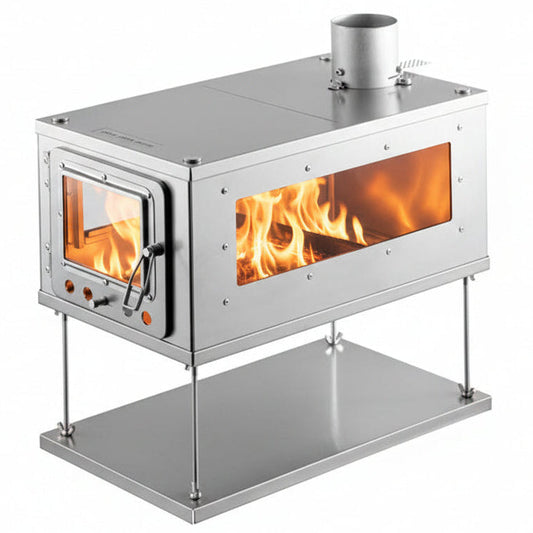
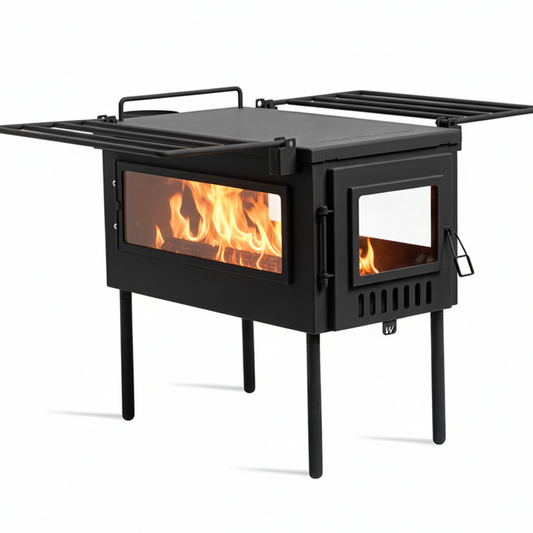
- Firebox capacity: Larger fireboxes hold bigger logs and burn longer between feeds.
- Material and thickness: Heavy-gauge steel or titanium retains heat better and lasts longer.
- Chimney design: A well-engineered flue draws efficiently and distributes heat more evenly.
- User reviews in similar conditions: Real reports from people camping in your climate tell you far more than marketing specs.
- Fuel efficiency: How much wood you need to stay warm overnight is often more important than raw heat output.
When evaluating a tent stove, ask yourself: How long does it heat on one load? Does it suit my tent size? What's the build quality? These questions will guide you better than any BTU promise.