3 Things You Should Know Before Using a Tent Stove for the First Time
3 Things to Know Before Burning a Tent Stove for the First Time
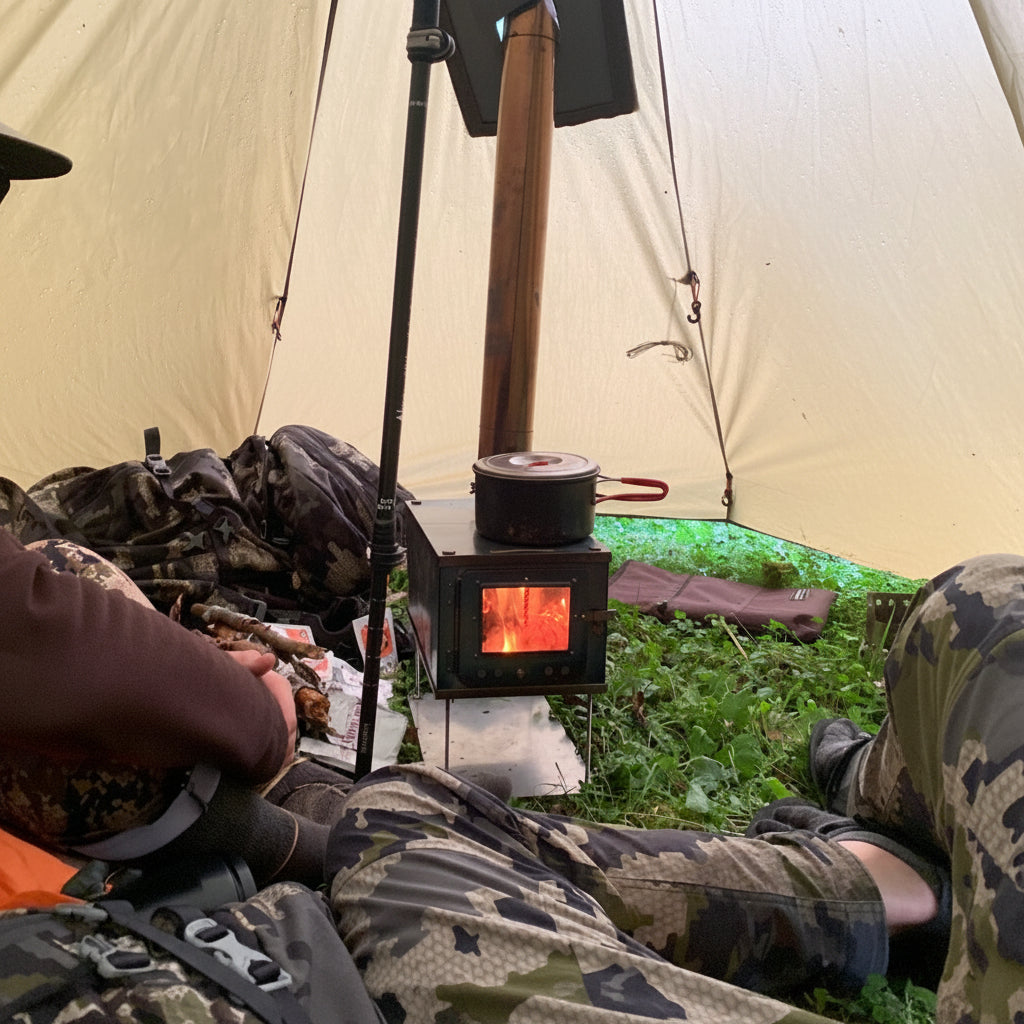
A tent wood stove can make cold-weather camping more comfortable, but learning how it responds to fuel and airflow takes practice. Before your first burn, set up the stove at home first, and make sure the chimney, stove jack, and clearances are correct inside your tent.

1. Build a bed of coals before adding larger wood
Start with a small fire and let it establish a steady bed of hot coals. Once the fire is burning well, add larger pieces of wood gradually. A strong coal bed helps new wood catch and burn more consistently.
Avoid loading large logs too early or closing the air intake before the fire is established. Too little air can cause a weak, smoky fire and may contribute to creosote buildup in the chimney. Make adjustments in small steps and observe how the fire responds.
2. Choose seasoned firewood
Use dry, seasoned firewood rather than freshly cut or damp wood. Wetter wood can be harder to ignite and may produce more smoke while delivering less usable heat. Store your fuel somewhere protected from rain and snow inside the tent.
Wood size and species also affect how quickly a fire develops and how long it burns. Start with smaller pieces, then add larger pieces once the fire is established. Never leave a burning stove unattended, and keep extra fuel a safe distance from the stove.
3. Learn how the air intake and damper affect the fire
The air intake controls how much air is drawn into the fire, while the chimney damper helps regulate draft. Together, they influence how quickly wood burns, how much heat the stove produces, and how long a load may last. The response varies by stove, chimney setup, wood, and weather conditions.
Get familiar with these controls while you can monitor the stove closely. Make one small adjustment at a time and give the fire a chance to respond. Avoid restricting airflow to the point that the fire smolders without a thick bed of coals.