Why Your Tent Stove Fire Keeps Going Out Explained
Why Your Tent Stove Fire Keeps Going Out
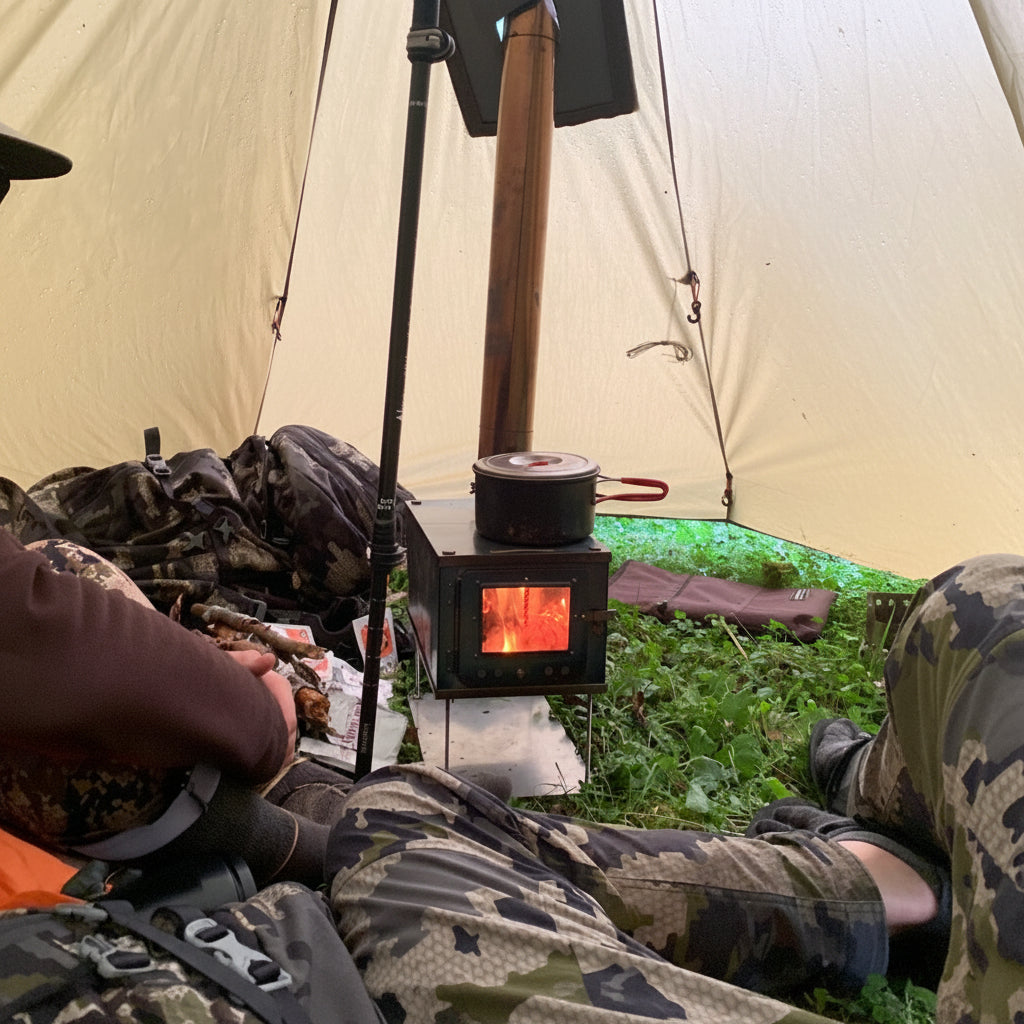
A tent wood stove fire that keeps dying can be frustrating, especially when you’re relying on it for warmth in camp. Most of the time, the problem comes down to fuel, airflow, draft, or adding wood before the fire is ready. Understanding how these pieces work together makes it easier to keep a steady fire—and helps you practice safer, more predictable fire management before heading into the backcountry.

1. The Coal Bed Isn’t Deep Enough
A healthy bed of glowing coals gives new wood the heat it needs to catch and keep burning. If you add logs while the fire is still mostly flame and has only a few coals, the new pieces may smolder or put the fire out.
Let the fire burn down until there’s a solid layer of glowing embers. Then add wood gradually, giving each load time to catch before adding more.
2. The Firewood Isn’t Seasoned
Fresh or damp wood uses much of its heat to evaporate moisture. That can make it difficult to get a clean, strong fire and may create more smoke and creosote in the chimney.
Use dry, seasoned firewood whenever possible. Keep your supply protected from rain and snow, and bring smaller, dry pieces for starting and reviving the fire.
3. Large Pieces Go In Too Early
Large logs need a hot fire and a strong coal bed before they’ll burn well. Put them in too soon, and they can absorb heat from the kindling and smaller fuel instead of catching.
Build the fire in stages: start with dry tinder and kindling, add small splits once the kindling is burning steadily, then move up to larger pieces as the coal bed develops.
4. Airflow Is Restricted Too Soon
A fire needs oxygen to burn. Closing air controls or reducing the airflow before the fire is established can cause flames to weaken and wood to smolder.
Keep adequate airflow while starting the fire and whenever you add fresh wood. Adjust the stove’s air controls gradually, following the stove manufacturer’s instructions. Avoid restricting airflow to the point that the fire smolders.
5. The Chimney Isn’t Drafting Properly
A weak or inconsistent draft can make it hard for the stove to draw in air and carry smoke up the chimney. A cold chimney, an obstructed flue, clogged spark arrestor, incorrect setup, or unsuitable conditions can all affect draft.
Check that the chimney is assembled and installed according to the manufacturer’s instructions, and inspect it for obstructions before use. If smoke spills into the tent or the draft remains poor, stop using the stove until you can identify and resolve the issue safely.
Practice Before You Camp
Fire management is a skill worth learning at home in a safe, suitable setting before you rely on a stove in the backcountry. Practice building a coal bed, adding wood in stages, and recognizing how airflow affects the fire. Always follow your stove’s instructions, use it only in a properly designed stove jack, and maintain ventilation and required clearances.
A steady fire starts with dry fuel, a developed coal bed, patient feeding, and a clear chimney. Get comfortable with those basics before the trip, and you’ll be better prepared to manage your stove when you’re out in camp.