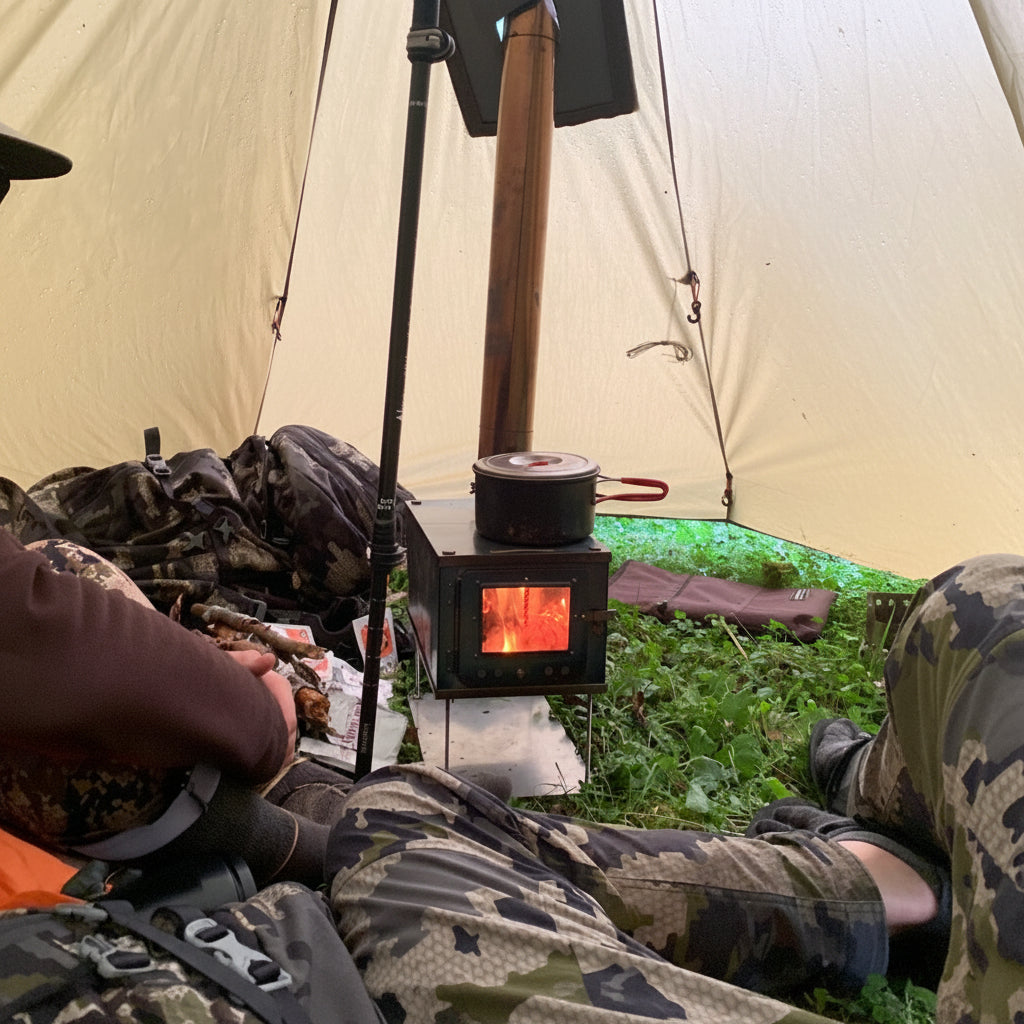
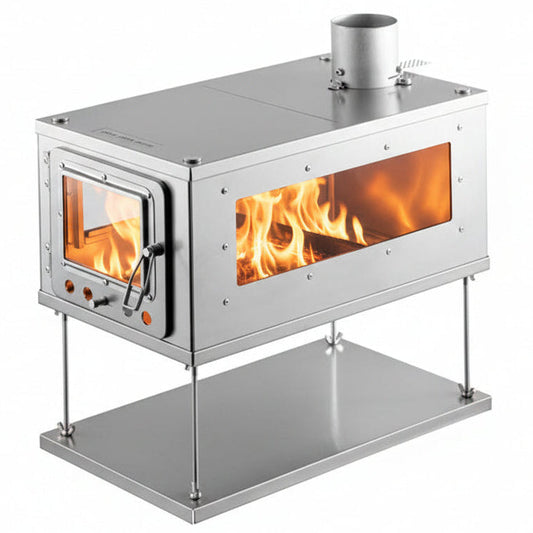
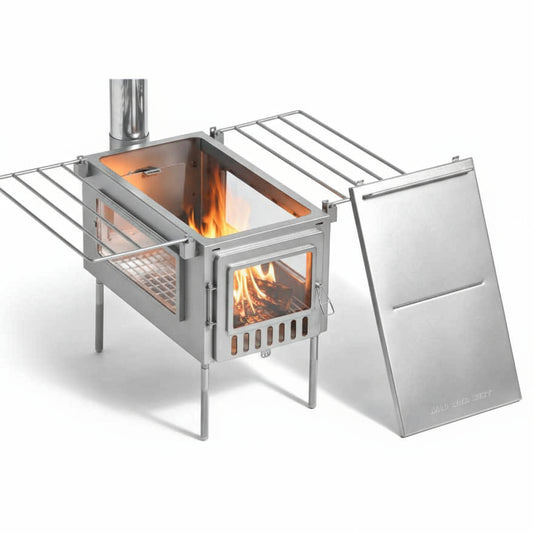
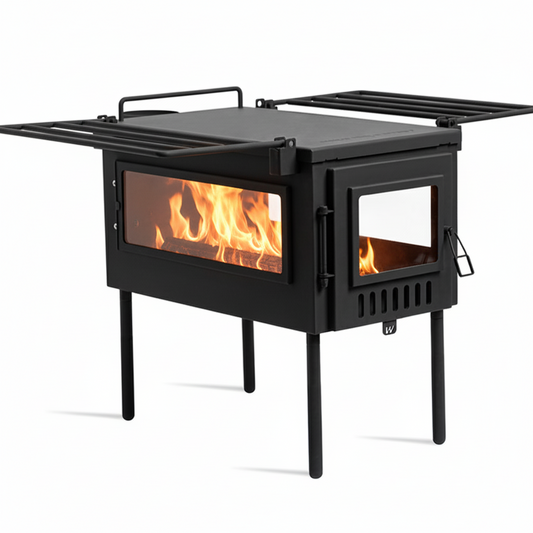
Don't Shut Off the Tent Stove Damper Too Early
What Happens If You Close a Tent Stove Damper Too Early?
A damper on a tent wood stove controls how quickly exhaust moves through the stovepipe. Closing it too soon—while the fire is still actively building a coal bed—can reduce draft and prevent smoke and combustion gases from venting properly. The result may be a smoky tent, a sluggish fire, and a greater risk of carbon monoxide exposure.

Smoke and Carbon Monoxide Can Back Up
When airflow is restricted before the fire has settled, smoke may spill from the stove when you open the door. Incomplete combustion can also produce more carbon monoxide, an odorless, colorless gas that can be deadly. Never rely on smell or visible smoke to tell you whether the air is safe.
Use a carbon monoxide alarm suitable for your setup, keep the shelter’s required ventilation open, and follow the stove and tent manufacturers’ instructions. If smoke enters the tent or an alarm sounds, get everyone outside into fresh air immediately. Do not re-enter until it is safe.
The Fire May Smolder and Build Creosote
Restricting the draft too early can make wood burn inefficiently instead of letting the fire finish cleanly. A smoldering fire can create more soot and creosote, which may collect in the stovepipe. Creosote buildup can reduce airflow and increase the risk of a stovepipe fire.
It can also make the stove harder to control: the fire may weaken, flare unpredictably when airflow changes, or leave more smoke and residue than a well-aerated burn.
How a Fire Without a Bed of Coals Affects Burn Time and Heat Output
A fresh fire can produce strong flames before it has built a lasting bed of glowing coals. Those flames can heat the stove quickly, but without an established coal bed, heat output tends to be less steady and can drop sharply as the initial fuel burns down. Hot coals provide a sustained source of heat and help newly added logs ignite more reliably.
Without that coal bed, each reload may take longer to catch, creating a dip in stove temperature while the new wood heats up. Small, fast-burning pieces may produce a brief burst of heat but leave little lasting fuel behind, so you may need to tend the fire more often. Actual burn time depends on the amount, size, species, and moisture content of the wood, as well as the stove and draft. A coal bed improves continuity between loads; it does not guarantee a particular number of hours or increase the energy contained in the wood.
Closing the damper early is not a reliable way to extend useful heating time. A fire that smolders longer may deliver less usable heat while producing more smoke and creosote. Build a steady fire with dry wood, let a coal bed develop, and adjust airflow only as directed by the stove manufacturer.
When Should You Adjust the Damper?
Let the fire establish and burn steadily before making small damper adjustments. The right setting depends on the stove, pipe, fuel, weather, and draft, so use the manufacturer’s guidance rather than relying on a universal timing rule. Make adjustments gradually and watch how the fire responds.
- Keep the damper open enough for a stable draft and clean exhaust.
- Do not use the damper to smother an actively burning fire.
- Wait until you establish a thick bed of coals
- Check and clean the stovepipe and spark arrestor regularly, especially during frequent use.
Stay Safe Around a Tent Stove
Keep the stove and stovepipe properly installed, maintain the clearances required by the manufacturers, and keep combustible gear away from hot surfaces. Never leave a burning stove unattended.
If you are unsure whether the fire is ready for a damper adjustment, leave the damper more open and prioritize a steady draft. A little extra fuel is a better tradeoff than smoke or combustion gases entering your shelter.