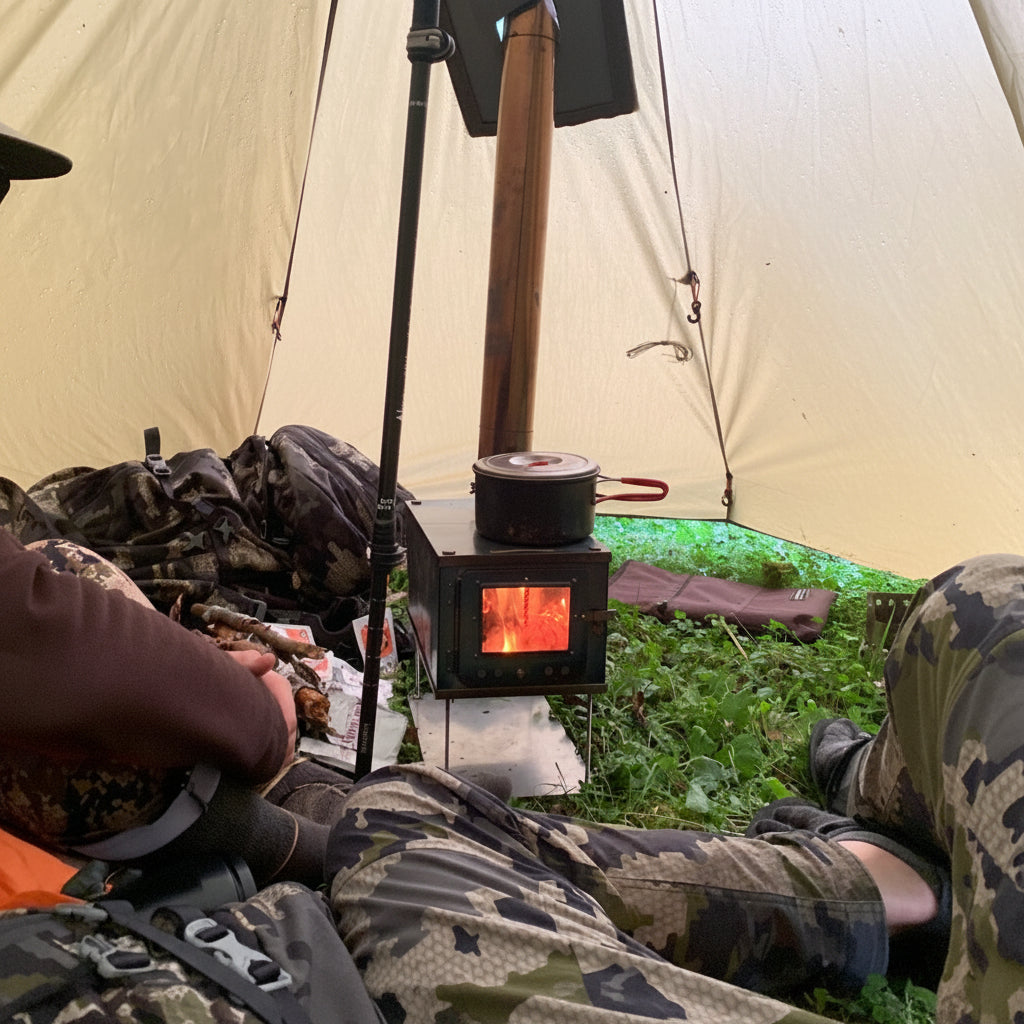
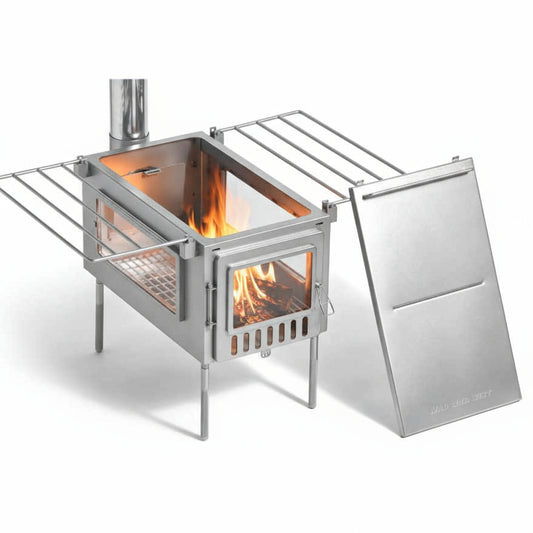
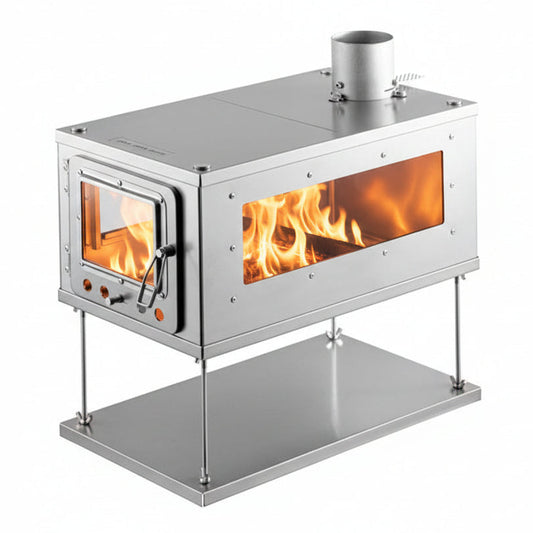
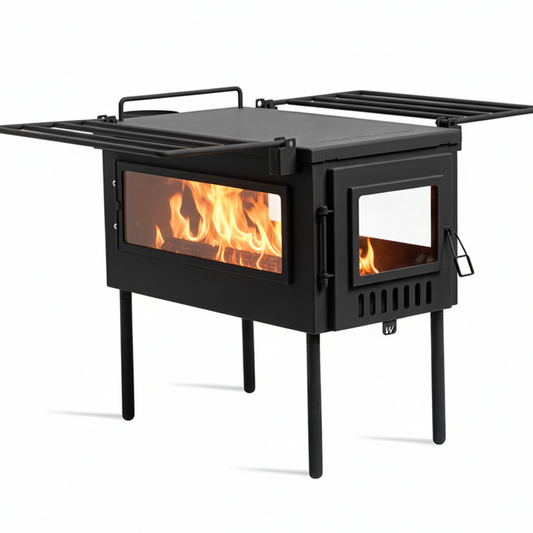
How to Start a Tent Stove in the Wet Rainforest
Starting a tent wood stove in wet PNW rainforest conditions presents unique challenges, but with the right preparation and technique, you can get a reliable fire going even when moisture is working against you.

Gather Dry Tinder Before You Need It
The most critical step happens before you even arrive at your campsite. Pack dry kindling and firestarter stored in a waterproof bag. Optionally, you can collect tinder materials during your camping trip —birch bark, dead grass, or small twigs from under dense tree cover where rain hasn't penetrated. Store these in a waterproof bag or inside your tent. In a rainforest, finding completely dry material on the open ground is nearly impossible, so bringing your own tinder is essential.
Prepare Your Wood Supply Strategically
Wet wood won't burn efficiently, but you can work with it. Look for dead standing trees or branches that are still attached to living trees—these stay drier than fallen wood on the forest floor. Split larger pieces to expose the dry interior wood. Collect wood in three sizes: thin kindling (pencil-thick), medium pieces (wrist-thick), and larger fuel wood. Keep your wood pile under a tarp or inside your tent vestibule to prevent additional moisture absorption while you're getting the fire started.
Create an Effective Fire Lay
Build your fire structure before lighting anything. Start with a small bundle of your dry tinder at the base. Arrange thin kindling in a loose teepee formation around it, leaving space for air to flow through. This airflow is critical—it helps moisture evaporate and keeps the flame alive. Avoid packing wood too tightly, which smothers the fire and traps moisture.
Use a Reliable Ignition Method
Waterproof matches, a quality lighter, or a ferro rod all work, but in wet conditions, redundancy matters. Bring multiple ignition sources and keep them dry. Light your tinder bundle from multiple sides if possible to build heat quickly. Once the tinder catches, feed kindling gradually and deliberately. Patience here pays off—rushing to add larger wood before the kindling is fully established will kill your fire.
Manage Airflow and Heat
Once your tent stove is lit, adjust the air vents to maximize draft without creating excessive heat loss. A strong draft pulls moisture out of the wood and helps it burn hotter. If your stove has adjustable dampers, start with them more open than you might in dry conditions. As the fire establishes and wood dries out from the heat, you can gradually reduce airflow to control the burn rate.
Dry Wood as You Go
Position your larger fuel wood near the stove (but safely away from flammable materials) so it can dry from the radiant heat before you add it to the fire. This pre-drying step makes a significant difference in how efficiently your stove burns and how much heat it produces.
Rainforest camping requires patience and planning, but a well-maintained tent stove becomes an invaluable tool for warmth, morale, and drying gear. Master these techniques, and you'll stay comfortable even in the wettest conditions.