The Secret Ultralight Hot Tent Manufacturers Don't Want You to Know
Small tents don’t perform like larger tents when you’re heating them with a wood stove. Their compact interior, lower ceiling, and limited space around the tent wood stove all affect how warmth spreads and how much heat you can make use of.

Why stove-jack height matters
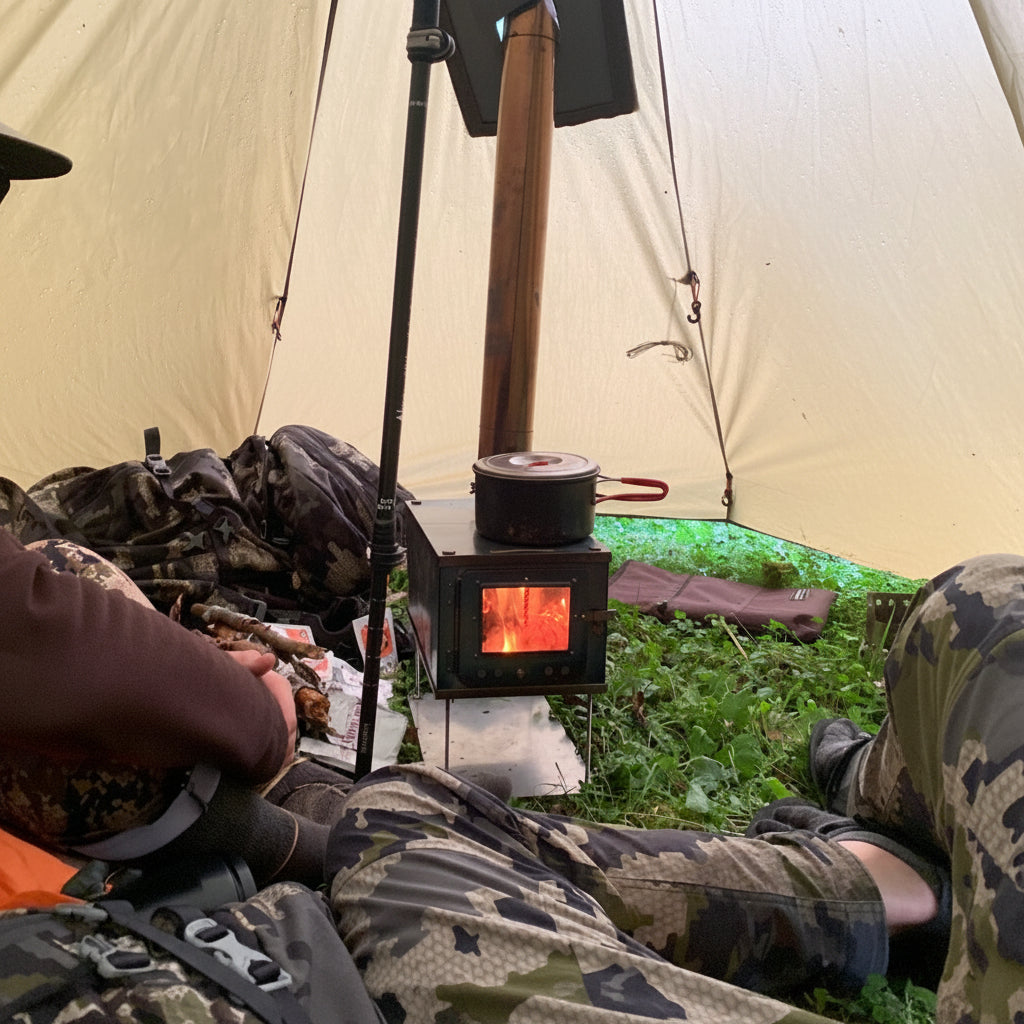
In a small tent, a low stove jack location can mean that more of the chimney pipe sits outside the shelter. Heat that could warm the interior then travels up and out through the pipe. A higher stove jack may allow more pipe to remain inside, giving the pipe more opportunity to radiate warmth into the tent before the exhaust exits.
Make the most of the chimney pipe inside
The amount of chimney pipe inside the tent can influence how much warmth radiates into the living space. When choosing a tent and stove combination, consider the tent’s ceiling height, stove jack position, and the usable length of pipe between the stove and the jack. A small difference in layout can change how the setup feels in practice.
How a small stove in a large tent can outperform a large stove in a small tent
A bigger stove doesn’t automatically make a better hot tent setup. A small stove in a larger, well-matched tent can provide more usable comfort than a large stove squeezed into a small shelter. The difference is not simply how much heat the stove produces, but how effectively the whole setup puts that heat to use.
A larger tent can offer more room for safe clearances and a comfortable seating or sleeping area away from the stove’s intense radiant heat. In a cramped tent, a larger stove may make the space immediately beside it uncomfortably hot while leaving little usable room. Tent height and the approved chimney layout also affect where heat is released.
This is a possibility, not a rule: a larger tent generally needs more heat under otherwise comparable conditions. Weather, wind, tent fabric, ventilation, fuel, and stove output all matter. Here, “outperform” means a more comfortable, usable camping setup, not proof that a smaller stove produces more heat. Choose a stove rated for your shelter and conditions rather than assuming bigger is always better.
Always follow the tent and stove manufacturers’ setup instructions. Keep the stove and pipe safely clear of tent fabric and other combustibles, use the specified components, and ensure adequate ventilation. A well-planned setup balances useful radiant heat with safe clearance and reliable exhaust.