What Winter Camping Looks Like When the Weather Turns Bad
Bad Weather Is Part of the Plan
Winter camping can feel calm and comfortable when the forecast holds. When wind, snow, or freezing rain moves in, the priorities change: stay aware, protect your shelter, manage heat carefully, and be ready to leave if conditions become unsafe. Good preparation gives you options, but it does not make every storm safe to ride out.

Choose a Campsite with Conditions in Mind
Look beyond the view when choosing where to camp. Check for overhead hazards such as dead branches or snow-loaded limbs, and avoid exposed ridgelines, avalanche terrain, and low spots where water or cold air can collect. Consider how wind and drifting snow may affect your tent, stove pipe, exits, and route out.
If the weather or terrain makes it difficult to identify a safe location, change plans rather than forcing the campsite.
Set Up the Tent and Stove Carefully
Pitch the tent securely, using suitable anchors and a layout that accounts for the expected wind direction. Keep the entrance and exit clear, and check that snow or gear cannot block them. Recheck guylines and anchors as conditions change; snow, thawing ground, and gusts can all affect how well a pitch holds.
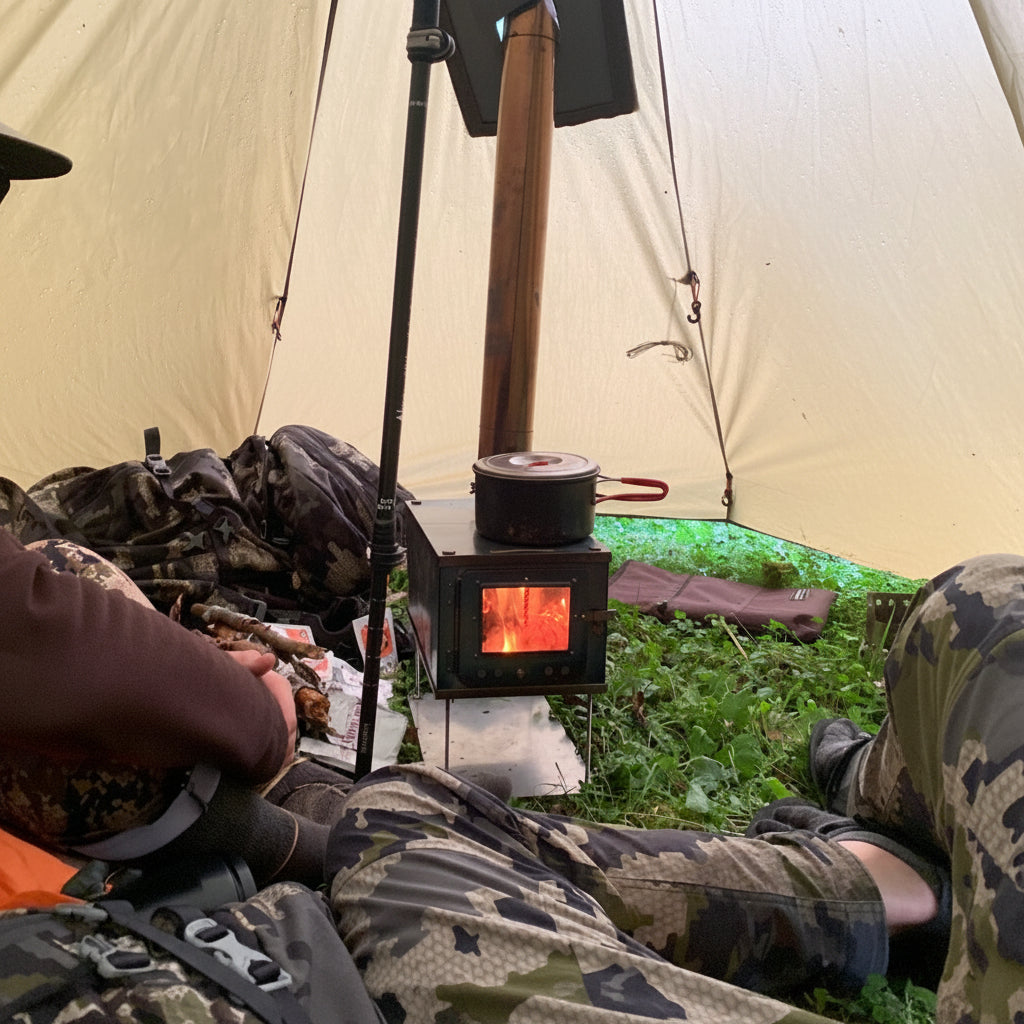
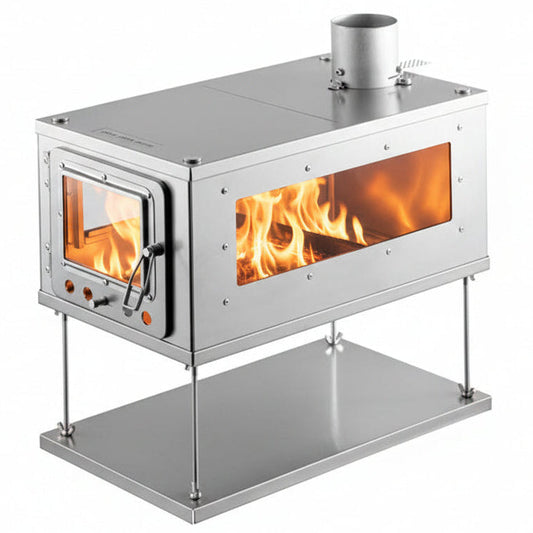
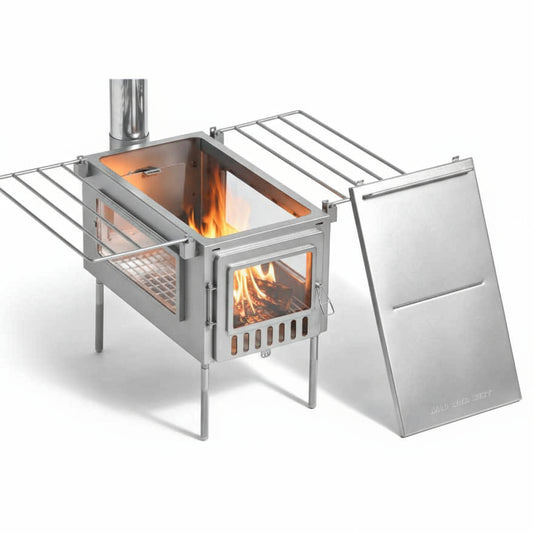
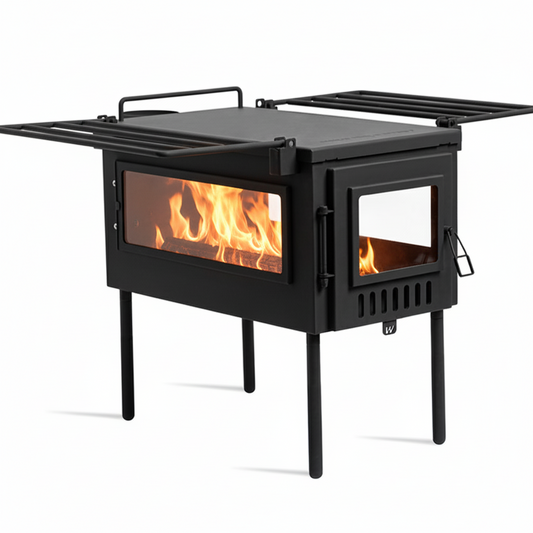
Install and operate a tent wood stove in a shelter designed for that use, following the tent and stove manufacturers’ instructions. Keep the stove, flue, and hot surfaces clear of fabric and other combustible materials.
Wood stoves produce carbon monoxide, an odorless, potentially fatal gas. Maintain ventilation, use a carbon-monoxide alarm suitable for the conditions, and leave the shelter immediately if anyone feels headache, dizziness, nausea, weakness, or confusion. Move to fresh air and seek emergency help.
Prepare Firewood Before the Weather Arrives
Have enough appropriately sized, seasoned firewood for your planned stay, with a reserve that accounts for slower burning or damp conditions. Keep it protected from precipitation without placing it too close to the stove or flue. Process and organize wood before setting out, and follow the stove maker’s guidance on fuel size and operation.
Wet fuel can be difficult to light and may produce more smoke and buildup. If your supply becomes wet or runs low, conserve fuel and reassess whether it is sensible to remain at camp.
Keep Checking the Forecast—and the Conditions Around You
Check the forecast before departure, then monitor updates when you have reliable access. Pay attention to wind, snowfall, temperature, and any local warnings. Conditions at camp can differ from a general forecast, so watch for increasing gusts, rapid snow accumulation, poor visibility, and changes to nearby terrain.
Share your route and expected return with someone you trust. Carry navigation tools, communication equipment appropriate to the area, and backup power. Know your exit route before weather makes it harder to see or travel.