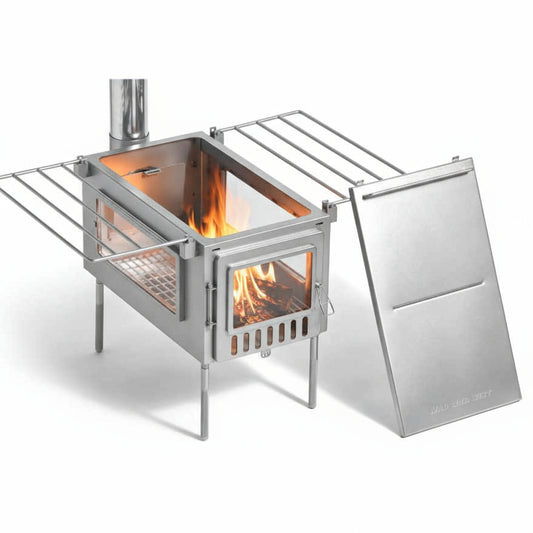
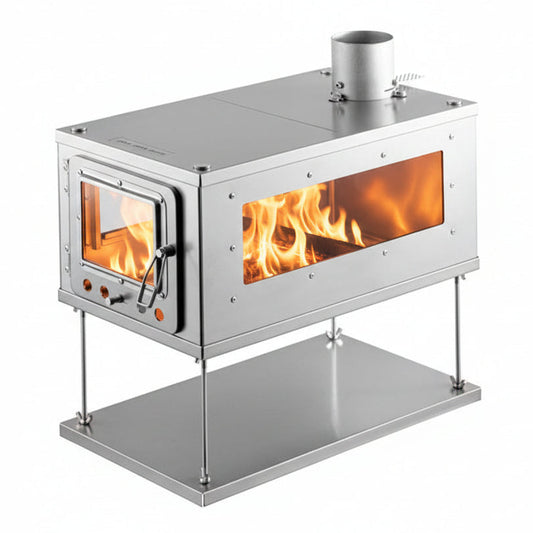
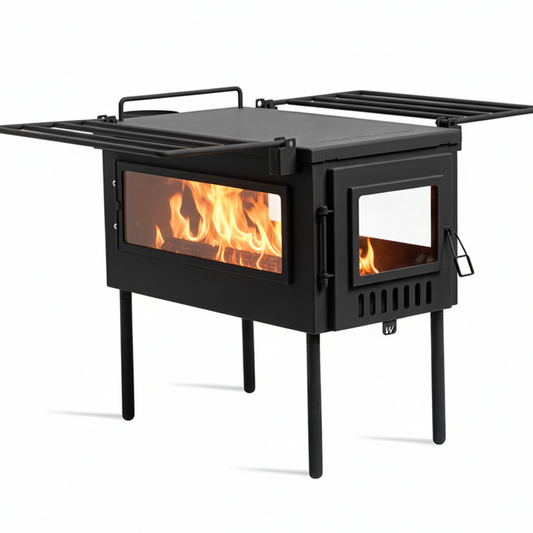
Why Titanium Cost More Than Steel for Same Sized Wood Stove
Why Titanium Wood Stoves Cost More Than Steel
When shopping for a tent wood stove, you'll quickly notice that titanium models command a premium price compared to their steel counterparts. This price difference isn't arbitrary—it reflects fundamental differences in material properties, manufacturing complexity, and long-term performance. Understanding what you're paying for helps you make an informed decision about which stove is right for your camping setup.

Material Properties and Performance
Titanium is a fundamentally different material from steel. It's significantly lighter, stronger relative to its weight, and far more resistant to corrosion. Steel, while durable and reliable, requires protective coatings or keep dry to prevent rust, especially in wet camping environments. Titanium naturally resists oxidation, meaning it maintains its integrity without additional treatments or upkeep.
The strength-to-weight ratio of titanium is exceptional. A titanium stove can achieve the same structural integrity as a steel stove while using less material. This matters for backpackers and campers who carry their gear, but it also means titanium stoves can be engineered with thinner walls that still perform reliably under high heat.
Manufacturing Complexity
Producing titanium components requires specialized equipment and expertise. Titanium is harder to machine, weld, and form than steel. It demands precise temperature control during fabrication and specialized tooling that increases production costs. Steel, by contrast, has been manufactured at scale for over a century with well-established, efficient processes.
Quality control for titanium is also more rigorous. The material's properties mean that even small defects can affect performance, so quality manufacturers invest in additional testing and inspection. These quality assurance measures add to the final cost but ensure you're getting a reliable product.
Longevity and Total Cost of Ownership
While titanium stoves can cost more upfront, they often deliver better value over time. A titanium stove won't rust or degrade from exposure to moisture and temperature swings. A steel stove, even a well-made one, may require refinishing, protective maintenance, or eventual replacement after years of use in harsh conditions with no upkeep.
If you're investing in a wood stove for serious camping adventures, the durability of titanium means you're buying a piece of gear that will perform consistently for decades. That longevity justifies the higher initial investment for many outdoor enthusiasts.
Market Positioning and Supply
Titanium stoves represent a premium product category. Manufacturers who work with titanium typically position themselves in the high-end market, where customers prioritize performance and durability over cost. Limited production volumes compared to mass-market steel stoves also mean higher per-unit costs.
The demand for titanium outdoor gear has grown, but it remains a specialty market. This smaller scale means manufacturers can't achieve the same economies of scale as steel producers, keeping prices elevated.
Making Your Choice
The decision between titanium and steel comes down to your priorities. If weight, corrosion resistance, and minimal maintenance matter most, titanium's premium cost reflects real advantages. If you're budget-conscious and willing to care for your gear, a quality steel stove can serve you well for many seasons. Both materials have earned their place in the outdoor camping world—the price difference simply reflects the distinct benefits each one offers.